D&R Auburn ConcreteD&R Auburn Concrete

Concrete Parking Lot Building in Auburn WA - a lot built for the traffic it carries

Planning a lot for your business or rental units? We plan and pour concrete parking lots around the vehicles that will use them.

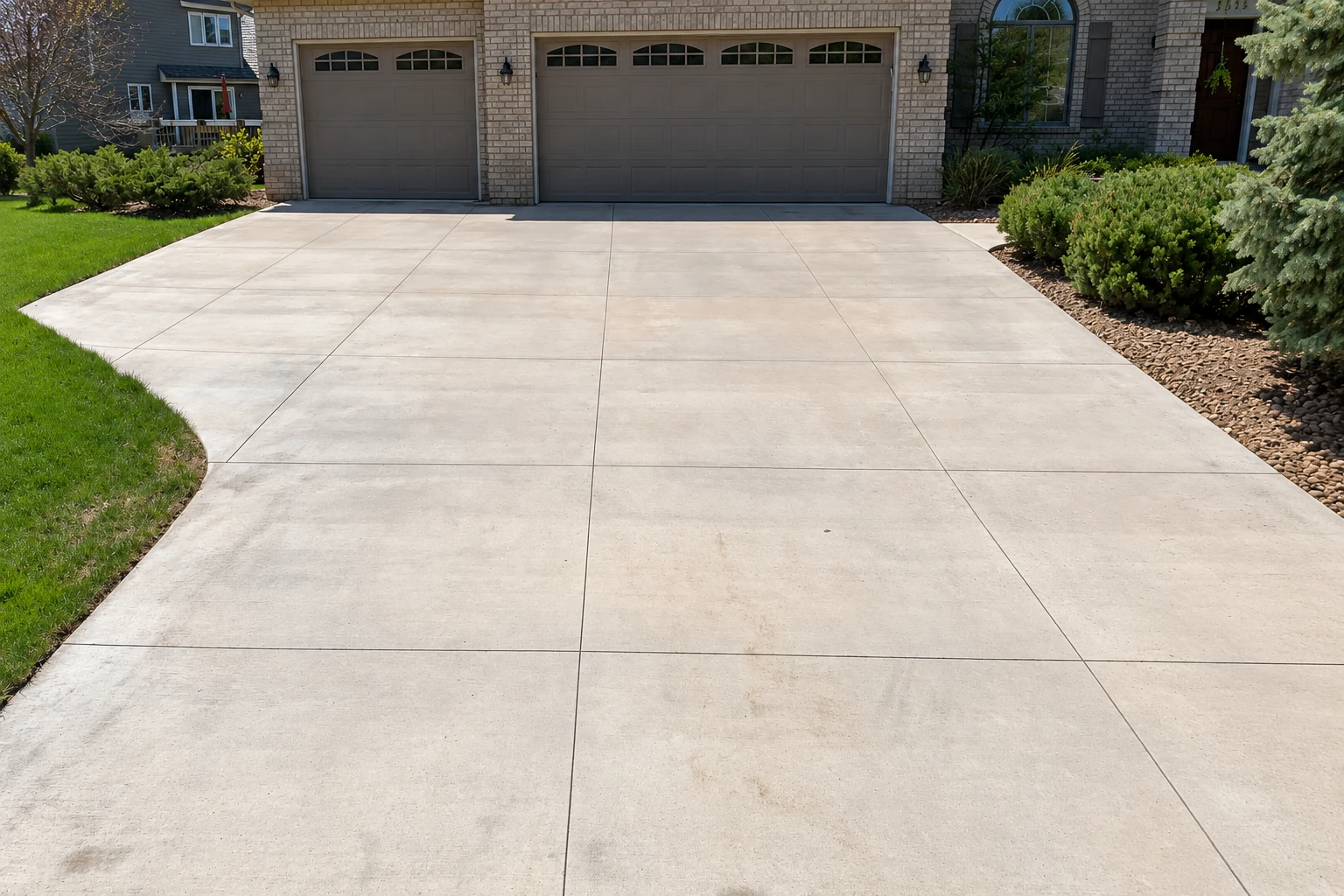
Concrete driveway with a pale, jointed slab leading to a two-car garage, bordered by lawn and shrubs.

Concrete parking lot building in Auburn, WA is the planning and pouring of a paved concrete lot for the cars and trucks that use it. When the design and the construction account for what a parking lot faces, the lot can be economical and serve well for many years with little upkeep.

What does it take to build a concrete parking lot in Auburn?

Most lot owners who call us have gravel that ruts and puddles every winter, old asphalt that's breaking apart, or a new building that needs parking before it can open. The work itself is digging out, packing a solid base, setting forms to the drainage grades, pouring, finishing and cutting joints, then giving the slab time to cure before anyone parks on it.

The price moves with the lot's size, what will drive on it, how much old paving comes out and how much base and drainage work the site needs, and your written estimate lists what's included for your lot. The schedule turns mostly on the engineer's plans and the city's reviews, then on pour weather and curing. We handle the permit applications when your lot needs them.

What a lasting parking lot needs underneath

Most of what makes a lot last is out of sight by the time the first car parks. These are the three things I look at hardest when we plan a lot.

A base dug out and packed

The subgrade, the ground the slab rests on, gets dug out and compacted in layers with gravel on top, not just raked level. A raked base looks fine on pour day, but it settles under loaded trucks and takes the slab down with it, which is how most sinking, cracked lots got that way.

Water that runs where planned

A parking lot sheds as much water as a big roof, so every bit of slope has to carry it toward the drains on the plan and away from the building and the neighbors. We check the grades before the pour, because pooling water on a finished slab can't be fixed afterward with a broom.

Joints, steel and a gripping finish

Control joints are cuts we saw into the slab so it cracks along a straight line we chose instead of wherever it likes, and they have to be cut soon after the pour. Rebar, the steel grid inside, holds the pieces together, and a broom finish leaves a light texture so tires and shoes grip in the rain.

What happens after you call about a parking lot

From the first call to the final walk-through, here's who does what and what you'll have in hand at each step of building your lot.

  1. 1

    Tell us about your lot

    Call (253) 275-5460 or send the form with a few lines on where the lot is and what will park there. We'll set a time for me to come out and look at it.

  2. 2

    Walk the site together

    I look over the site and check whether your address falls under the city or the county, since that decides who reviews the work. Then I write up an estimate that lists what's included, such as taking out old concrete and cleaning up afterward.

  3. 3

    Permits first, then the pour

    Once you're ready, we take care of the permit paperwork and work from your engineer's drainage plan. Our crew then digs out, packs the base, sets the forms, pours, finishes and cuts the joints.

  4. 4

    Walk the finished lot

    When the work is done, I walk the finished lot with you and go over when it's ready for cars and when it's ready for heavier trucks, so nobody drives on it too soon.

Request an estimate

How we build a concrete parking lot, start to finish

My first question is how the lot will be used and what will drive on it. A lot for customer cars and one that takes garbage trucks and deliveries need a different slab thickness, more steel and a deeper base, so that answer shapes the rest. We plan the accessible spaces and the street entrance from the first drawing, because they're far easier to place on paper than to move once forms are set.

On drainage, we work alongside your engineer, setting our forms and grades to their plan so the water goes where it was designed to go. We also try to time pours away from the midday heat when the weather allows, since a slab that dries too fast ends up with a weak, dusty top that wears off under tires.

When a budget gets tight, the base is usually the first thing people want to trim, because nobody sees it once the concrete is down. I'd rather keep the base and keep the finish plain. A broom finish on a well-packed base holds up under trucks, while a fancier surface on a thin base cracks as soon as the base gives way.

Lots often bring other concrete work with them. Light poles, signs and canopy posts sit on concrete footings that we can pour while the lot is open. If the building beside the lot has sunk out of level, foundation raising can bring it back up before we set the final grades, so the paving meets the doorways where it should.

All at once or in sections

Pouring the whole lot at once is usually quicker and leaves fewer seams. Pouring in sections lets a business keep part of the lot open, though it takes more trips and more planning around the curing time.

Concrete everywhere or where it works hardest

Some owners pour concrete across the whole lot. Others put it where trucks turn, stop and stand, like the entrance, the drive lanes and a dumpster pad, and pave the rest with another surface the city accepts.

Get a written estimate for your concrete parking lot

We reply within one business day and set a time for me to come out for a free on-site estimate, with no pressure to book. It helps if you know how the lot will be used and where it meets the street, since those two things shape most of the plan.

(253) 275-5460

team@auburnwaconcrete.com

Concrete parking lots and street entrances in Auburn

In Auburn, the city engineer approves a lot's pavement for the traffic its intended use will bring, which is why use is our first question. Where your driveway crosses the public right-of-way along an improved street, the city requires cement concrete, so the entrance is the one place on the lot where there's no choice of surface.

For any lot other than single detached homes and middle housing, the city engineer decides where the street entrances and exits go and how they're built. Commercial and industrial lots also keep a queuing stretch at the driveway, room for cars waiting to pull in, with no parking aisles, spaces or other driveways in it. If you'd like to ask the city directly, its Permit Center answers at 253-931-3090, option 2.

We're based in Auburn and work in the cities around it, including Kent and Federal Way. Most of our lot calls come from business owners and landlords planning a new lot or replacing broken paving, and the work is the same across city lines even when the office reviewing it changes.
Why Auburn property owners call D&R Auburn Concrete for parking lots

I grew up on a family farm where something broke every week and somebody had to fix it, and I learned concrete on other people's crews before starting D&R Auburn Concrete in 2013. In 13 years, the question I answer most is still a plain one. What's going under this slab, and will it hold?

I come out myself to look at the lot and write the estimate, so the person explaining the job is the one who answers for it. Our crew lead runs the work on site, and I check in while it's underway.

We're licensed and insured. Our promise is short. Your satisfaction, guaranteed. When you're ready to talk through your lot, call (253) 275-5460 or send us the details, and we'll set a time for me to come out and walk it with you.

Concrete footings

Light poles, signs and canopy posts need solid concrete under them, and setting those while the lot is built saves cutting into new paving later.

Foundation raising

If a building beside your lot has sunk out of level, lifting it first lets the new paving meet its doorways at the right height.

Cities we serve for parking lot work

We're based in Auburn and pour parking lots, driveways and other slabs in the cities around it. Find your city below, and if it isn't listed, give us a call and ask.

Questions about concrete parking lots in Auburn

How much does a concrete parking lot cost in Auburn, WA?

The cost of a concrete parking lot depends mostly on its size, what will drive on it and how much base and drainage work the site needs. Taking out old paving, building the street entrance and the thicker slab heavy trucks call for also move the number. I'll give you a written figure for your lot once I've seen it.

What surfaces does Auburn allow for a parking lot?

Auburn accepts asphalt, cement concrete, grass block pavers or pervious pavement for parking on private property, including the driveways inside the lot, and calls for bumper guards where they're needed. Concrete usually costs more up front than asphalt but holds up well where trucks turn and stand, and the entrance crossing the street right-of-way has to be concrete either way.

Do I need a storm drainage permit for a parking lot in Auburn?

You likely do if the lot is part of a new development or a redevelopment, because the city issues storm drainage permits and an owner gets one first for the kinds of work its code lists. The application is prepared by a civil engineer licensed in Washington, though the city engineer can accept others when a project needs no detailed plans. It's applied for alongside your other permits so the reviews move together.

Who is allowed to build a parking lot in Washington?

Any construction contractor working in Washington has to be registered with the state Department of Labor and Industries and be bonded and insured. The state set those rules to protect the public, and they apply to paving a parking lot the same as to building a house.

Does my business parking lot need accessible spaces?

Yes, under federal ADA guidance, when a business, a non-profit or a state or local government provides parking, the lot has to include accessible spaces that comply with the ADA. Resurfacing, resealing or adding spaces later counts as an alteration that brings the required accessible spaces with it. Patching and pothole repair don't, unless they change how the lot can be used.

How long before I can park on a new concrete lot?

Most concrete can take foot traffic in a day or two and cars after about a week, with heavy trucks waiting longer. That wait is curing, the time the concrete needs to gain strength, and driving on it early is how good slabs get cracked. I'll give you the dates for your pour when we finish.

Call us about your parking lot plans

Call (253) 275-5460 or use the form while your engineer is still drawing the drainage plan, so the grades and the entrance get worked out together instead of fixed later.

(253) 275-5460Request an estimate