Concrete driveway building
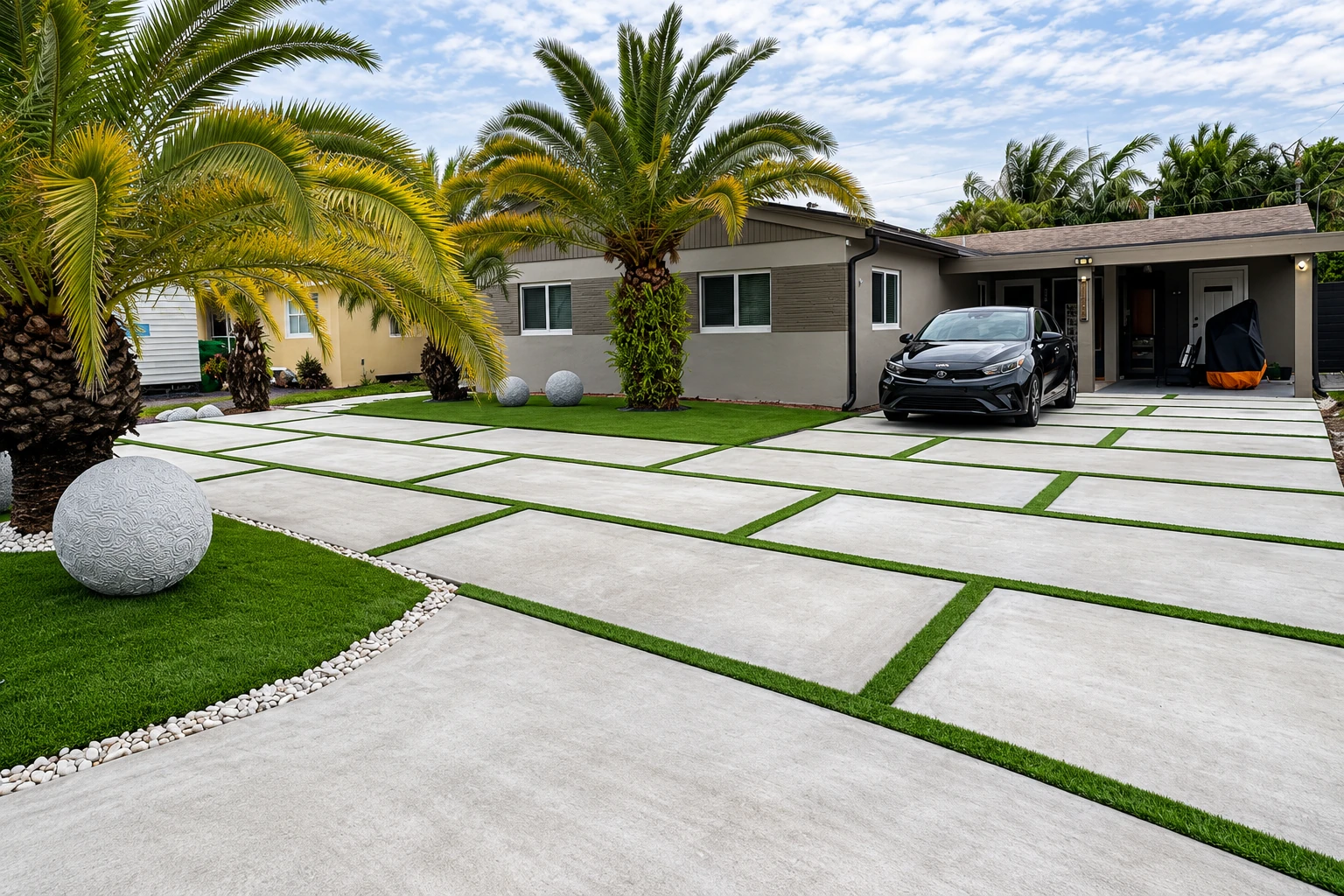
When a driveway has sunk at the edges or cracked across, we take it out, pack a new base and pour a slab that sheds water away from the garage.
D&R Auburn Concrete is a concrete contractor based in Auburn that pours driveways, patios, walkways, steps and foundations for homes in Lakeland South, WA, from digging out the old base to the final finish.
D&R Auburn Concrete pours and replaces driveways, patios, walkways, steps, garage floors and foundations for homeowners in Lakeland South. I come out to look at each job myself before anything is priced, and most of what I look at is the ground under the old slab, because that's what decides how long the new one lasts.
The calls we get are mostly about concrete that has moved. A driveway drops along one edge, a patio tips back toward the house, or water stands in a low spot by the garage. When we break the old slab out, the cause is usually the subgrade, the soil and gravel the slab rests on, which was raked level instead of dug out and packed, so it settled and took the concrete with it.
Most of what we pour in Lakeland South is flatwork, our word for the driveways, patios, walks and garage floors that lie on the ground, plus steps and the footings under decks and additions. Many of these jobs replace an older slab, so tearing out the old concrete is often part of the work. We do the same work in Lakeland North and Pacific, with the crew coming over from Auburn.
When a driveway has sunk at the edges or cracked across, we take it out, pack a new base and pour a slab that sheds water away from the garage.
A patio that tips toward the house or holds puddles by the back door usually needs a new base, and we pitch the new slab away from your walls.
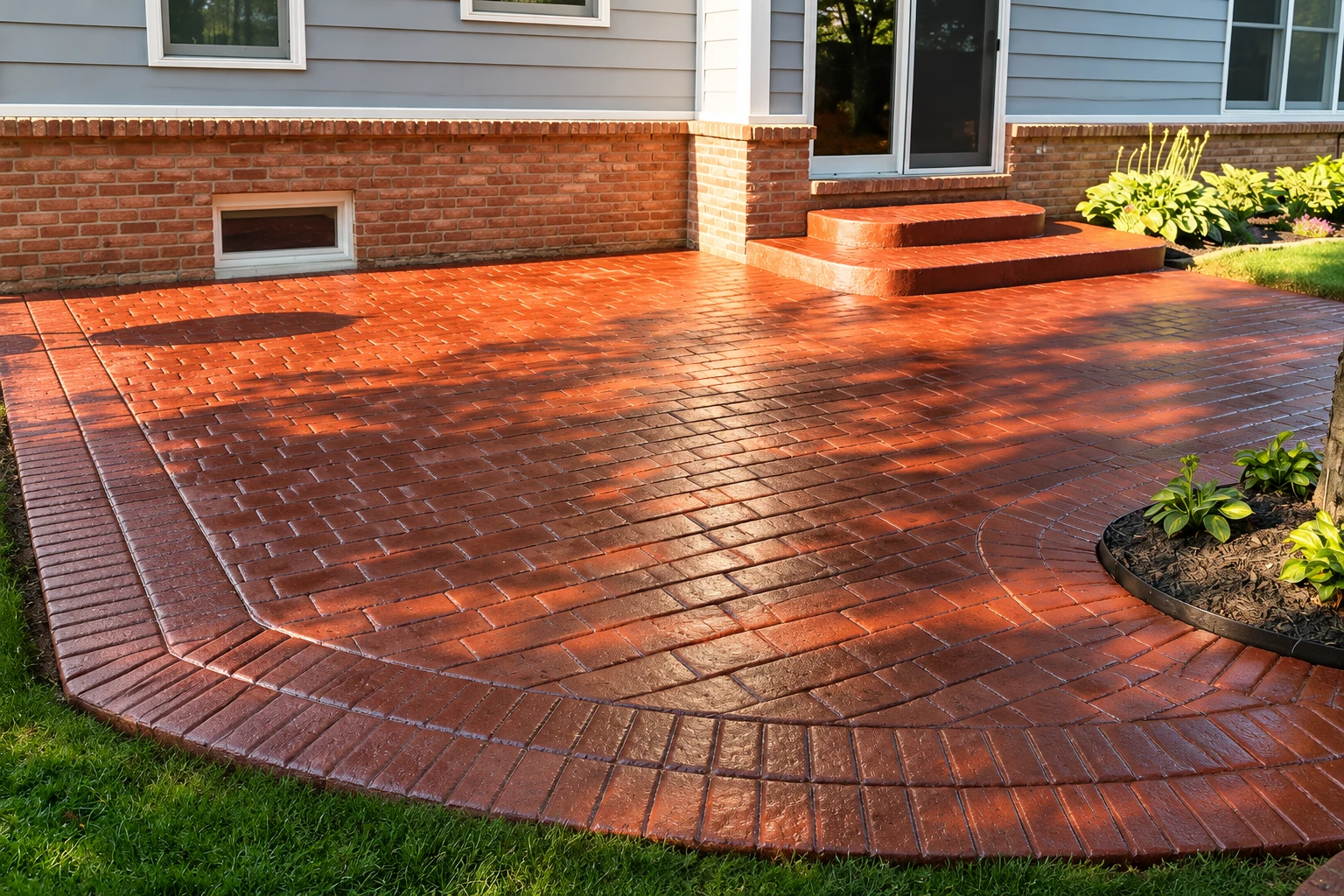
Stamped concrete gives a patio or walkway the look of stone or brick in a single pour, which suits homeowners who want a pattern without setting separate pavers.
A walkway from the driveway to the front door takes daily foot traffic, so when slabs have heaved into a trip edge we replace them on a packed base.
A garage floor that's cracked, pitted or chipping can be broken out and repoured with the slope running toward the door, so water tracked in by the car runs out.
Decorative concrete covers colored, exposed and textured finishes for a front entry or patio, for when plain gray doesn't suit the house and you'd like the slab to match it.
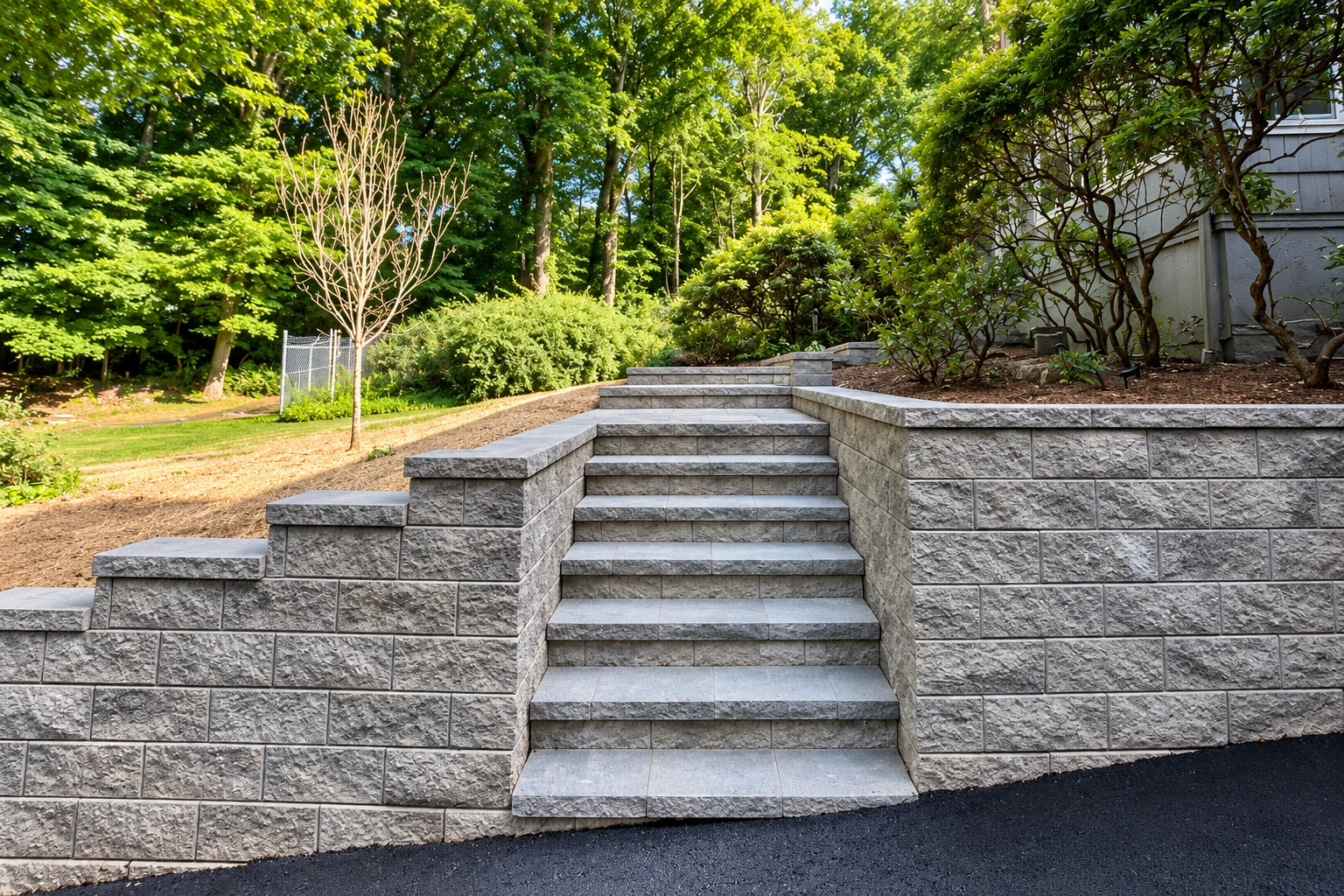
On a lot that steps down from the house, a poured retaining wall holds the soil back, and we look at where water collects behind it before we form it.
For a shop, basement or outbuilding, we pour interior floors over a packed base, with steel rebar set inside to hold the slab together where heavy loads sit.
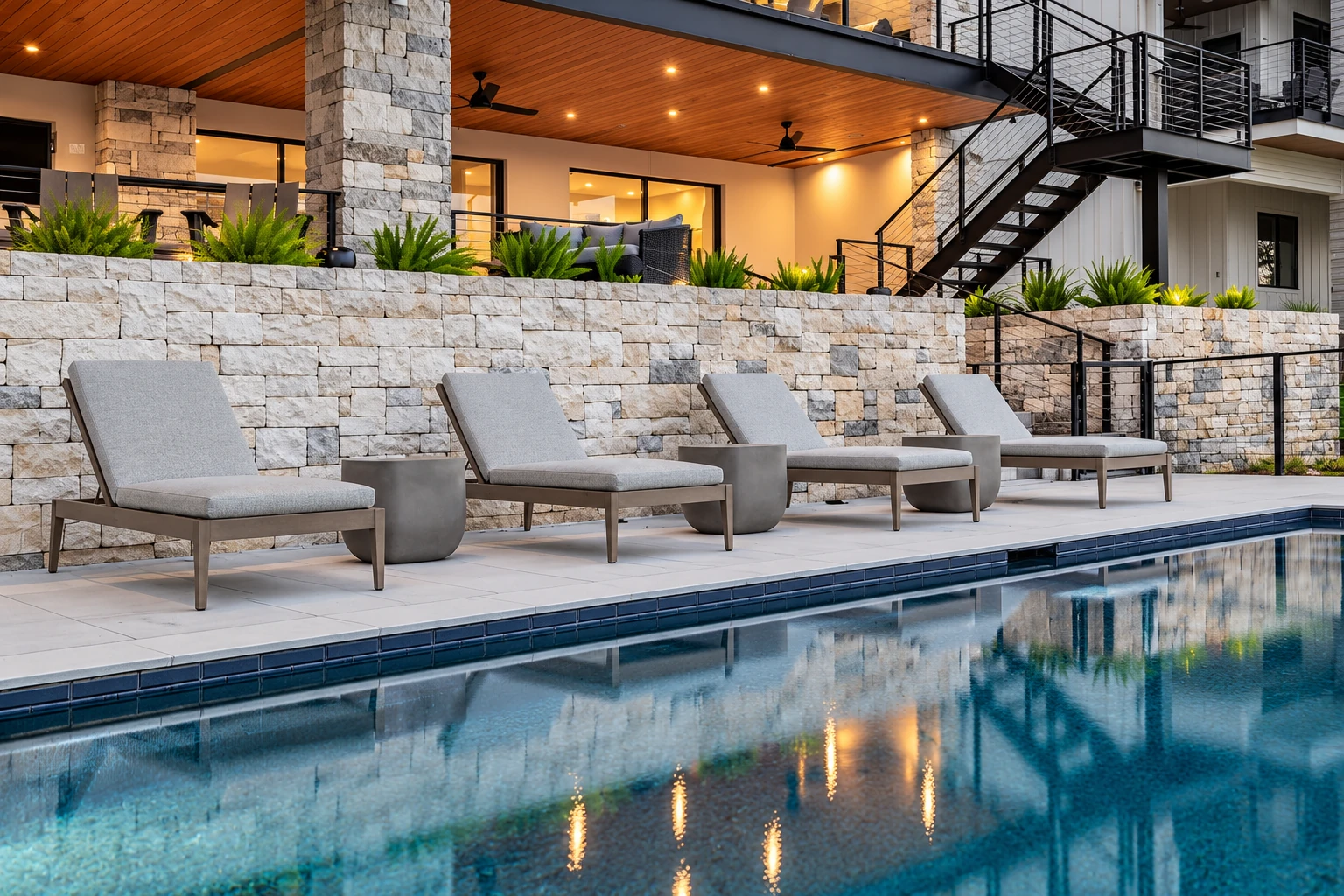
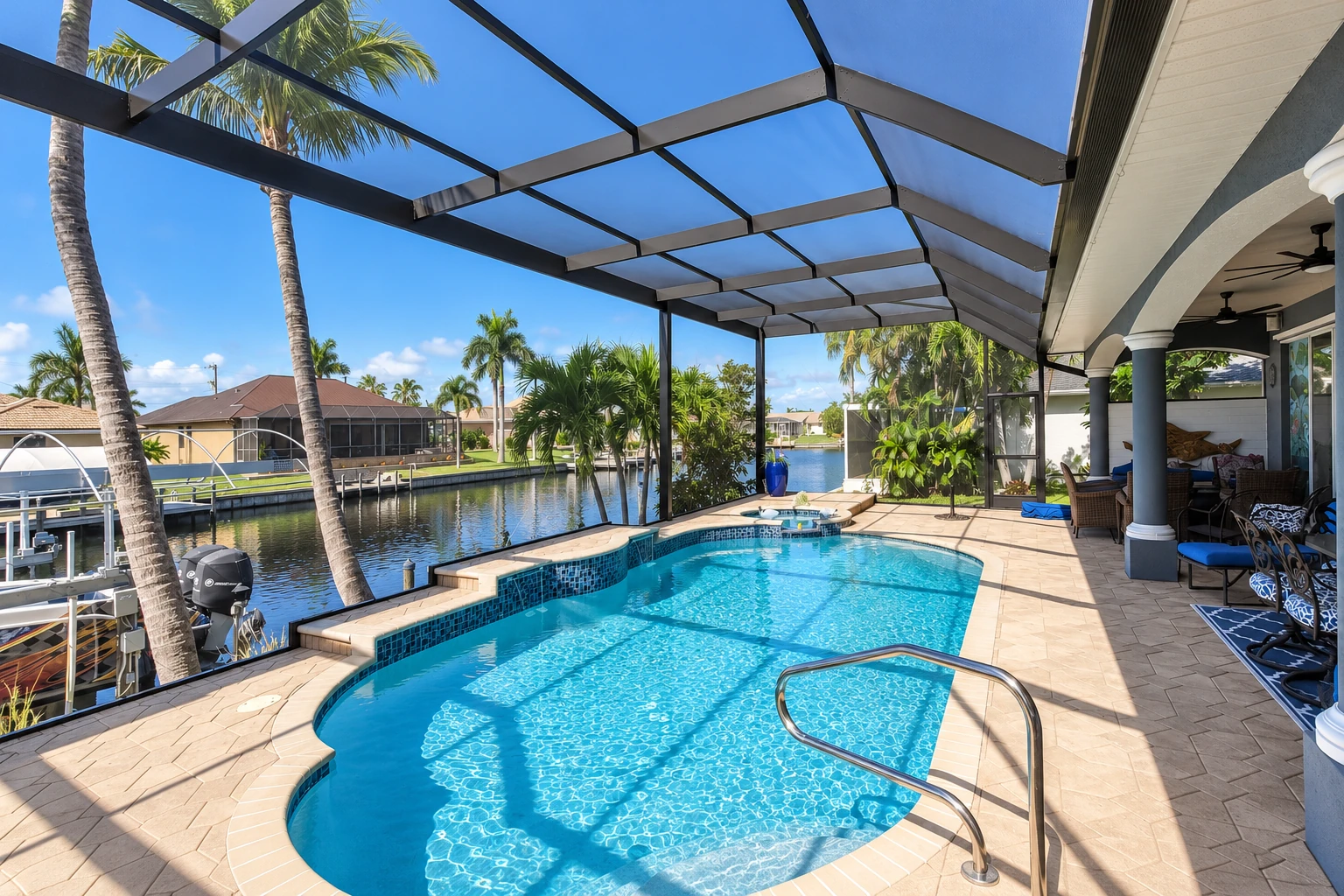
Around a pool, we give the deck a broom finish, a brushed texture that grips wet feet, and slope it so splash water runs away from the pool and the house.
Front or back steps that have pulled away from the house or crumbled at the front edge can be formed and poured new, with even rises so nobody catches a toe.
For a garage, shop or addition built on a slab, the foundation starts with the ground, so we dig, pack and check the base before any concrete goes in.
When you're building an addition or an outbuilding, we form and pour the foundation walls and footings it sits on, once the plans are settled.
For a business lot or a shared drive, we build thicker concrete paving that takes delivery trucks and daily parking, graded so water runs to the drains.
Footings are the wide concrete base under a wall, a post or a deck, and we size and dig them down to firm soil so what's above stays put.
If part of a house or garage slab has dropped and doors have started sticking, raising the foundation can bring it back up, and we look for the cause first.
When you need a new doorway, a trench for a drain line or a clean edge on an old slab, we saw-cut the concrete instead of breaking it out by hand.
Send us a few lines about your Lakeland South project and we'll reply within one business day to set a time. I come out myself to look at the job and write a free estimate that lists what's included, such as taking out the old concrete and cleaning up afterward. There's no obligation and no pressure to book.
(253) 275-5460For a Lakeland South address in unincorporated King County, the county issues building permits through King County Local Services. Federal Way, Auburn and Pacific all border the area, so before we schedule I confirm whether your address falls under the county or a city. The county's list is written around building work, so we ask about your slab, handle the application when it needs one, and that review sets the earliest start.
Every construction contractor in Washington has to be registered with the state Department of Labor & Industries, so ask anyone you're considering for theirs. King County asks for its own business license only when a business does a regulated activity in the unincorporated county. We're licensed and insured, and I'll answer anything you'd like to check before you sign.
The price turns on more than the slab itself: tearing out the old concrete, how much soft ground comes out and gets replaced with packed gravel, the slab's thickness and rebar, how close the truck can get, and the finish. The schedule turns on any permit review, the base work and curing, the days new concrete needs to harden before you use it. Your written estimate lists what's included, cleanup too.
I come out myself to look at the job and write the estimate, and I've done it that way since starting the business in Auburn in 2013. Our crew lead runs the work on site and I check in while it's underway, so the person who priced your job also sees it built. If you have a question, you get a full answer before we start.
When a budget gets tight, the base is usually the first thing someone wants to cut, because on pour day it's buried and nobody sees it. I'd rather trim the finish than the base, since a nice surface on soft ground still sinks and cracks, and you can't fix the base without breaking out the slab. So we dig out soft soil, pack the gravel in layers and check the slope away from your house first.
We also time pours to stay out of the midday heat, because a slab that dries too fast on top turns weak and dusty later. We're licensed and insured. Your satisfaction, guaranteed. Call (253) 275-5460 or use the estimate form to set up a visit.
Lakeland South sits in southwestern King County, and a few things about the ground and the lots here change how we plan a job before the first form board goes down.
Most of the shore around Lake Geneva is private homes, woods and docks. On a lakeside lot we plan where the concrete truck and pump can reach without crossing soft lawn, and we pitch a new patio or walk so its runoff spreads into the yard instead of heading straight for the water. That planning shows up in the estimate, since a longer reach or a pump adds work.
King County keeps a map of potential landslide hazard areas. The county is clear that the map doesn't identify actual hazards for any one property, but depending on what you're building, a site evaluation by a licensed geological engineer may be recommended. If your lot slopes and you're planning a retaining wall or a foundation, it's worth looking there first, and we build to what that evaluation calls for.
If your house is on septic, we need to know where the tank and drainfield sit before a loaded truck comes anywhere near them. For a septic project, including a remodel or an addition to the house, the county asks for a copy of the approved septic permit and site plan when you apply, so it helps to have those in hand before we plan footings for an addition.
When the county approves a building permit, it has to be displayed where it's easy to see on the site and kept there by the applicant or the contractor. On jobs that carry a permit, we post it when work begins and leave it up for the length of the job, so an inspector or a neighbor can see the work is approved.
The cost depends on the driveway's size and thickness, whether the old slab has to be broken out and hauled off, and how much soft ground needs replacing with packed gravel. The finish and access matter too, since a stamped surface or a long pump reach adds work. I measure on site and write it all down, so you see each part of the price.
The county's summary lists decks under 30 inches above grade among the work exempt from a building permit, with exceptions. A deck higher than that isn't on the exempt list, and footings for an addition are part of building the addition, so check the county's permit guide and we'll pour to the approved plans.
A general contractor needs a $30,000 bond and a specialty contractor needs a $15,000 bond. Liability insurance has to be $200,000 in public liability and $50,000 in property damage, or $250,000 combined. A specialty contractor can only work in the specialty it's registered in and can't hire subcontractors, which matters if one firm is quoting your whole addition.
For a county application deemed complete today, the 2021 Washington State Building Code applies, with state and county amendments. The County Council has a hearing set for December 1, 2026, on a proposal that would adopt the 2021 state building, fire and energy codes for the unincorporated county with local amendments. We build to whatever is in effect when your application goes in.
You can walk on a new driveway well before you can drive on it, because the concrete keeps curing and gaining strength for days after the pour. A car parked on it too soon can crack the edges or leave marks. Before we leave, we'll tell you which day it's ready for foot traffic and which day it's ready for your car.
Move cars, planters and anything stored on or beside the old slab, and tell us where sprinkler lines, buried wiring or a septic tank sit. Keep a clear path for the truck to reach the forms, and plan to keep kids and pets off the area while it cures. Our crew lead runs the job on site, so that's who to ask on the day.
Concrete shrinks as it cures, so some cracking is normal, but control joints, the shallow grooves we cut across a slab, give it a straight, planned place to crack instead of a random line. We cut them on time, because joints cut late or skipped are why so many old patios crack in odd spots. A packed base keeps the pieces level.
We take calls until 11 PM on weekdays and 10 PM on weekends, so you can reach us at (253) 275-5460 after work or send the project form with your permit questions.