
Concrete driveway building
When a driveway has sunk at the edges, cracked or holds puddles by the garage, we take it out, dig down to firm ground, pack a new base and pour.
D&R Auburn Concrete is a concrete contractor based in Auburn, WA. In Pacific, we replace cracked and sunken driveways, patios and walks, and pour new steps, garage floors and foundations, starting every job with the ground underneath.
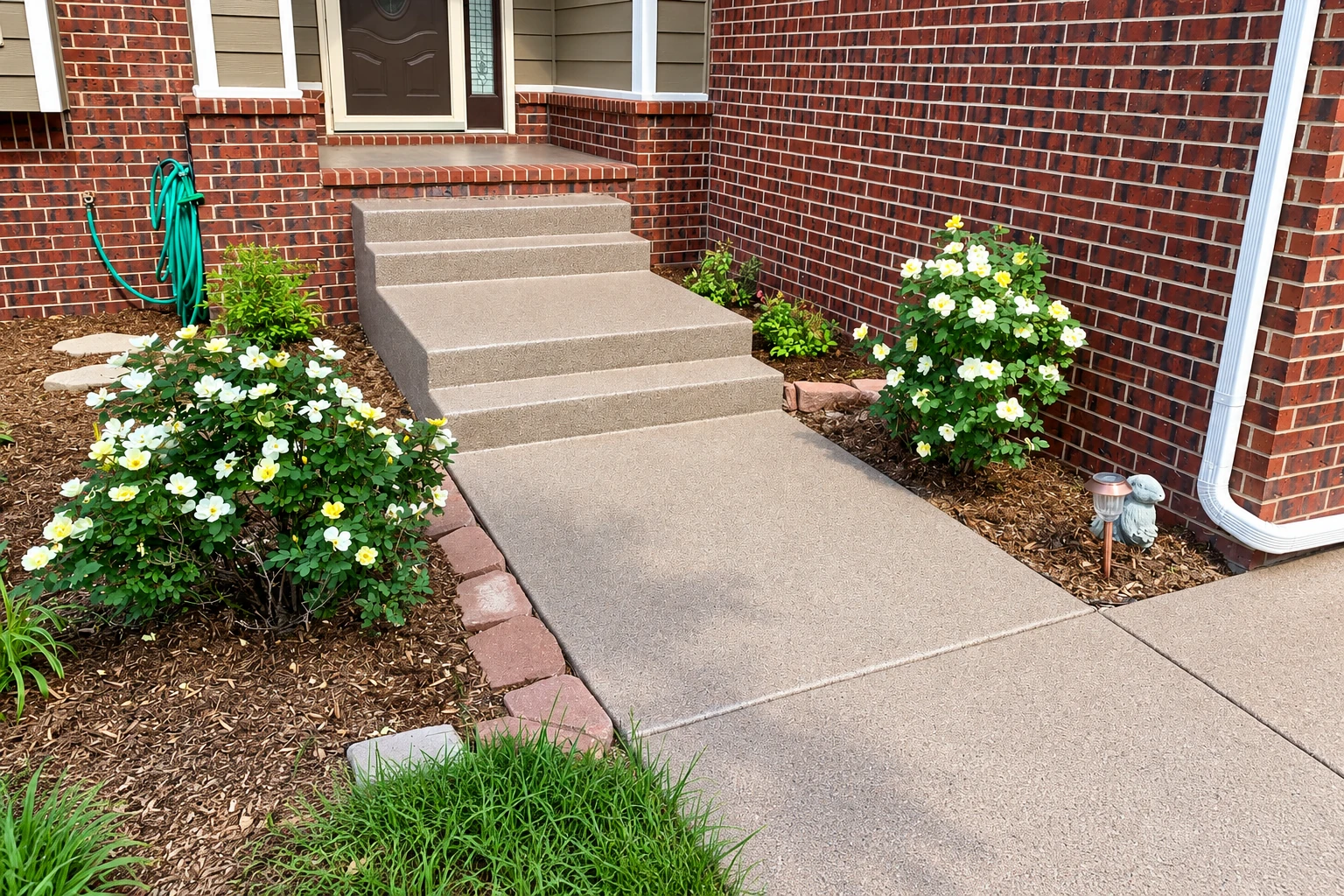
For homeowners in Pacific, D&R Auburn Concrete handles the full range of concrete work, from a short front walk to a new driveway or a business lot. We're based in Auburn, right next door, and much of what we're asked to fix in Pacific is concrete that has cracked, sunk or started holding water.
The trouble we see in Pacific usually looks like one of these: a driveway sunk along one edge, a patio that puddles against the house, or a walk with a lip that catches your toe. When we break the old concrete out, we often find the ground was raked level rather than dug out and packed, so the slab settled right along with the dirt under it.
Most of what we pour in Pacific is flatwork, our word for the driveways, patios, walks and garage floors that lie on the ground, and we build steps, retaining walls and foundations when a house or lot calls for them. We do the same work in Lake Tapps and the other cities around Auburn, so a Pacific job fits easily into our week.
When a driveway has sunk at the edges, cracked or holds puddles by the garage, we take it out, dig down to firm ground, pack a new base and pour.
A patio that tips toward the house sends rain to your foundation, so we set the new one to fall away and finish it with a broom texture for grip.
If you want the look of stone or brick without loose pavers to reset, stamped concrete gives you a pattern pressed into the slab while it's still soft.
Walks that have heaved or split into trip edges get broken out and repoured on a packed base, with joints cut to give cracking a straight, planned place to go.
A garage floor that's pitted, dusty or cracked under the car can be replaced, and we pour the new slab thick enough for the weight it carries every day.
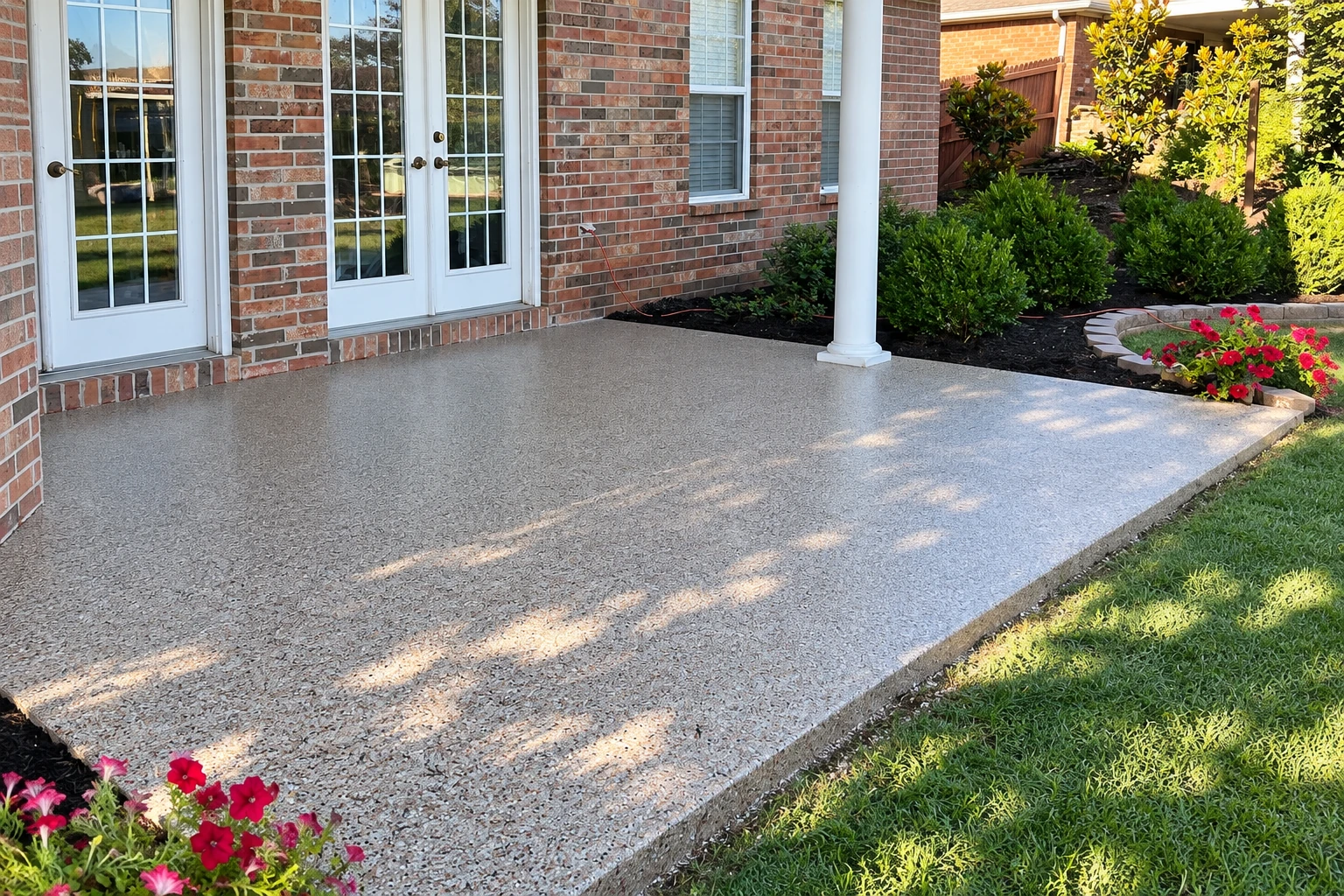
Colored concrete and exposed aggregate, where the small stones show at the surface, suit an entry or patio, and we explain how each wears before you choose.
Where a slope keeps spilling onto the driveway or yard, a concrete retaining wall holds the soil back, with drainage behind it so water doesn't push it over.
For a shop, basement or outbuilding floor, we prepare and pack the ground inside the walls first, then pour and finish a level slab you can work on.
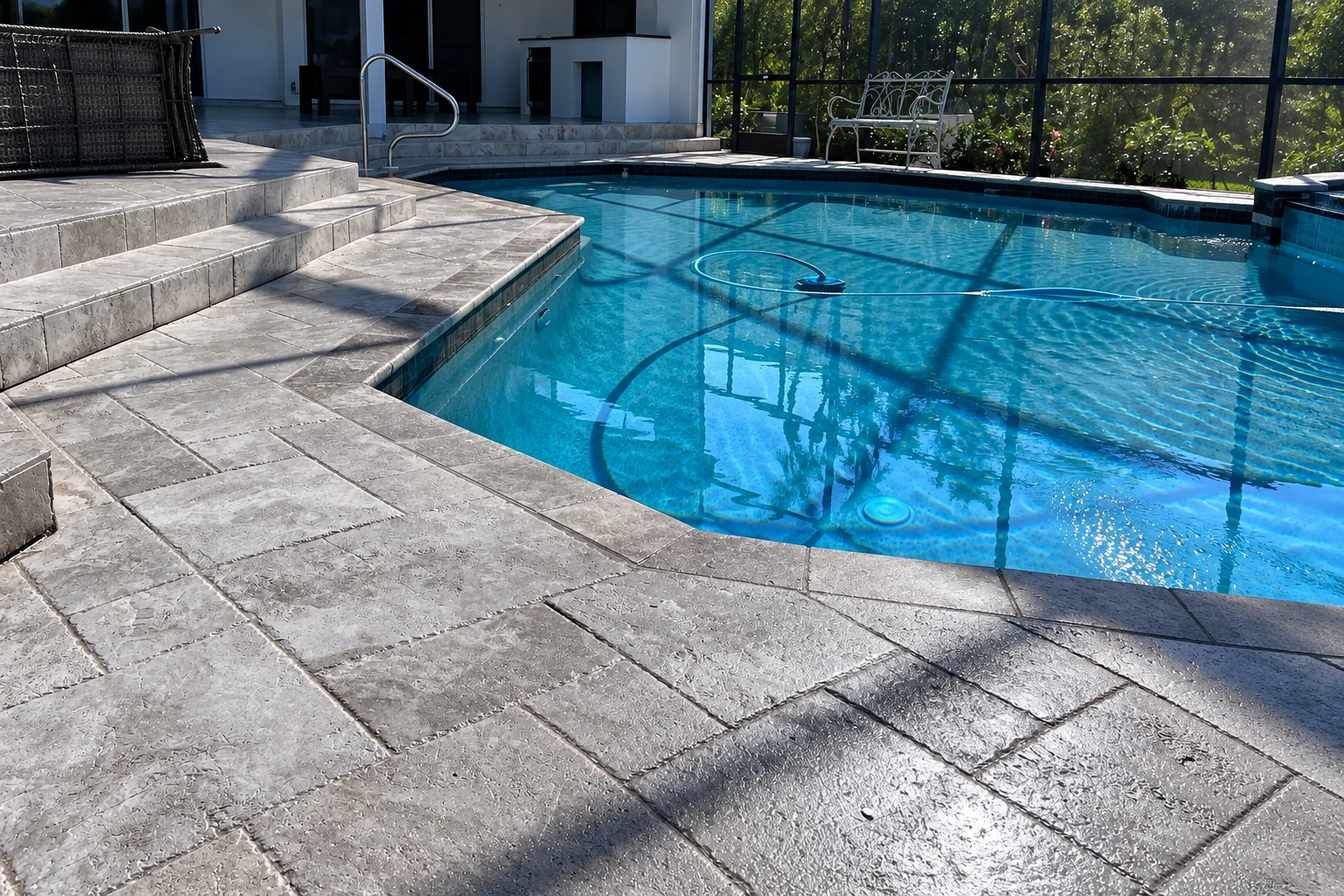
Around a pool, the deck has to drain away from the water and stay grippy when it's wet, so the slope and the surface texture get planned together.
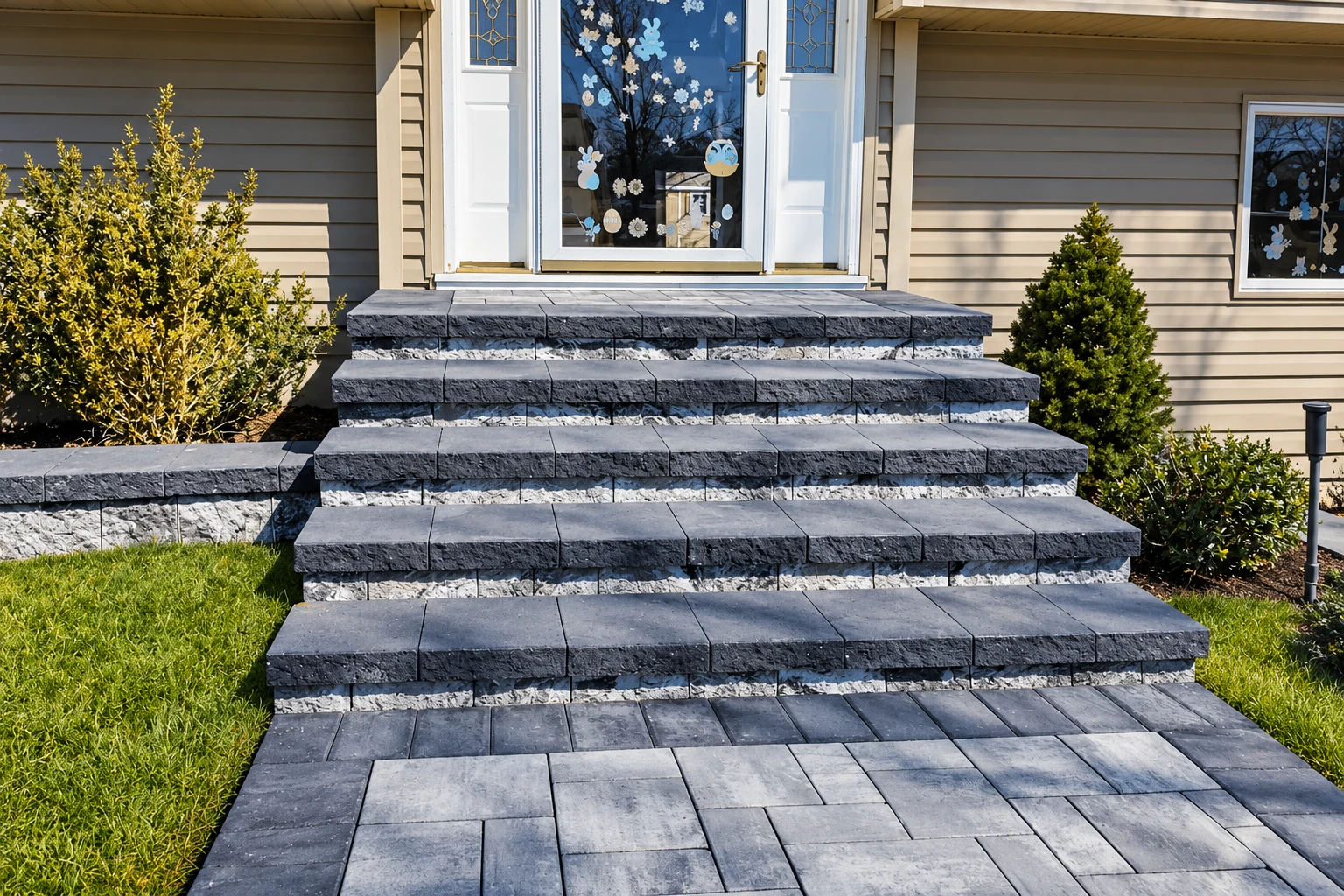
Front steps that have cracked, pulled away from the porch or settled out of level are formed and poured new, with even step heights so nobody catches a toe.
For a garage, addition or shed on a slab, the foundation is the slab itself, so we spend our time on the base and the steel before the truck arrives.
When you're adding on or building new, we dig, form and pour the foundation to the plans, so the framing starts on something square and level.
For a business lot that has to carry delivery trucks and steady traffic, we size the base and the slab for that load and plan where the rain will run.
Decks, posts, porches and small walls sit on footings, the concrete pads underneath that spread the weight, and we dig them down so they bear on firm ground.
If a corner of the house has dropped and doors have started to stick, we look at what's under it and explain whether raising the foundation is the right fix.
When you need a doorway in a basement wall, a trench through a slab or a damaged section taken out, we saw-cut it so the concrete around it stays sound.
We reply within one business day, and there's no obligation to book. I come out to Pacific myself to look at the job and write the estimate, which lists what's included, such as taking out old concrete and cleaning up afterward.
(253) 275-5460Permits from the City of Pacific start on its online permit portal, which also posts notices when processing changes. Whether your concrete job needs one is the city's call, and when it does, the permit sets the earliest start date. Pacific sits between King and Pierce counties, mostly in King, so before we schedule we confirm whether your address falls under the city or the county, and we handle the applications when a permit is needed.
Two things are worth checking on any contractor you invite out. One is a state contractor registration, covered in the questions below. The other is the city's business license, which in Pacific is an endorsement a business applies for along with its state license, and it covers contractors who travel into Pacific to work. We're licensed and insured, and I'm glad to answer questions about that at the estimate.
What moves the price is the work you won't see: how much old concrete comes out, how deep we dig to reach firm ground, and what it takes to carry water away from the house. After that come the size and the finish you choose. The schedule turns on the permit, the weather and curing, the wait while fresh concrete hardens enough to take weight. Your written estimate gives your figure and lists what's included.
I grew up fixing what broke on a family farm and learned concrete on other people's crews before starting D&R Auburn Concrete in 2013. I still come out myself to look at each job and write the estimate. Once work starts, our crew lead runs the site and I check in while it's underway, so the person who priced your slab also sees it go in.
When a budget gets tight, the base is usually the first thing people want to cut, because nobody sees it on day one. I'd steer you the other way. A plain broom finish on a dug-out, packed base will usually outlast a fancy surface poured over raked dirt, so I'd rather trim the finish than the ground it sits on.
I want you to understand what you're paying for before we start and to be treated with respect from the first call to the last, so ask me anything at the estimate and I'll answer it fully. Your satisfaction, guaranteed. To set up a visit, call (253) 275-5460 or use the form on this page.
Water is the thing we plan around most in Pacific, from the river to the storm drains. Here's how that, and a few things every slab has to deal with, shape the way we build here.
The lower White River runs along the east side of Pacific, and sediment building up in its channel has brought flooding to Pacific, Sumner and Auburn. Pacific also sees more frequent stormwater flooding, and when the river is high, it can back up into the city's storm drains. Rain off your driveway may have nowhere quick to go, so we check where water runs before we set forms and slope the slab away from the house.
In December 2025, an atmospheric river hit King County, one of the strongest and longest-lasting storms the county had seen in decades, and the county is still repairing flood damage from it. If water sat on your patio or ran under your driveway that month, the subgrade, the packed ground a slab rests on, may have softened or washed out. When a slab dropped afterward, we dig down to firm ground before we pour again.
Heavy rain on fresh concrete can wash out the top layer and leave it weak and dusty later, and a pour in hot midday sun does the same kind of damage. We pick the day and the hour with the forecast in mind and protect the slab while it cures. If the forecast turns bad, we'd rather move the pour a day than pour into it.
Concrete shrinks as it dries and shifts a little with wet and dry ground, so some cracking is normal. Control joints are grooves we cut on purpose so cracking tends to follow a straight line we chose instead of running across the middle, and rebar, the steel set inside the slab, keeps cracked pieces from spreading apart. Old slabs usually crack badly because the joints were cut late or skipped, or the base gave way.
Your price is set by the driveway's size, the work under it and the finish, so I write a figure after I've seen the site. Breaking out the old slab, digging to firm ground, drainage, and stamping or color all add to it, while a plain broom finish keeps it down. Call or use the form, and I'll come out to measure.
You can see your application and its inspection results on the city's permit portal, the same place Pacific permits start. When we file a permit for your concrete job, you can follow it there yourself as it moves along.
Yes, every construction contractor has to register with the Department of Labor and Industries, and state law requires them to be bonded and insured. On a home job of $1,000 or more, a registered contractor has to hand you the state's disclosure notice for customers. Eligible homeowners can also now apply for recovery payments when a contractor's work causes them financial loss.
Most major White River floods come between November and February. If your yard or driveway takes on water in those months, show me where at the estimate, because that tells me where the new slab needs to send the water.
Clear the area of furniture, planters and anything you want to keep, and leave a path in for our equipment. Tell us about sprinkler lines, buried wires or anything else you know is underground, so we can mark it before we dig. We handle breaking out old concrete, the base work and the cleanup.
You can walk on new concrete well before you can drive on it, because it keeps curing and gaining strength for a while after the pour. The exact wait depends on the mix and the weather, so I'll give you your dates before we pour. Plan to park on the street for that stretch.
We take calls until 11 PM on weekdays and 10 PM on weekends, so you can reach us at (253) 275-5460 after work or send the form whenever it suits you.