Concrete driveway building
When an older driveway has cracked, sunk at the garage or lets water pool, we break it out, rebuild the base and pour a new slab sized for your cars.
D&R Auburn Concrete is a concrete contractor based in Auburn. We build driveways, patios, walkways, steps, retaining walls and foundations for homeowners and property owners in Federal Way, and we prepare the ground under every slab.
D&R Auburn Concrete is a concrete contractor that builds and replaces driveways, patios, walkways, steps, retaining walls, garage floors and foundations in Federal Way. Calls here usually start with something the homeowner can see, like a cracked and sunken driveway, a patio where water pools or steps pulling away from the house. We work back from there to the cause.
Many of Federal Way's neighborhoods have been there a while, so the concrete on these lots has usually had years to settle. When a driveway cracks across the middle or drops at the garage, the cause is most often the subgrade, the soil and gravel the slab rests on. It was raked flat instead of dug out and packed, and roots and water running under the edges did the rest.
We also see plenty of sloped yards, where a path needs steps or a lawn needs a wall to hold it, and some business owners planning a lot. It's the same work we do in Auburn and Kent, and the groundwork under it doesn't change from one city to the next.
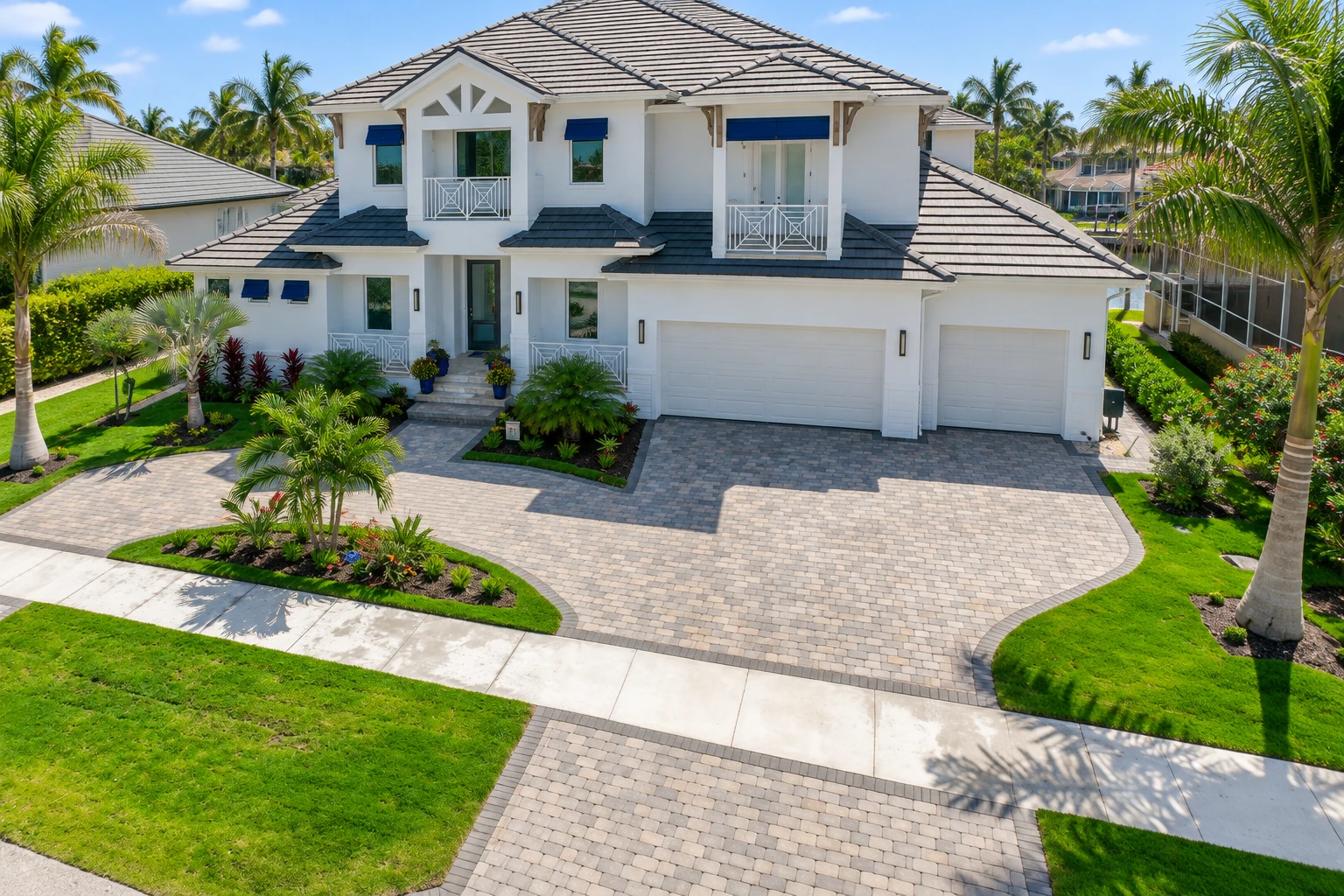
When an older driveway has cracked, sunk at the garage or lets water pool, we break it out, rebuild the base and pour a new slab sized for your cars.
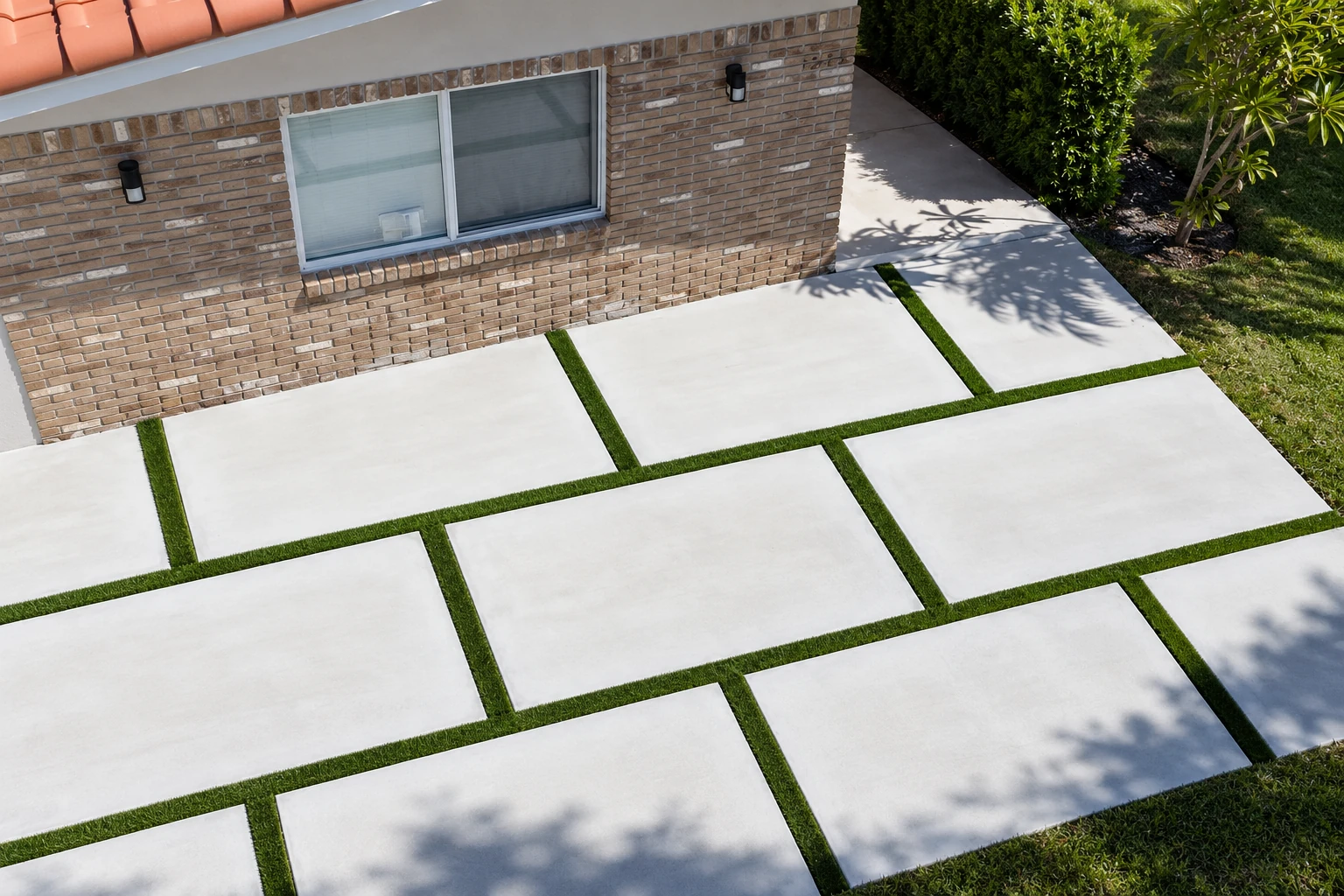
When the back of the house is mud or patchy lawn, a poured patio gives you a level spot for a table and grill, sloped away from the walls.
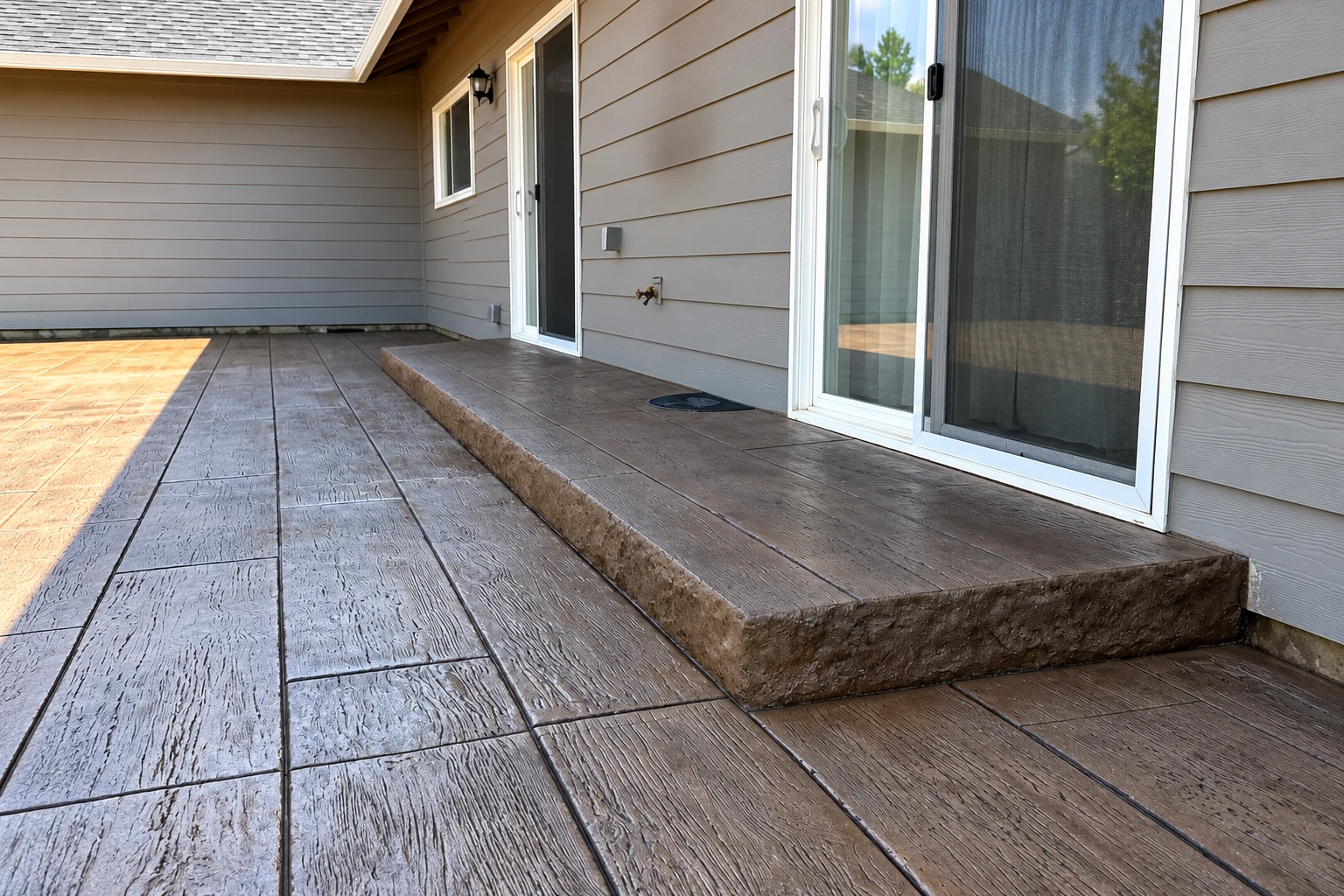
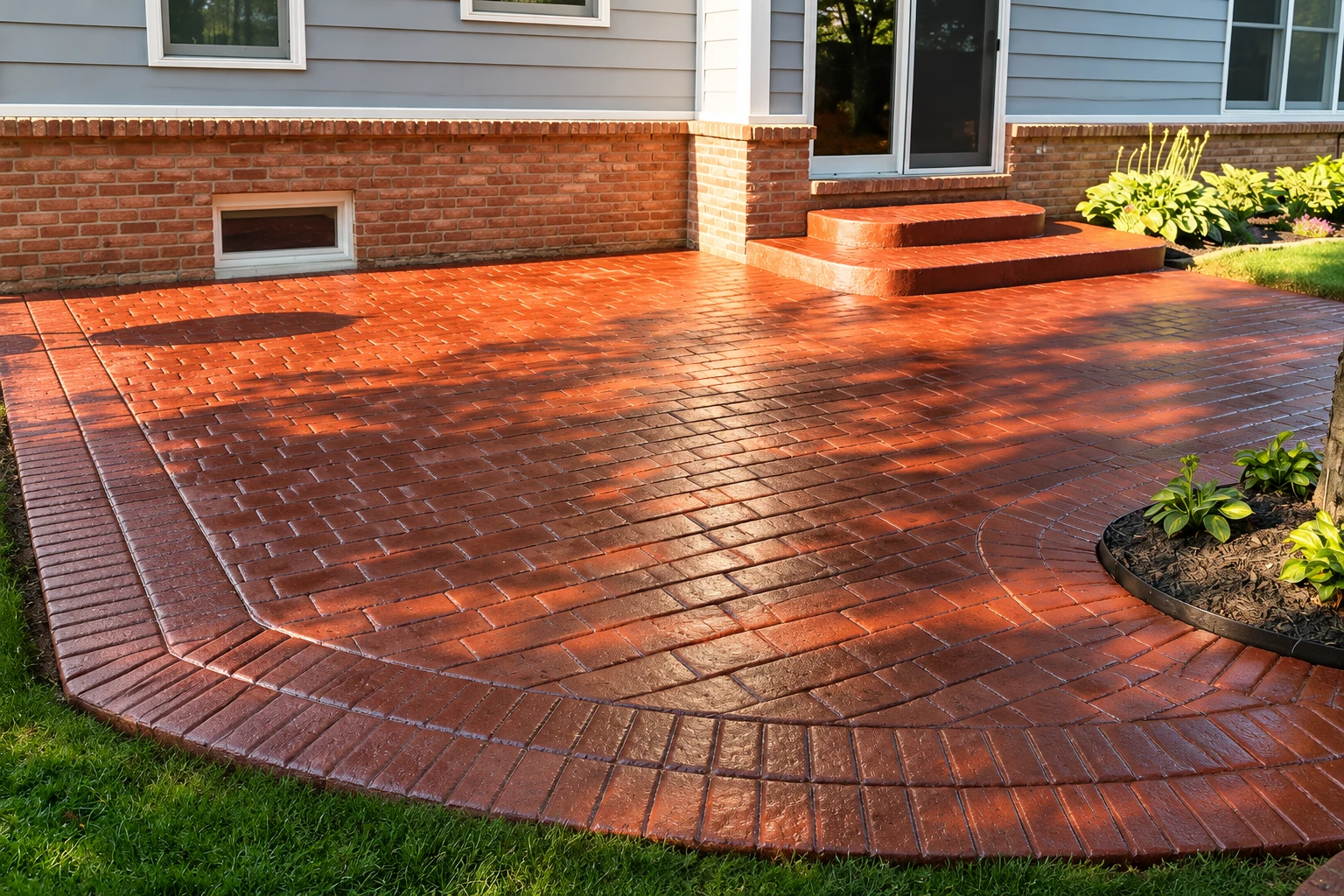
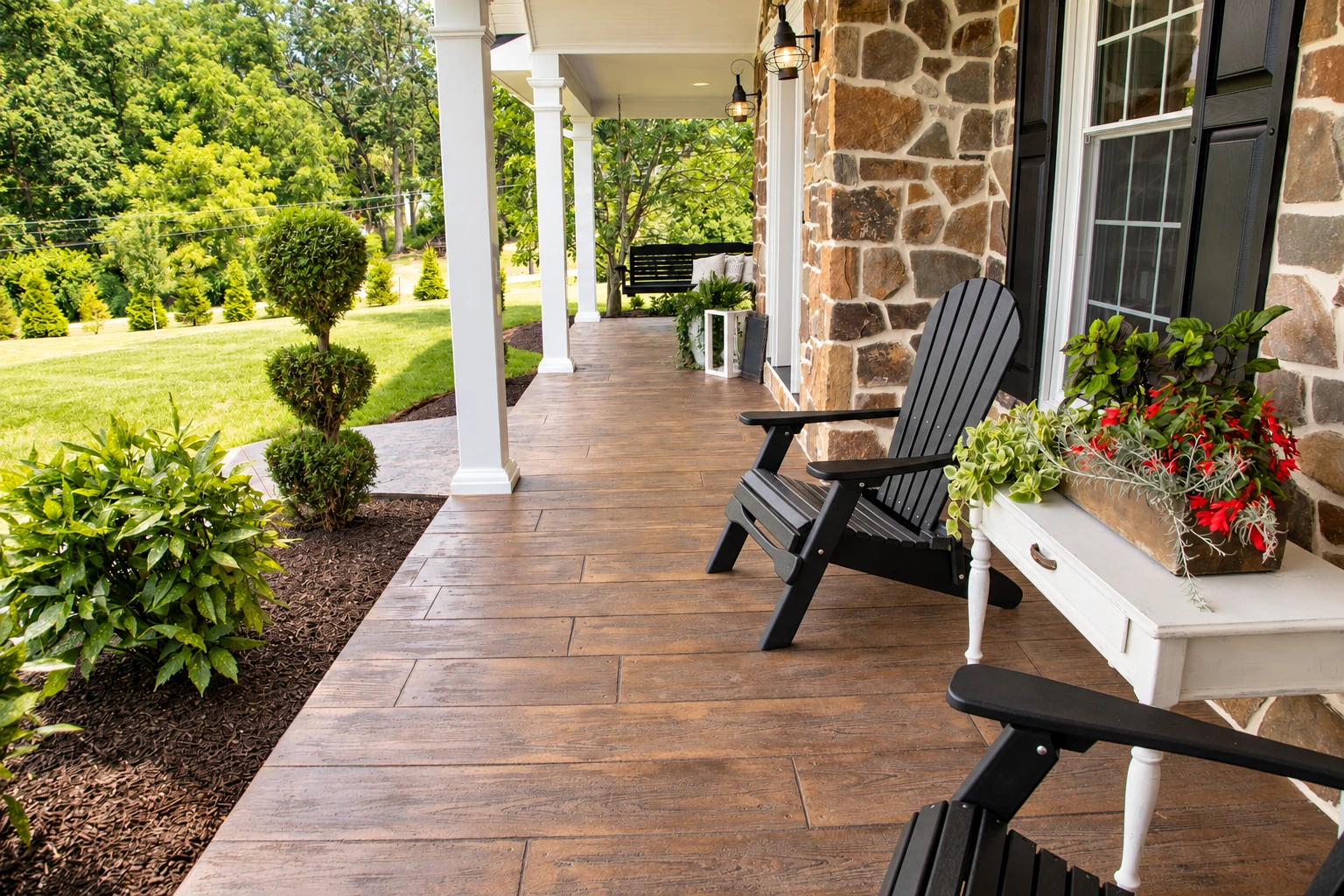
If you want the look of stone or brick without loose pavers, we press a pattern and color into the wet concrete on patios, walkways and entries.
Walkways that have heaved over tree roots or tipped toward the house are a trip hazard, so we replace them on a firm base with a brushed surface for grip.
A garage floor that's cracked, stained or settling at the door can be broken out and repoured, so it drains toward the door and stands up to cars.
When plain gray won't suit the house, we can add color, exposed stone or a scored pattern to a patio, entry or path while keeping the same solid base underneath.
On sloped yards where soil keeps sliding onto the lawn or driveway, a poured wall holds the grade back and gives you flat ground you can use.
For a basement, shop or outbuilding that needs a hard, level floor, we prepare the ground, set the forms and pour an interior slab flat enough for shelving and tools.
Around a pool, the concrete has to shed water and keep bare feet from slipping, so we slope the deck away from the water and give it a textured surface.
When front or back steps have crumbled, settled or pulled away from the house, we form and pour new ones with even step heights you can trust in the dark.
For a garage, shop or addition, we pour the slab foundation the building sits on, with the base and steel set before any concrete arrives.
When you're building new or replacing a failed foundation, we dig, form and pour walls and footings to the approved plans so the house above sits level.
For a business lot with potholes, failing asphalt or poor drainage, we build a concrete lot with a thicker base, planned drainage and joints placed where they'll do their job.
Decks, posts, sheds and additions all need something solid under them, so we dig and pour footings, the wide concrete pads that spread a load into firm ground.
If floors slope, doors stick or cracks run up the walls, the foundation may have settled, and we can lift and support it back toward level.
When you need a doorway, a trench for a new line or a cracked section removed, we saw-cut the concrete cleanly so the rest of the slab stays intact.
We reply to calls and form messages within one business day to set a time, and I come out to your Federal Way property myself to look at the job. You'll get a free written estimate that lists what's included, such as taking out the old concrete and cleaning up afterward, and you're under no obligation to book.
(253) 275-5460Inside Federal Way city limits, the city's Building Division issues permits for nearly every improvement on a home or business lot. That means the permit question comes first, and a review can add time before we pour. Before we schedule, we confirm whether your address falls under the city or the county, the same check we make in Tacoma and the other cities around Auburn. When your job needs a permit, we handle the application.
The city also requires every business working inside its limits to carry a city endorsement. That endorsement needs an active Washington State business license behind it, and it's good for one year. It's a fair thing to ask any contractor about before you sign. We're licensed and insured, and we'll answer the question plainly.
The price depends mostly on what's under and around the slab: how much old concrete comes out, how much digging and base the ground needs, how far the truck can reach, and the finish. That can be a plain broom finish, a light brushed texture for grip, or color and pattern. The schedule depends on the weather on pour day and on curing, the days the concrete needs to harden before you use it. Your written estimate lists what's included.
I learned concrete on other people's crews before I started this business in Auburn in 2013, and the lesson that stuck is that most slabs fail from the ground up. The base is covered by the end of the first day, so it's the first place a tight budget gets cut. We don't trim it. We dig out soft soil, bring in gravel and pack it, because a slab stays flat only as long as what's under it does.
Every slab shrinks a little as it dries, and that's where cracks come from. So we cut control joints, shallow grooves that give a crack a straight place to run, before the concrete can pick its own path. When the weather allows, we pour early in the day instead of in midday heat, which can leave a weak, dusty top. We also keep the surface damp while it cures.
Our crew lead runs the work on site and I check in while it's underway, so the person who wrote your estimate is still watching the job. Our promise is simple. Your satisfaction, guaranteed. If that's how you want your concrete done, call us at (253) 275-5460 or send the form.
Most of the city rules that touch concrete come down to where your slab or wall sits and how big it is. These are the ones we plan around before we pour in Federal Way.
Federal Way has its share of wet ground, and most residents know the West Hylebos Wetlands. The city requires a permit for any work in a critical area. That includes wetlands, streams, landslide hazard areas and the buffers around them, even for work that would otherwise be exempt. If your lot backs onto one, we sort that out before pricing, because it changes both the schedule and how we handle drainage.
The city exempts a retaining wall up to four feet, measured from the bottom of the footing to the top of the wall, unless it holds back extra weight such as a driveway, a slope or a building above it. Taller walls, or walls carrying that load, need a permit. On a sloped yard, that rule often decides between one tall wall and two shorter terraced ones, and we'll walk you through both.
A one-story detached outbuilding with no more than 200 square feet of floor is on the city's exempt list, as long as it isn't a storm shelter. That makes a small shed or shop slab a simpler job to schedule, though separate permits may still apply. Past that size, the building and its slab foundation go through the permit process, so it helps to settle the footprint before we price the pour.
If you're working from plans drawn up a few years ago, check which code they meet. Permit applications the city deems complete after March 15, 2024 have to meet the 2021 code edition with state and city changes. Footings and slab foundations drawn to the older 2018 edition may need updating. We look at your plans early so a revision doesn't hold up the pour.
We can't give you a fair number until I've seen the ground, because the base under the slab is the part of the price you can't see from the street. Thickness matters too. Most home driveways run about four inches thick, and one that carries a heavy truck or RV usually goes to five or six with rebar, steel bars that hold the slab together.
Driveways and sidewalks are on the city's list of exempt residential work, but patios aren't named there, and separate permits may still be required for exempt items. The critical-area rule above also applies. If you're unsure, call the Permit Center at 253.835.2607, and we'll tell you what we find for your address.
The Building Division takes applications and issues permits from 9 a.m. to 4 p.m. on Monday, Tuesday, Thursday and Friday. The Permit Center is closed on Wednesdays. We build those days into the schedule we give you, so a closed day doesn't catch anyone by surprise.
Usually you can walk on new concrete after a day or two and drive a car on it after about a week, a little longer when it's cool. That wait is curing, and rushing it is how good slabs end up chipped and cracked at the edges. We'll tell you which day to expect when we pour.
Move cars, planters and anything stored along the work area, and plan to park on the street until the slab has cured. Mark any sprinkler lines, buried wires or pet fences you know about, because they sit right where we dig out the base. Keep kids and pets inside on pour day, since wet concrete keeps every footprint.
We answer at (253) 275-5460 until 11 PM on weekdays and 10 PM on weekends, so you can call after work or send the form tonight.