Concrete driveway building
When an old driveway has cracked through or sunk at the garage, we break it out, pack a new base and pour a slab that drains away from the house.
D&R Auburn Concrete is a concrete contractor based in Auburn, WA. In Burien we build driveways, patios, walkways, steps, garage floors and foundations for homeowners, and we start each job with the ground underneath.
Most of what D&R Auburn Concrete pours in Burien is flatwork, our word for slabs that lie on the ground, like driveways, patios, sidewalks and garage floors. We also build steps, retaining walls, footings and foundations, and I come out myself to look at each job before I write the estimate.
The calls we get from Burien sound a lot like the ones we get around Auburn. A driveway has cracked through or dropped at one corner, a patio has sunk toward the house, or a walkway has lifted enough to catch a toe. Usually the concrete itself isn't the real problem. The ground under it settled because the base was raked flat instead of dug out and packed.
Burien sits a little farther out than Kent or Renton, but we do the job here the same way we do it in Pacific, right next to home. We dig down to firm subgrade, the undisturbed soil the slab will rest on, then bring in gravel and pack it in layers. That hidden work decides whether a new driveway stays flat.
When an old driveway has cracked through or sunk at the garage, we break it out, pack a new base and pour a slab that drains away from the house.
A patio that holds water by the back door or tips toward the foundation gets torn out and poured again, sloped so water runs off toward the yard.
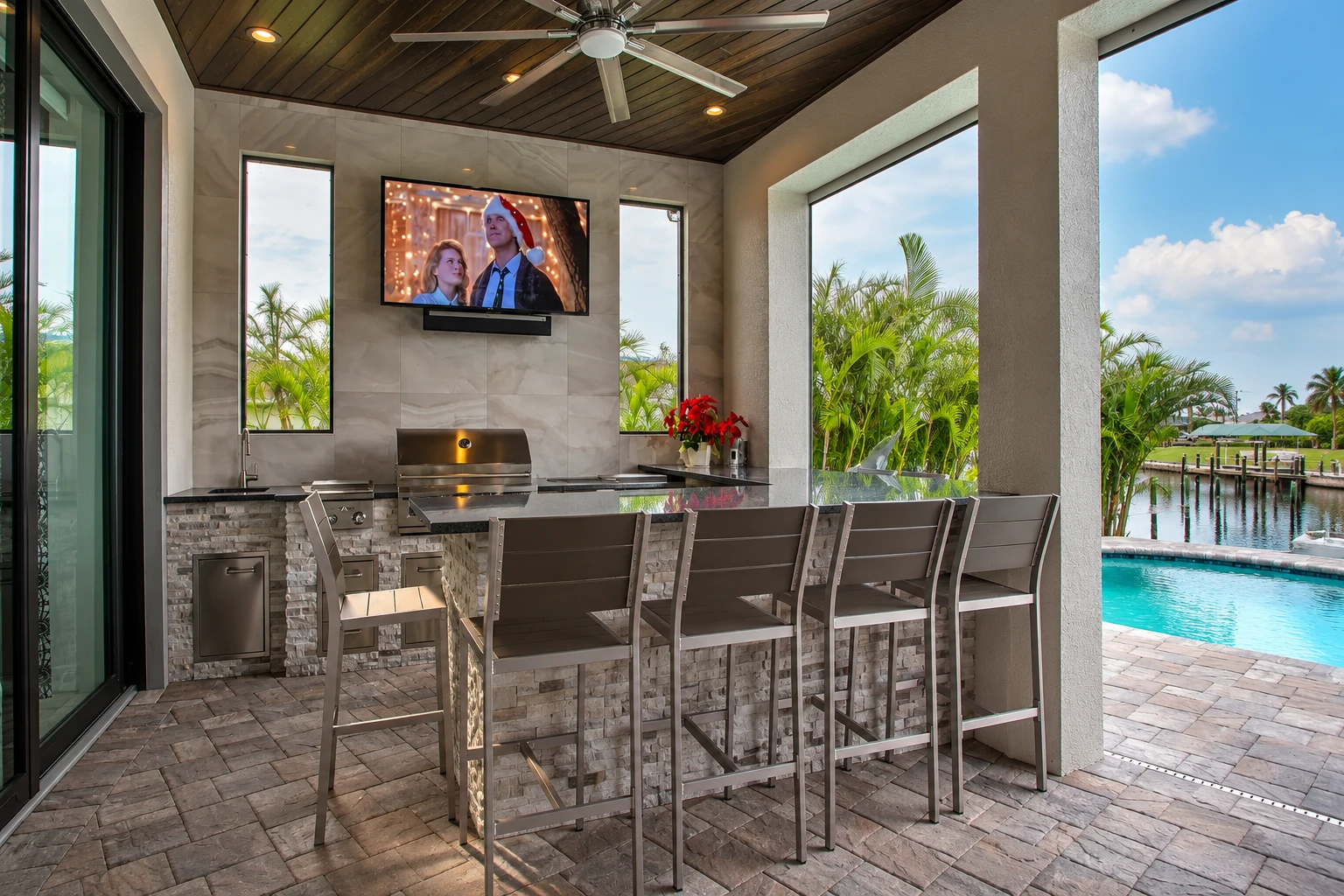
Stamped concrete presses a stone or brick pattern into the fresh pour, for a patio or front walk where you'd like the look of pavers without loose joints.
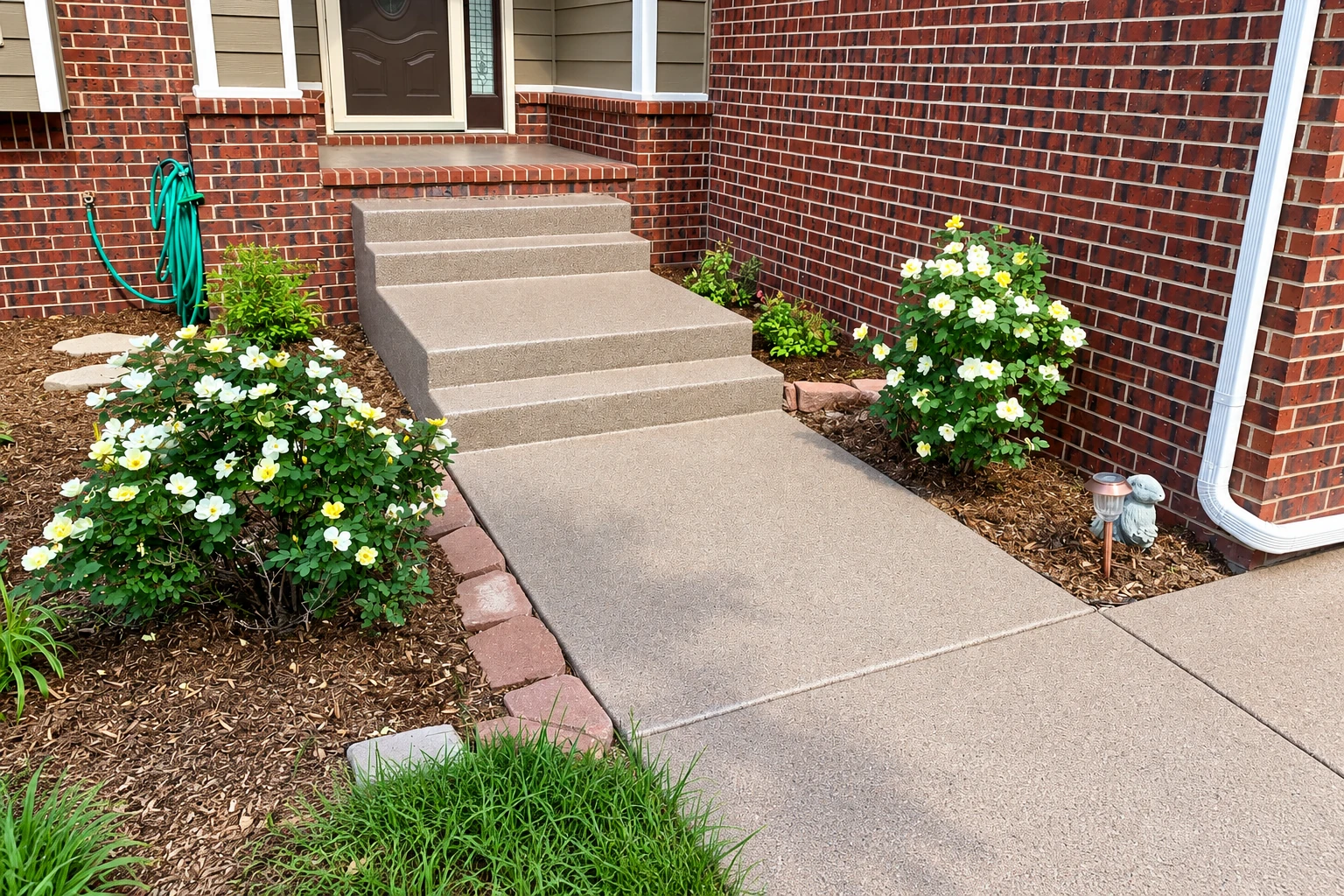
A front walk that has heaved into a trip hazard gets torn out and repoured with a broom finish, a brushed texture that gives shoes some grip.
A cracked, dusty or sloped garage floor can be replaced once the old slab is out, with a fresh base and a smooth troweled top that's easy to sweep.
Colored, stained or exposed-aggregate finishes suit an entry, a patio edge or a garden path where plain gray would look unfinished next to the house.
On a sloped yard, a poured retaining wall holds the soil back and gives you a level spot for a patio, a parking pad or a planting bed.
Interior slabs for shops, basements and additions get a packed base, a vapor barrier under the pour and a smooth finish ready for flooring or equipment.
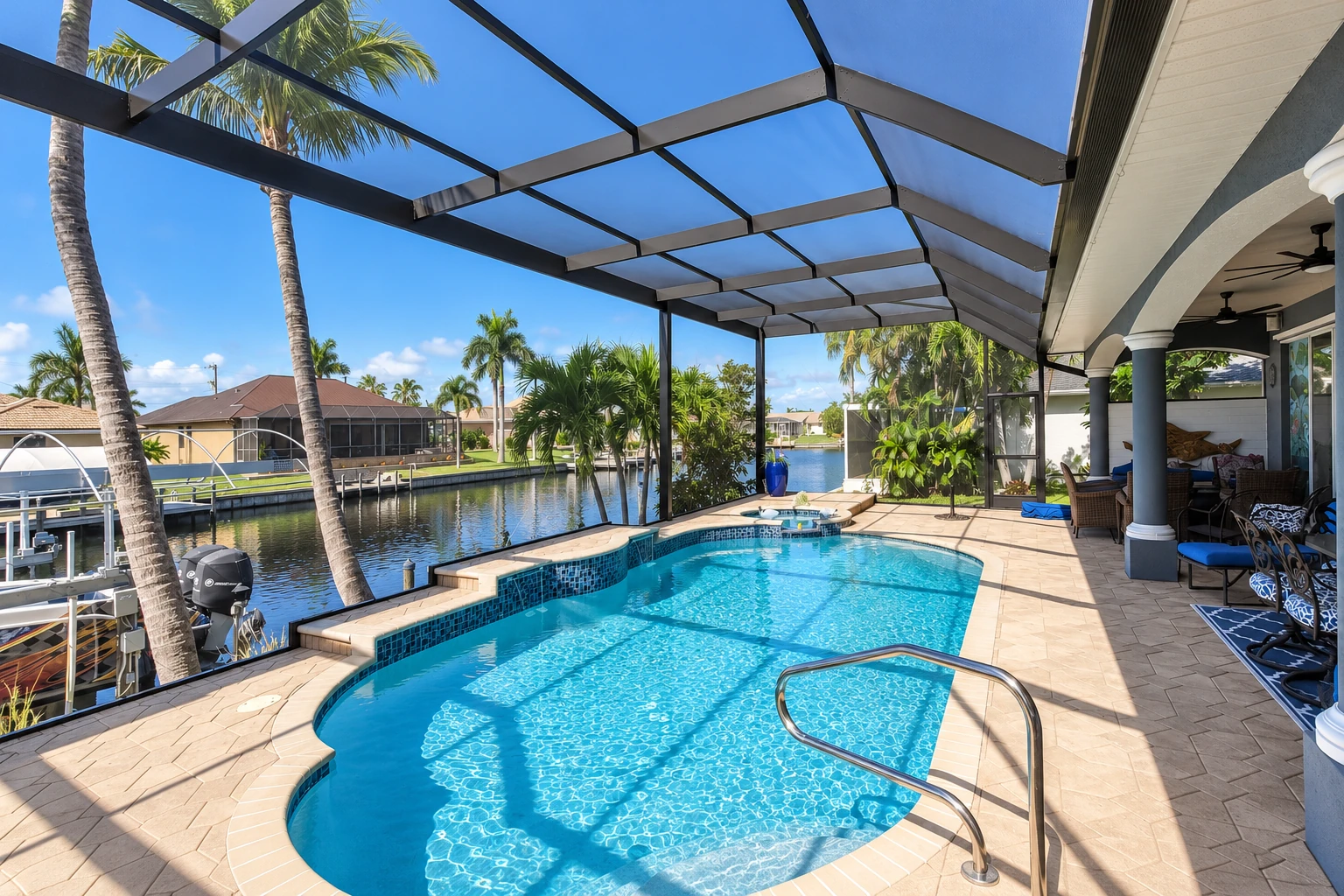
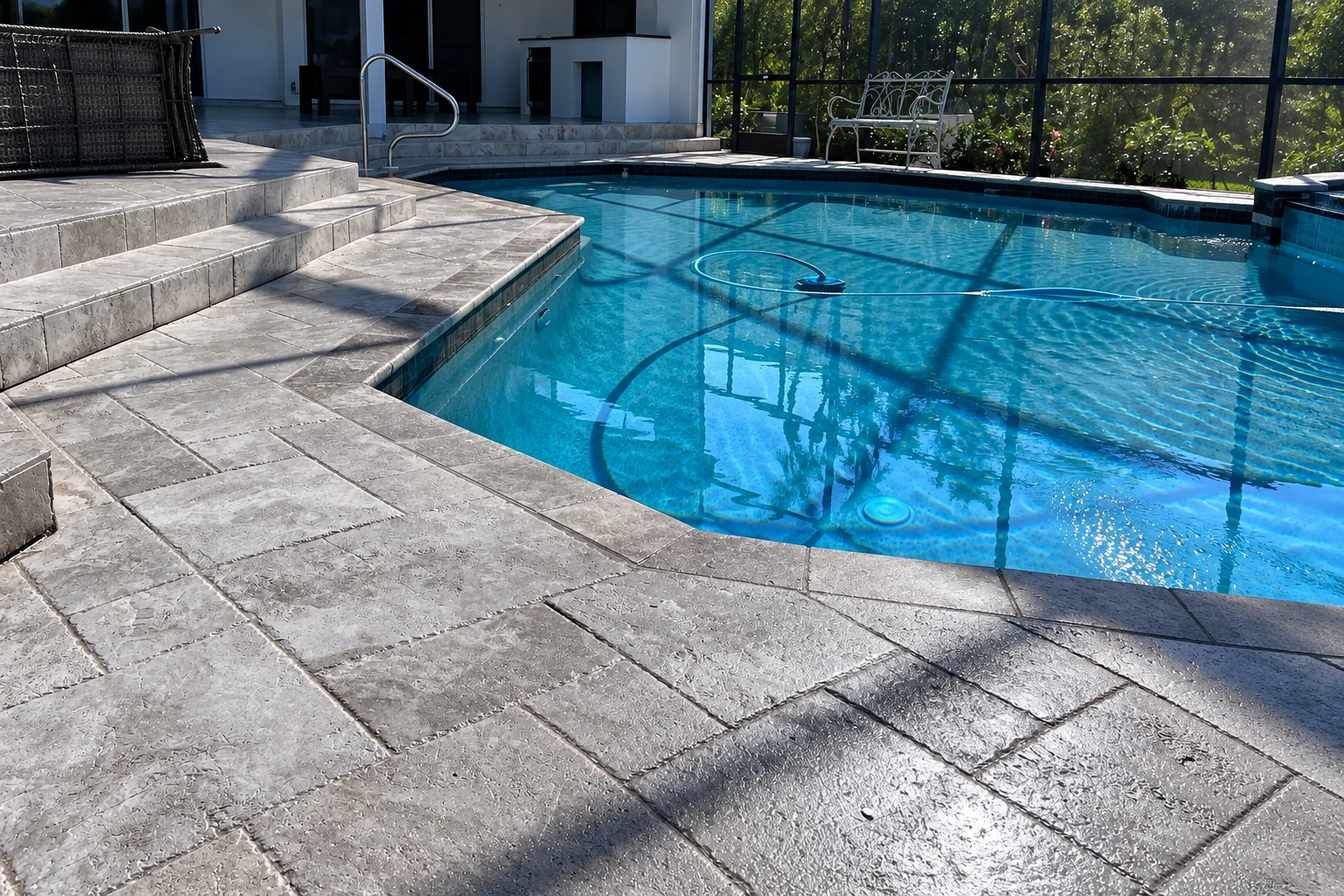
Around a pool, we pour a deck with a textured surface for wet feet and slope it so splash water drains away from the pool and the house.
Front or back steps that have pulled away from the house or crumbled at the edges get rebuilt with even risers, steel inside and a finish with grip.
For a garage, shop or addition built at ground level, we form and pour the slab foundation on a packed base, with steel set in place before the pour.
New foundation walls for an addition or outbuilding start with footings dug to firm soil, then formed walls poured and left to cure before framing goes on.
For a business lot or a shared parking area, we plan the thickness, drainage and joints for car and delivery traffic, then pour it in sections.
Footings are the wide concrete pads under posts, walls and decks, and we pour them on firm, undisturbed soil so whatever sits on top stays put.
When part of a slab or foundation has dropped, we work out why it settled first, then lift and support it instead of patching the crack on top.
We saw-cut concrete for new doorways, utility trenches or a clean edge where an old slab meets new work, so the break lands where you want it.
We reply to calls and messages within one business day, and there's no obligation to book. Once you send the form, we'll set a time and I'll come out to your Burien property myself to look at the job. The written estimate lists what's included, such as taking out the old concrete and cleaning up afterward.
(253) 275-5460The City of Burien Permit Center issues building and construction permits, and the type of permit depends on the project. Building projects often need an application and plan review, so if a permit is needed, that review comes before our start date. Before we schedule, we confirm whether your address falls under the city or the county, and we handle the permit applications when your job needs one.
The city also wants proof of two things from any contractor before it issues a permit, a state license and a Burien endorsement through the Washington Department of Revenue. Those are worth asking about with anyone you hire, because the permit won't be issued without them. We're licensed and insured, and you're welcome to ask me about any of it when I come out.
Price comes down to the slab's size, whether old concrete comes out first, how much digging and gravel the ground needs, how close the truck can get, and your finish, since stamping and color take more labor than a plain broom finish. The schedule turns on any permit review and on curing, the time new concrete needs to gain strength before you use it. Your written estimate spells out what your job includes.
I grew up on a farm where something broke every week and somebody had to fix it right, and I learned concrete on other people's crews before starting this business in Auburn in 2013. I come out myself to look at your job and write the estimate. Our crew lead runs the work on site, and I check in while it's underway.
When a budget gets tight, people usually want to cut the base and keep the fancy finish. I'd steer you the other way. Nobody sees the base once the slab is poured, but it's what keeps the concrete from sinking and cracking, so a plain broom finish on good ground will usually outlast a stamped pattern on loose fill.
I'd rather spend an extra half hour answering your questions at the estimate than have you wonder later what you paid for. Your satisfaction, guaranteed. If you'd like me to look at your driveway, patio or steps, call (253) 275-5460 or send us the form and tell me a little about what you're seeing.
A few things about Burien lots are worth knowing before we plan a pour. The city publishes maps that show whether some of them apply to your property.
Burien regulates critical areas, and the city says they're found throughout Burien and may pose a threat to people or to public and private property. The city's Critical Areas Map shows whether your lot falls within one, and the city updated these rules in late 2025. If yours does, let me know at the estimate so we can plan around it when we look into the permit.
Some Burien properties sit close to Puget Sound, and the city's Map Library includes FEMA shoreline flood zone maps along with the official zoning map. Burien code also has its own rules on flood damage prevention. On a lot near the water, it's worth pulling up those maps before a new slab, wall or footing goes in, and telling us what you find.
The first thing I check on any slab is which way the water runs. A driveway or patio that falls toward the house sends water at the foundation and under the garage door, and that's a common reason old slabs get replaced. We set the new grade so water heads out to the yard or the street instead.
Many jobs here start with something to remove, a cracked driveway, a sunken patio or broken steps. We saw-cut where the old slab meets anything that's staying, so the edge is clean, then break it out and haul it away. After that we look at what was underneath before deciding how deep to dig for the new base.
There's no single figure that fits every Burien driveway, because the price follows the size, the tear-out, the base work and the finish covered above. I'd rather put your own number in writing after I've walked the site than guess over the phone, and the estimate shows what each part of the job includes.
Your project may well need one, since Burien says building projects often require an application and plan review, and the permit type depends on the project. A permit tech answers questions at permittech@burienwa.gov, and applications go in online through MyBuildingPermit. When your job needs a permit, we handle the application.
Yes, Washington requires every construction contractor to register with L&I and to be bonded and insured. The bond is $15,000 for a specialty contractor and $30,000 for a general contractor. Burien treats unlicensed contractor work as a misdemeanor, with a penalty of 90 days in jail, a $1,000.00 fine or both.
Burien reviews permit applications against the 2021 codes, including the 2021 International Residential Code that covers houses. The state's building code council says the 2024 codes take effect May 3, 2027. If your project might be applied for around then, it's worth asking the Permit Center which set your application falls under.
You'll be walking on a new slab well before you can drive on it, because a car needs the concrete further along in curing than your feet do. I'll tell you the wait for your slab at the estimate and again on pour day, and the tear-out and base work usually decide how long the driveway is torn up.
Concrete can still crack, but a slab on a packed base with control joints tends to crack where we choose, not across the middle. Control joints are grooves we cut so shrinkage cracks run straight down them and stay out of sight, and rebar, the steel set inside the slab, holds the pieces together if a crack opens.
Move cars, planters and anything stored on or near the old slab, and tell us about sprinkler lines or anything else buried near the work. Leave a clear path for the truck to reach the pour, and keep kids and pets off the fresh concrete until we say it's ready.
Our phone hours run into the evening and through the weekend, so call (253) 275-5460 when it suits you or send the form with a few words about what's cracking or sinking, and I'll know what to look at before I come out.