Concrete driveway building
When your driveway has cracked, sunk at the edges or sends water toward the garage, we take it out, rebuild the base and pour one that drains away.
D&R Auburn Concrete is a concrete contractor based in Auburn, WA, and we build driveways, patios, walkways, steps, garage floors and foundations for homeowners in Covington, starting with a dug-out, packed base under the slab.

D&R Auburn Concrete builds driveways, patios, walkways, steps, garage floors, retaining walls and foundations in Covington. Much of the work here is flatwork, the flat slabs around a house like driveways, patios and walks, and every one of those jobs starts with the ground underneath, not the finish on top.
Covington sits just east of Kent and a short drive from our base in Auburn, and a good share of the homes here sit on lots that rise or fall toward the street. On a sloped lot the driveway has to carry water past the garage, not into it, so I look at where the water runs before we set a single form.
The calls we get from Covington are mostly the ones you'd expect around family homes. It's a driveway that's cracked and sunk at one corner, a patio that holds puddles after rain, or steps that have started to pull away from the porch. Each of those usually traces back to the soil under the slab, so that's where our crew starts, digging out the soft ground and packing a firm base before anything is poured.
When your driveway has cracked, sunk at the edges or sends water toward the garage, we take it out, rebuild the base and pour one that drains away.
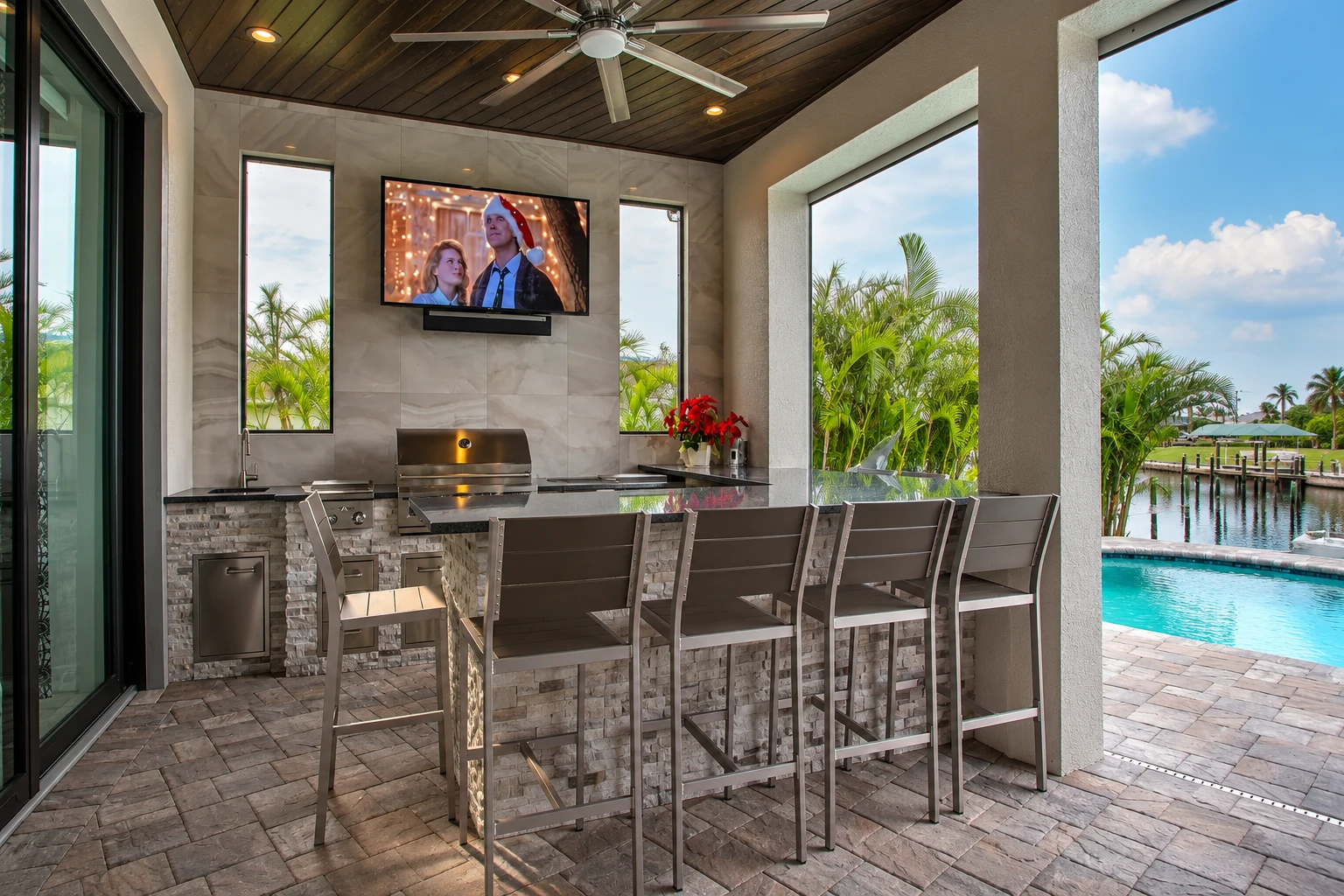
A patio off the back door helps when the lawn turns to mud or the old pavers have heaved, and we slope it so rain runs off toward the yard.
Stamped concrete presses a stone, slate or brick pattern into the fresh slab, which suits a front walk or patio where you want the look of pavers without the weeds.
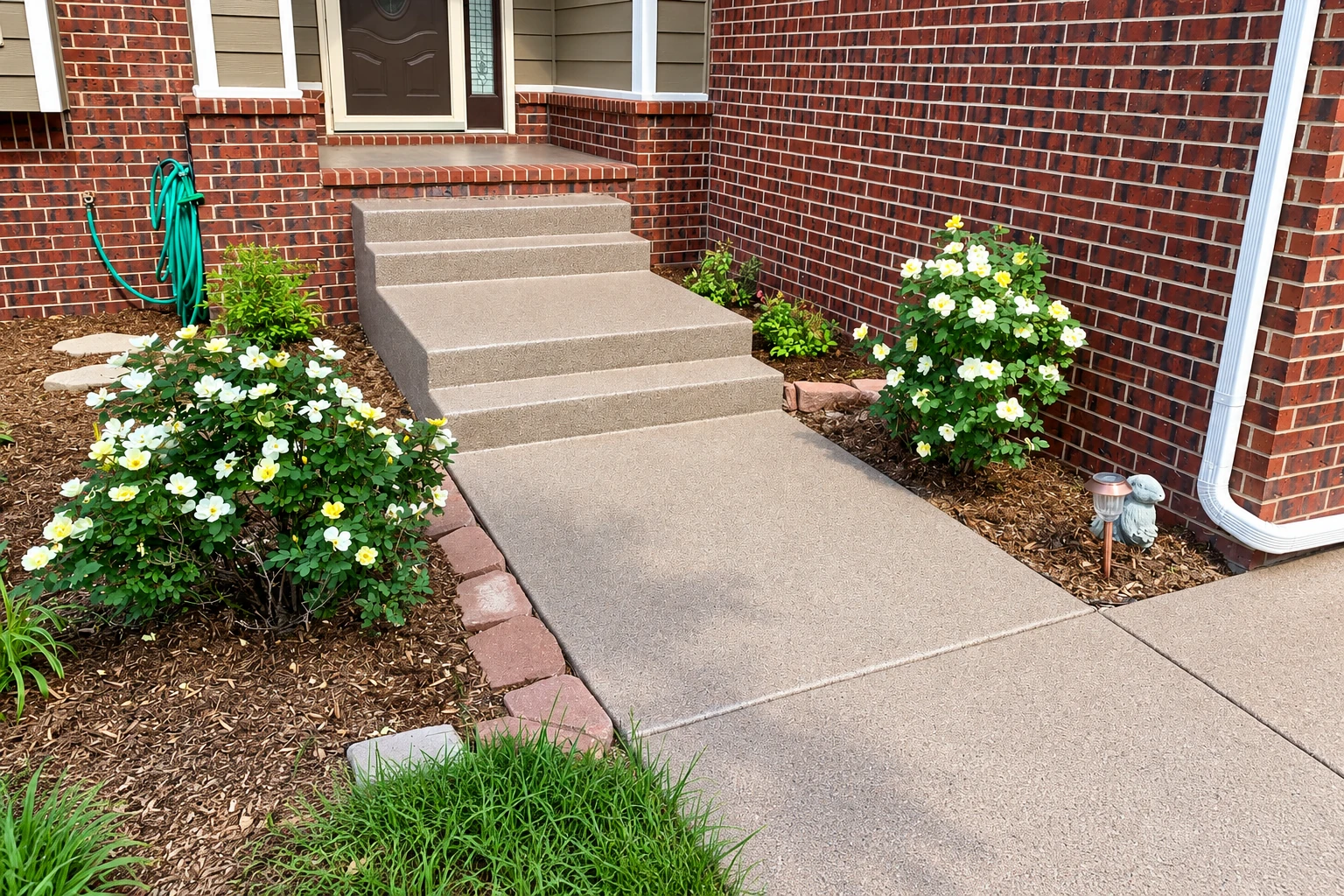
A walkway from the driveway to the front door, or along the side of the house to the back gate, gives you dry footing where the grass has worn bare.
If the garage floor is pitted, cracked or holding water from wet tires, we can break it out and pour a new slab that drains toward the door.
Color, exposed stone or a scored pattern can dress up a plain patio or entry, and we'll talk through which finishes stay less slippery when they're wet.
On lots that step down from the street or the back fence, a concrete retaining wall holds the soil back so you get a level patio or yard.
For a basement, shop or outbuilding, we pour an interior floor slab over a packed base so it stays flat under shelving, workbenches and daily foot traffic.
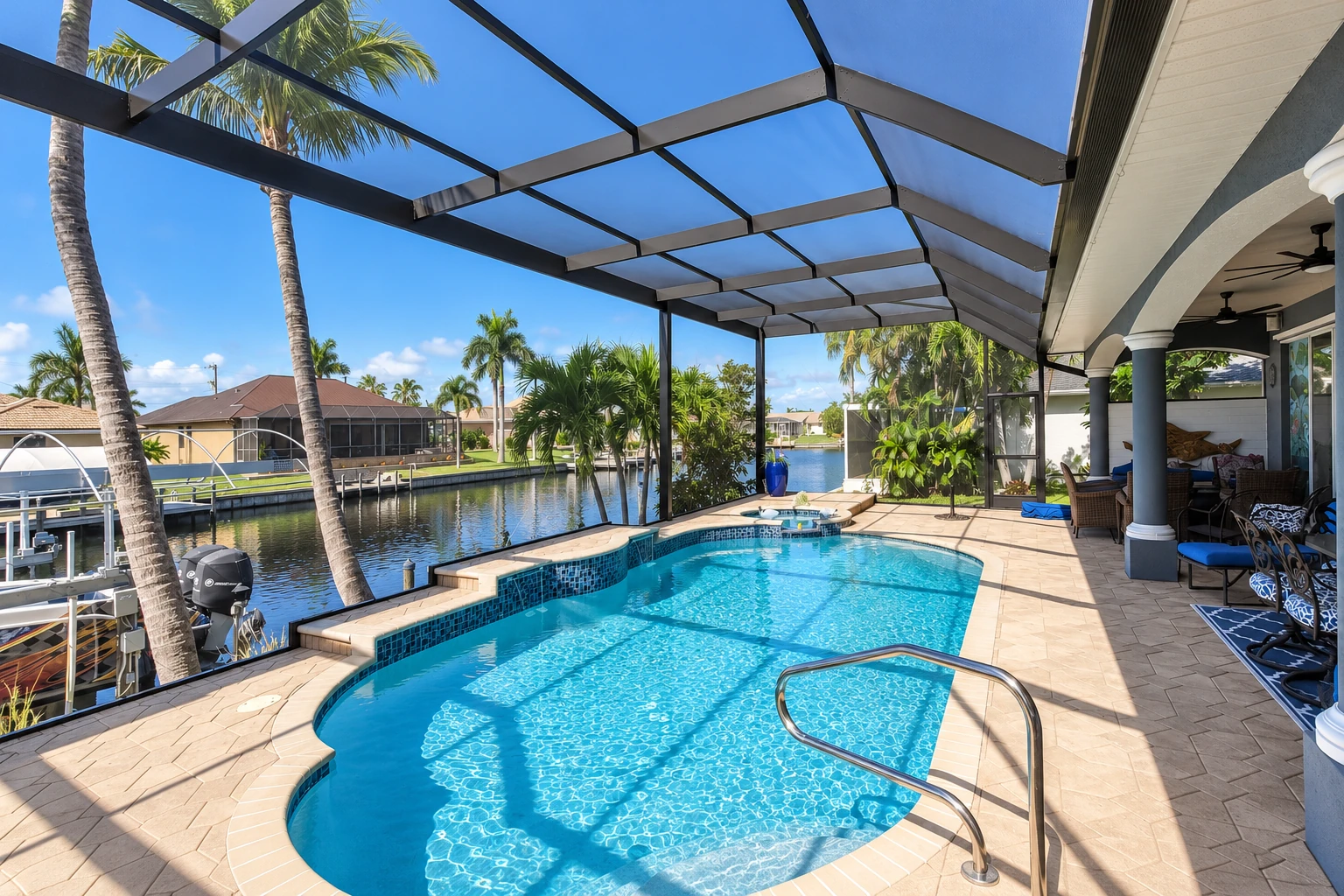
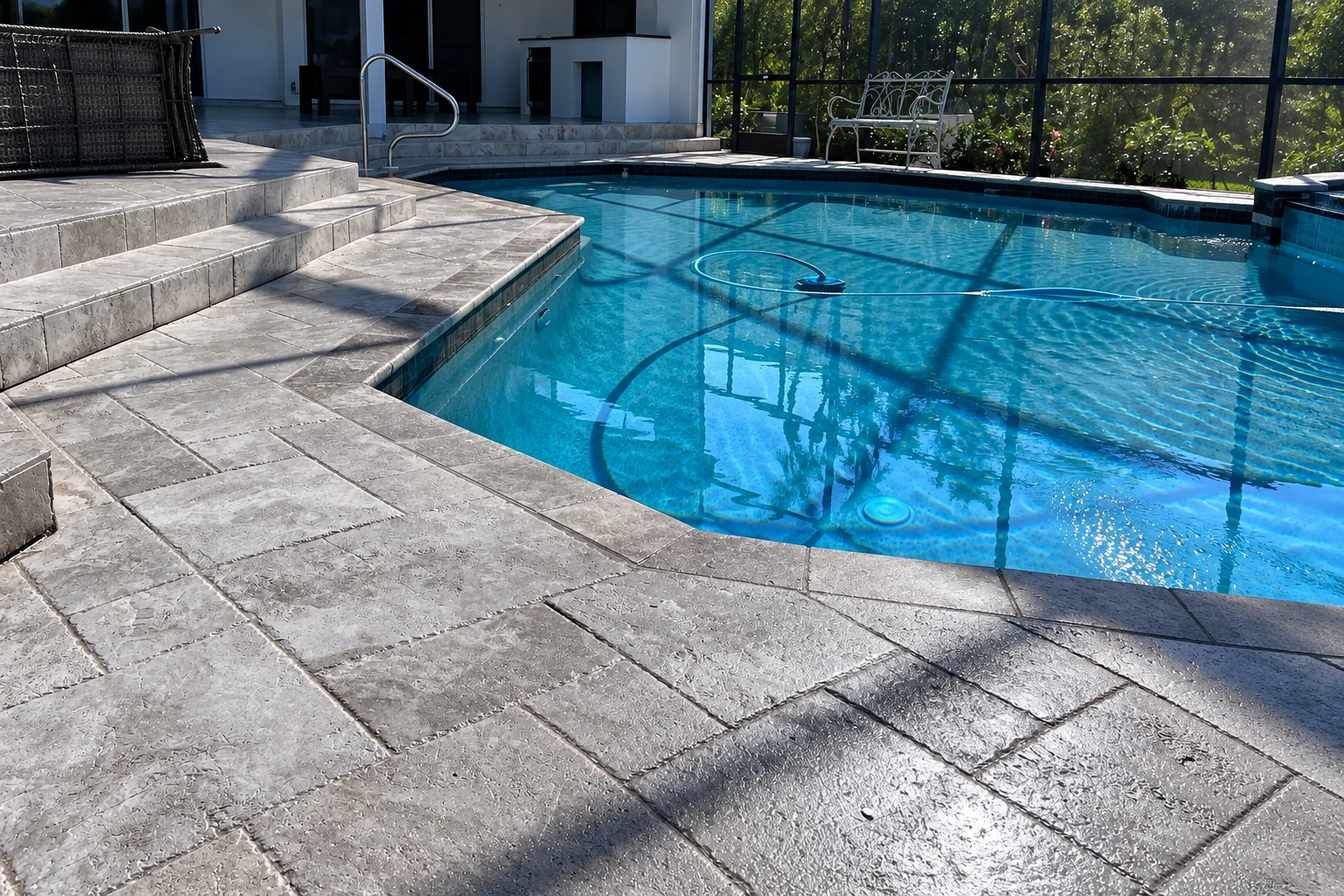
Around a backyard pool, the deck needs a finish that grips under wet feet and a slope that sends splash water away from the pool and the house.
When front or back steps have cracked, settled or pulled away from the porch, we form and pour new ones with even risers so nobody catches a toe.
For a detached garage, shed or addition, a slab foundation gives the building a flat, solid floor and base in one pour, set on ground we've dug out and packed.
When an addition or new building needs walls below the floor, we set the forms, steel and concrete for a foundation that carries the weight down to firm soil.
For a business lot, shop yard or shared parking area, we pour thicker slabs built for cars and delivery trucks, with drainage planned before the first load.
Footings are the concrete pads under posts, walls and additions, and we dig them to firm soil so a porch or carport doesn't settle out of level.
If a floor has begun to slope or doors have started sticking because part of the foundation sank, we look at what's moving and how to lift it back.
We saw-cut concrete for a new doorway, a drain line or a clean edge, and cut out a damaged section so it can be replaced without tearing out the rest.
Send us a few lines about your Covington project and we'll reply within one business day to set a time. I come out myself to look at the slab and the ground around it, then write an estimate that lists what's included, such as taking out the old concrete and cleaning up afterward. There's no obligation to book.
(253) 275-5460Inside Covington city limits, building permits come from the city's Building Safety Division, and waiting on one adds time before your pour goes on the calendar. Starting permit-required work on a building or structure before the permit is issued costs more, because the city adds an extra fee. So before we schedule, we confirm whether your address falls under the city or the county, and we handle the permit applications when your job needs one.
Before you hire anyone for concrete work here, check two things. The first is the contractor's state registration, and the second, where the city requires one, is a Covington business license, which has to be in place before a business starts work here. The questions below spell out what each involves. We check city and county rules the same way in Burien, Kent and the other cities we work in, since what applies changes from one place to the next.
The price comes down to what a photo won't show, such as how much old concrete comes out, how deep we dig to reach firm soil, what a slope asks of the forms and drainage, and how thick the slab has to be. The schedule turns on any permit, the weather and curing, the days concrete needs to harden before you use it. Your written estimate lists what's included, like tear-out and cleanup.
If a budget has to give somewhere, I'd rather it give on the finish than the base. The subgrade, the packed soil and gravel the slab sits on, is buried by the end of the first day, so it's the easiest place to cut corners and the usual reason an old driveway sinks and cracks. Our crew digs it out and packs it firm, and where the job calls for it, we add rebar, steel bars that hold a cracked slab together.
We cut control joints, shallow grooves that give the concrete a straight line to crack along, before it can crack on its own, and we plan pours around the midday heat that leaves a weak, dusty top. A broom finish, the light ridged texture dragged across the surface, gives shoes and tires grip in the rain. Then the slab cures, hardening slowly, and I'll tell you when it's ready for feet and when for a car.
I started D&R Auburn Concrete in 2013 after learning the trade on other people's crews, and I still come out myself to look at each job and write the estimate. Our crew lead runs the work on site, and I check in while it's underway. We're licensed and insured. Your satisfaction, guaranteed. Call (253) 275-5460 or send your project details through the form.
Much of what makes concrete work different in Covington comes from the ground itself. The city has its own rules for hillsides, soil that can shift and low ground, and they can change where and how we build.
The city treats a slope as a steep slope hazard area when it rises at 40 percent or more over a height change of at least 20 feet. That's a real hillside, not a gently sloping yard. If your lot backs onto one, the buffer rules covered in the questions below apply, and we sort them out with the city before anything is formed or poured near the edge.
Covington's hazard rules also cover seismic hazard areas. That's land a geotechnical study, which is a soil engineer's report on the site, finds prone to liquefaction, surface rupture or landslides set off by an earthquake. Liquefaction means loose, wet soil going soft in a quake. If a study exists for your property, we'd like to read it before we plan a foundation or retaining wall, because it tells us how the ground underneath behaves.
The city's critical areas rules include a section on frequently flooded areas. If your property sits in one, we check with the city before planning a slab there. Either way, water decides a lot about how concrete holds up, so every driveway and patio we plan gets a slope that sends rain away from the house, and on low lots we look hard at where that water ends up.
Covington and the state both work from the International Residential Code, the rulebook for one- and two-family homes. That means foundations, footings and slabs under living space are held to the same rules here as in Auburn or Kent. The city does make its own changes to that code, so we read those for each job instead of assuming everything carries over unchanged.
I price every Covington job after seeing it in person, because the cost turns on things that only show up on site. The biggest swings come from tearing out old concrete, the base work a sloped lot needs, and the finish, since stamped or colored concrete takes more labor than a plain broom finish. I'll walk you through each part so you know what you're paying for before we start.
Most concrete cracks a little as it dries and ages, so the aim is to choose where it cracks and keep the slab from sinking. Control joints give those cracks a straight line to follow, and a dug-out, packed base keeps the slab from settling the way old patios poured on raked dirt usually do.
You'll be able to walk on it well before you can park on it, because concrete keeps curing and gaining strength for weeks after the pour. The exact wait depends on the mix and the weather that week, so I give you the dates for your slab when we schedule. Plan to park on the street until then.
Clear the slab area and a path to it of cars, furniture, planters and anything stored along the edges. Tell us at the estimate about sprinkler lines, buried wires or a dog that needs to stay in, so the crew can work around them. On pour day, keep cars off the driveway and the gate open if the truck needs the side yard.
It may, so it's worth checking before any work starts. Covington's residential code keeps a list of work that doesn't need a permit, and the city's own additions to that list cover low decks and rooftop solar panels. We confirm where your patio stands for your address and handle the application if one is needed.
Covington regulates work on or within 50 feet of a steep slope or landslide hazard area. The city can approve work closer than that, but not within 15 feet, when a critical area report shows the work is safe and adds no hazard risk. Without a report, a 50-foot buffer from the top or bottom of the slope applies.
Washington requires every construction contractor to register with the Department of Labor & Industries, and state law also requires them to be bonded and insured. A business the city requires to hold a Covington business license has to apply before starting work there, through the state's Business Licensing Service. On residential jobs of $1,000 or more, the contractor must also give you a state disclosure notice.
A crack that lets water under a slab usually grows as the base washes out, so calling (253) 275-5460 or sending a note through the form now can mean a smaller repair later.