
Concrete driveway building
When a driveway has cracked through or sunk where the car parks, we break it out, dig and pack a new base, and pour a slab built for daily traffic.
D&R Auburn Concrete is a concrete contractor serving Kent, WA. We tear out cracked and sunken slabs and pour new driveways, patios, walkways, steps and foundations, starting with the ground underneath so the new concrete has solid footing.
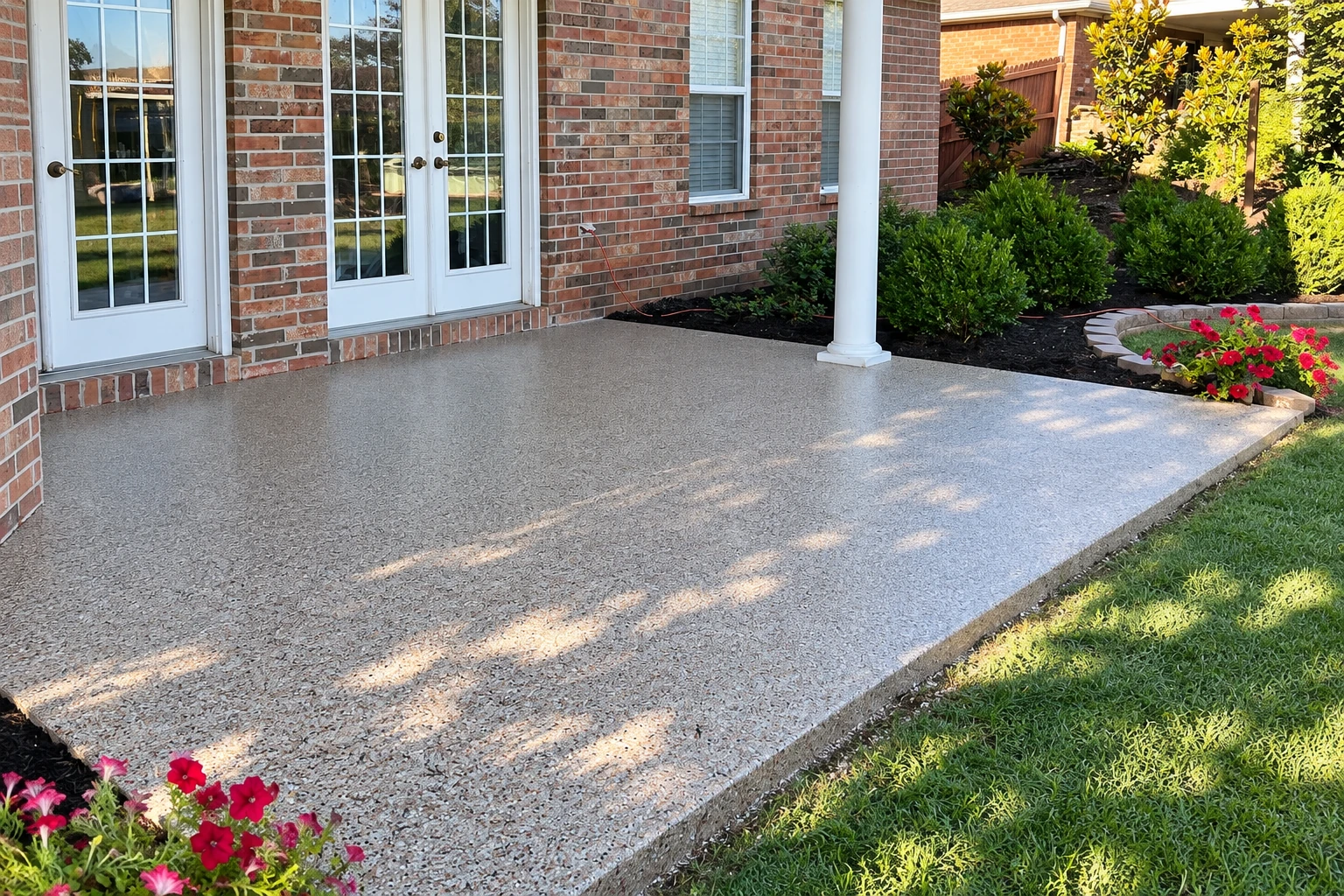
D&R Auburn Concrete pours and replaces driveways, patios, sidewalks, steps, garage floors and foundations for homeowners in Kent, and we build parking lots for owners planning a business lot. Kent sits right next to Auburn, where we're based, so we're close by for the estimate and for the pour.
Most Kent calls start with something you can see. A driveway has cracked across the middle, a patio has sunk at one corner, or water pools against the house after a hard rain. When we break the old slab out, the cause is usually underneath it. The base was raked level instead of dug out and packed, so it settled with the dirt and took the concrete down with it.
That's why I start the estimate by looking at the subgrade, the ground the slab sits on, and at where water runs off your lot. A thin or loose base and a slab that drains toward the house are the two faults behind most of the work we replace. We see the same problems on jobs in Auburn, and the fix starts in the same place.
When a driveway has cracked through or sunk where the car parks, we break it out, dig and pack a new base, and pour a slab built for daily traffic.
For a backyard patio that's tilted, holding puddles or simply too small, we set the grade so water runs away from the house before any concrete goes in.
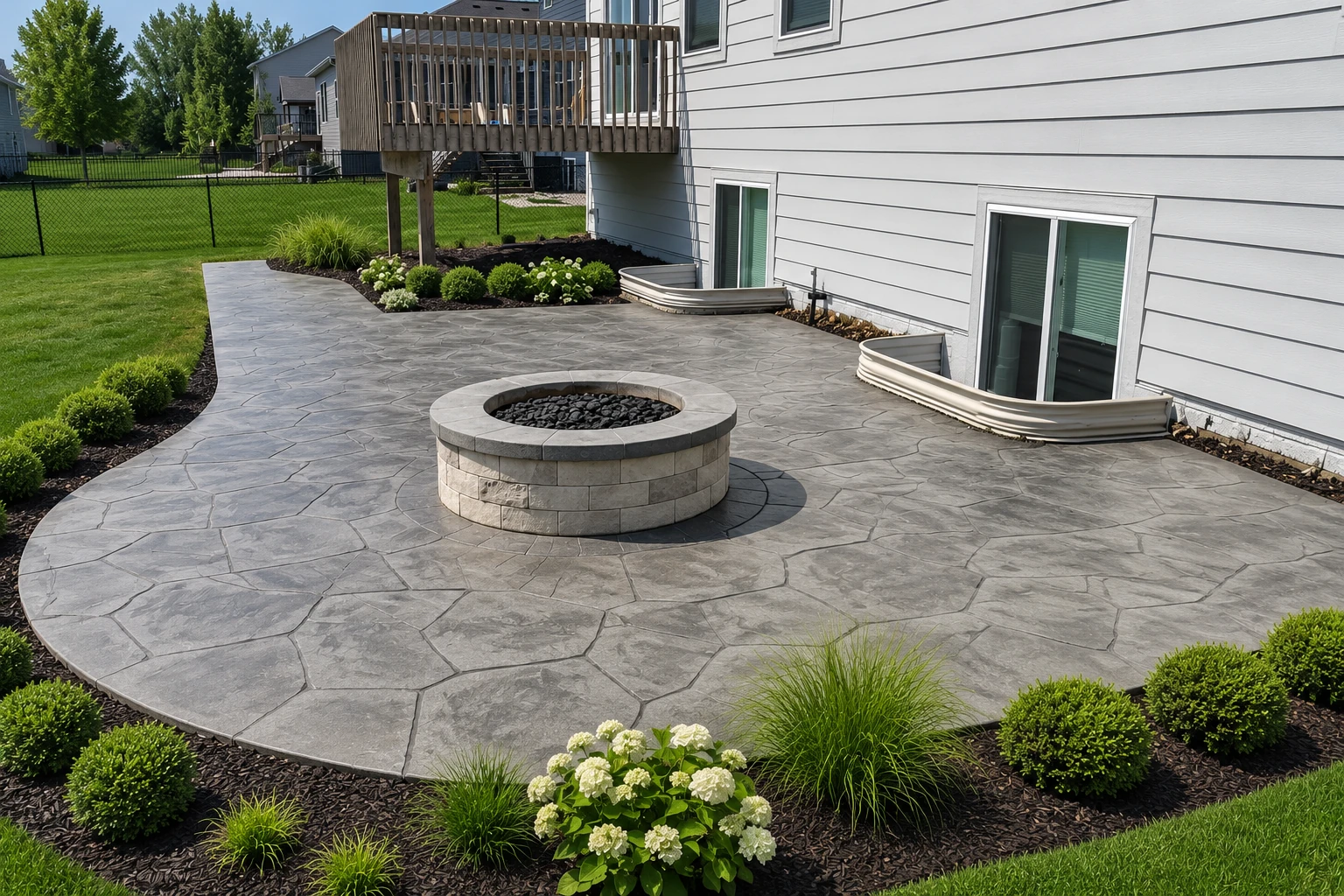
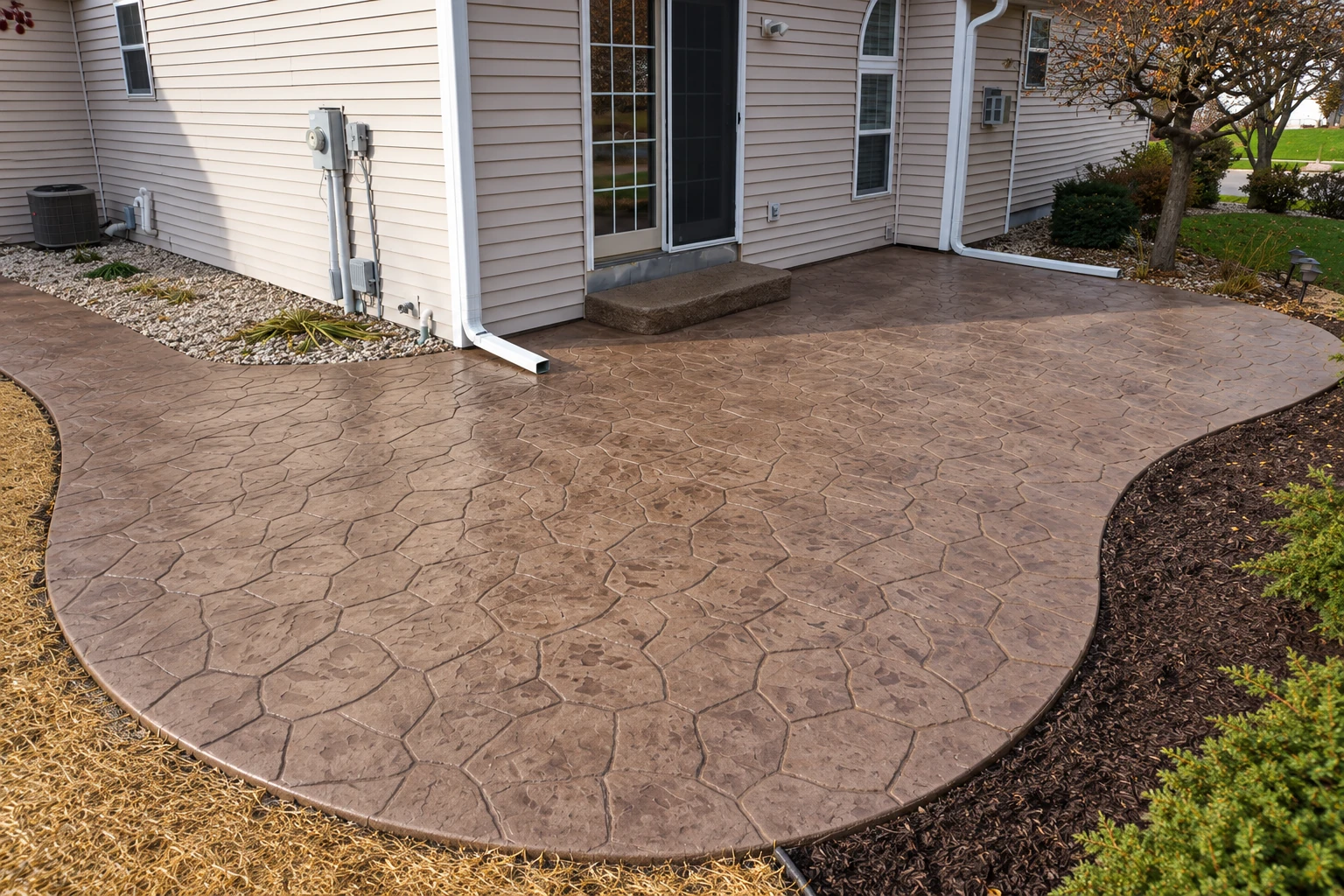
Stamped concrete gives a patio or walk the look of stone or brick in a single pour, though it holds up only as well as the base under it.
A front walk that has lifted or dropped at the seams becomes a trip hazard. We replace the bad sections and slope them so water doesn't sit on the path.
A garage floor that's cracked, chipping or uneven can be replaced with a new slab on a packed base, finished smooth so it's easy to sweep.
Colored, stained or exposed-aggregate concrete suits an entry, a patio border or a walkway where plain gray would look out of place beside your house.
Where a slope keeps slumping into the yard, a poured retaining wall holds the soil back, with drainage behind it so water doesn't build up against the wall.
Interior slabs for basements, shops and additions start with a level, compacted base and a vapor barrier, which gives the floor its best chance of staying flat and dry.
A pool deck needs a broom finish, a light brushed texture that gives bare feet grip when wet, and a slope that carries splash water away from the pool.
Crumbling or uneven front steps are a common call. We form and pour new steps with even rises, so nobody catches a toe on the way in.
For a garage, shop or addition built on grade, we prepare the subgrade, set the rebar, steel bars that hold the slab together, and pour the foundation.
Foundations for additions and outbuildings are formed to your plans, so the framing above starts on walls that are square, level and sitting on firm ground.
Owners planning a business lot in Kent get the same care with base and drainage, scaled up for heavier vehicles and more water running off the paved area.
Footings are the wide concrete pads under walls, posts and decks. We dig them to the depth your plans call for and pour them on undisturbed, firm ground.
When part of a slab or foundation has dropped, raising it back toward level can sometimes save it, and I'll tell you plainly when replacing makes more sense.
We saw-cut old concrete for clean removal, new doorways or utility trenches, and cut control joints, planned grooves that give a slab a place to crack neatly.
Send the form and we'll reply within one business day to set a time, with no obligation to book. I come out to your Kent property myself, look at the old slab and the ground around it, and write an estimate that lists what's included, such as taking out the old concrete and cleaning up afterward.
(253) 275-5460If your address is inside Kent city limits, the city's Permit Center issues building permits and permits for residential work, and you get them by booking an appointment there, so a job that needs one waits on that step before it goes on our calendar. The city's site lets you check whether your address is inside city limits, which matters because the city's rules apply only inside them.
You can check two things about any contractor you're considering. Washington requires construction contractors to register with the state, and every business working in Kent needs a city business license. We're licensed and insured. Before we schedule, we confirm whether your address falls under the city or the county, and when your job needs a permit, we handle the application.
On flatwork, our word for driveways, patios and walks, the price moves with the size of the slab, how much old concrete comes out, how much base has to be dug and packed, access for the truck and the finish you choose. The schedule turns on any permit and the weather on pour day. Your written estimate gives your own figure. We do the same work in Federal Way and Covington.
I grew up on a family farm, where fixing what broke was part of every week, and I learned concrete on other people's crews before starting this business in Auburn in 2013. I come out myself to look at your job and write the estimate. Our crew lead runs the work on site, and I check in while it's underway.
When a budget gets tight, the base is usually the first thing people want to trim, because it's buried by the end of day one and the finish is what you see. I'd rather trim the finish. A stamped surface over a base that settles will crack just as a plain one does, and the base is the one part you can't redo without tearing everything out.
Our promise to every customer in Kent is the same one we make in Auburn. Your satisfaction, guaranteed. If you'd like me to look at your driveway or patio, call (253) 275-5460 or send the estimate form, and I'll walk you through what the job involves before you decide anything.
These are the things I look at on a Kent property before I write a number down, because each one changes how we prepare the ground or when we schedule the pour.
Part of Kent sits in the Lower Green River valley, and the county's flood control district has a draft long-term plan for reducing flood risk along the 21-mile stretch that runs through Auburn, Kent and Renton. For concrete, that means I pay close attention to low spots, where runoff collects and how the new slab sits against your yard, so water heads away from the house.
One of the most common faults we tear out is a patio or walk that slopes toward the foundation, so every rain sends water against the wall. We check where the water runs before we set forms, and we pitch the new slab away from the house toward the yard or a drain, which is cheap to do on day one and costly to fix later.
Many Kent jobs start with removal, and breaking out the old slab tells us a good deal. The ground beneath shows whether it sank from a thin, loose base, from water working under it or from roots. We deal with that cause before we pour, because a new slab on the same ground tends to fail the same way the old one did.
Concrete poured in midday heat can dry on top before it's ready, which leaves a weak, dusty surface a season or two later. We'd rather start early, finish while the slab is still workable, and keep it damp while it cures, the slow hardening that sets its strength over the first days and weeks.
The price comes down to the driveway's size, how much old concrete has to come out and how deep the base needs to be dug and packed. A plain broom finish costs less than stamped or colored work, and tight access for the truck adds labor. I'll give you a written figure after I see the driveway, and it lists what's included.
You can usually walk on new concrete within a few days, but you'll need to wait longer before parking a car on it. That wait is curing, when the concrete gains its strength, and loading it early can crack it. Plan on the driveway being out of use for a while, and I'll give you the timing for your slab at the estimate.
Concrete can still crack, but a packed base and well-placed joints decide where and how badly. We cut control joints soon after the pour so cracks form in those grooves instead of across the middle, and we add rebar where a slab needs it. Most of the ugly cracks we replace came from a skipped base or joints cut late.
Move cars, furniture and planters out of the work area and keep a clear path for the truck and wheelbarrows. Tell us about sprinkler lines, buried lights or anything else you know is underground, and plan to keep pets and children off the fresh slab until we say it's ready.
Ask for the contractor's state registration number, which by law has to appear on their estimates, bids, ads and business cards. The state registers contractors through the Department of Labor & Industries and requires them to be bonded and insured, with bonds of $30,000 for a general contractor and $15,000 for a specialty contractor.
The City of Kent's website lists Green River flooding information, flood resources and FEMA elevation certificates for homes in or near the floodplain, so that's the place to look into your address. If your lot is low or close to the river, mention it at the estimate, because it shapes how we grade around the new slab and where we send the water.
Call (253) 275-5460 or use our estimate form after work if that suits you better, since our phone hours run until 11 PM on weekdays and 10 PM on weekends.