
Concrete driveway building
When a driveway has cracked or sunk, we tear it out, pack a new base and pour a fresh slab with a broom finish, a ridged texture for grip.
D&R Auburn Concrete is a concrete contractor based in Auburn that builds driveways, patios, steps, retaining walls, garage floors and foundations for homes around Lake Tapps, with the digging, forming, pouring and cleanup done by our own crew.
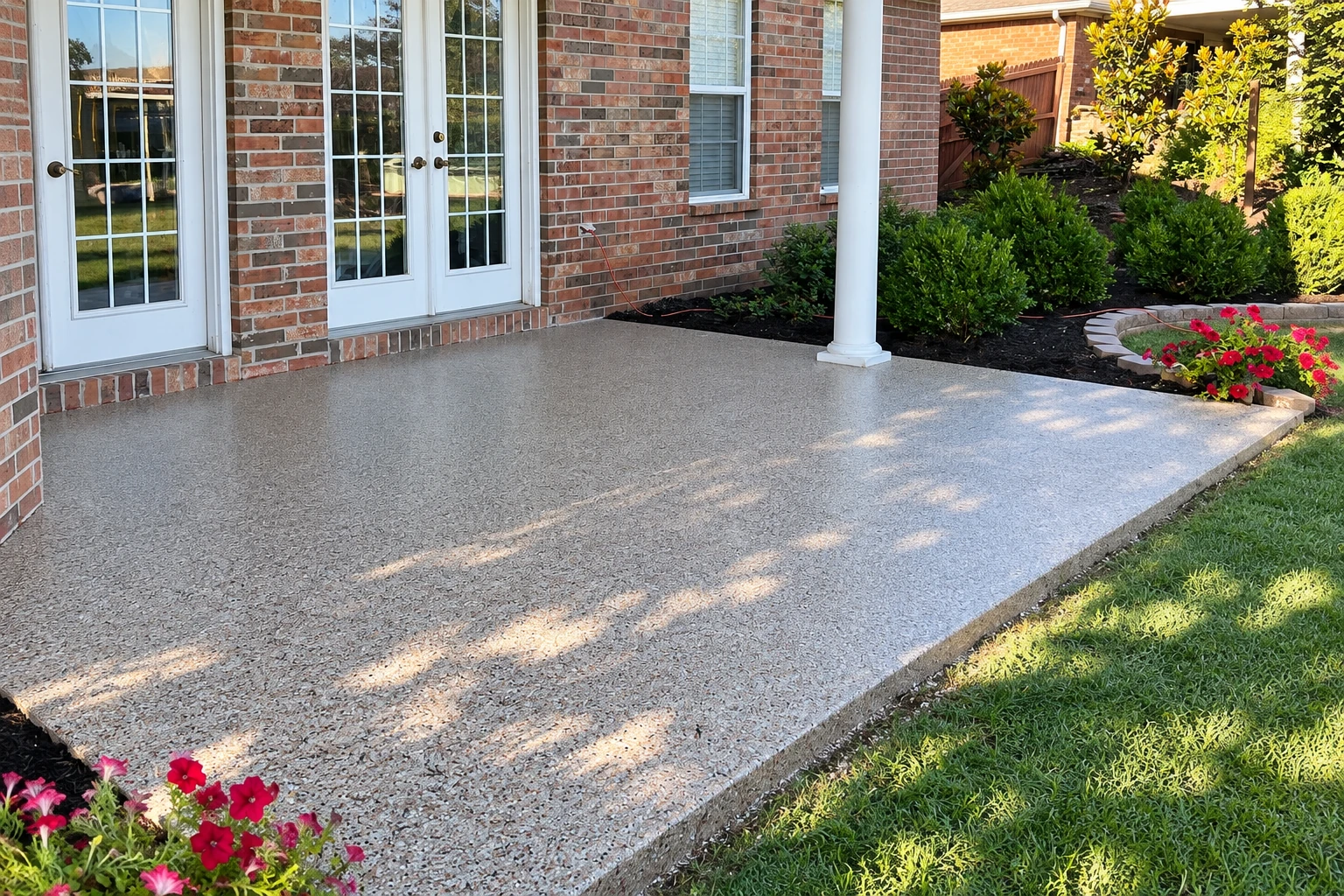
D&R Auburn Concrete pours driveways, patios, walkways and other flatwork, the flat slabs you walk and park on, for homes around Lake Tapps. We also build the steps, retaining walls, footings and foundations a lot near the lake often calls for, and we cut out or replace old concrete that has cracked or sunk.
Most of the calls I get from Lake Tapps are about the same few things: a driveway that has cracked and settled, a patio with pooling water, or steps down the yard that have started to tip. Sinking and cracking usually trace back to the subgrade, the packed ground a slab sits on, so we dig out the soft material and pack a fresh base before the forms go up.
Many homes here sit on lots that slope toward the water, so drainage is part of the plan from the first visit. A slab that falls toward the house sends water against your foundation, so we set each driveway and patio to shed water away from it. Our crew works out of Auburn, and Lake Tapps is one of the cities around it where we do a good share of our work.
When a driveway has cracked or sunk, we tear it out, pack a new base and pour a fresh slab with a broom finish, a ridged texture for grip.
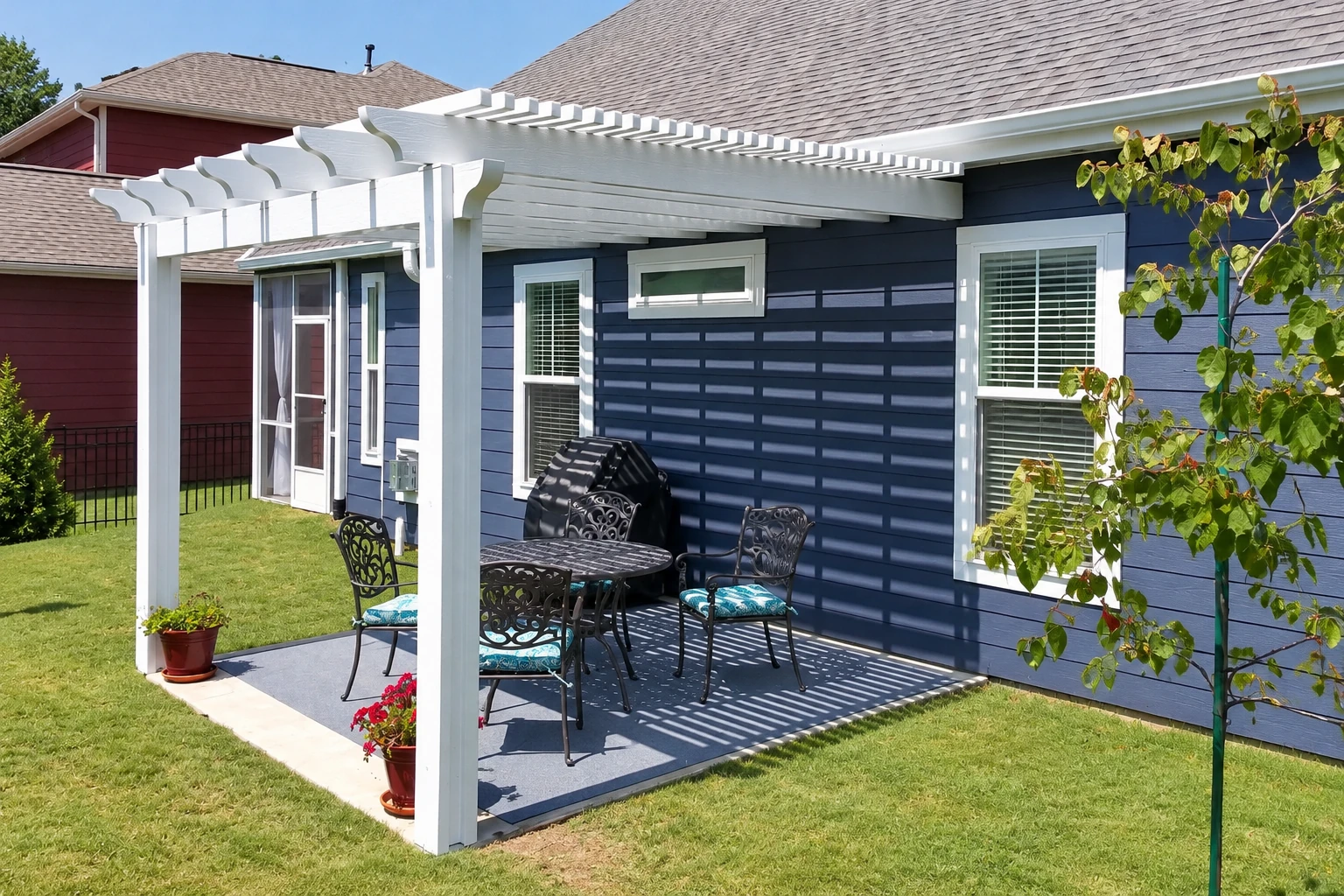
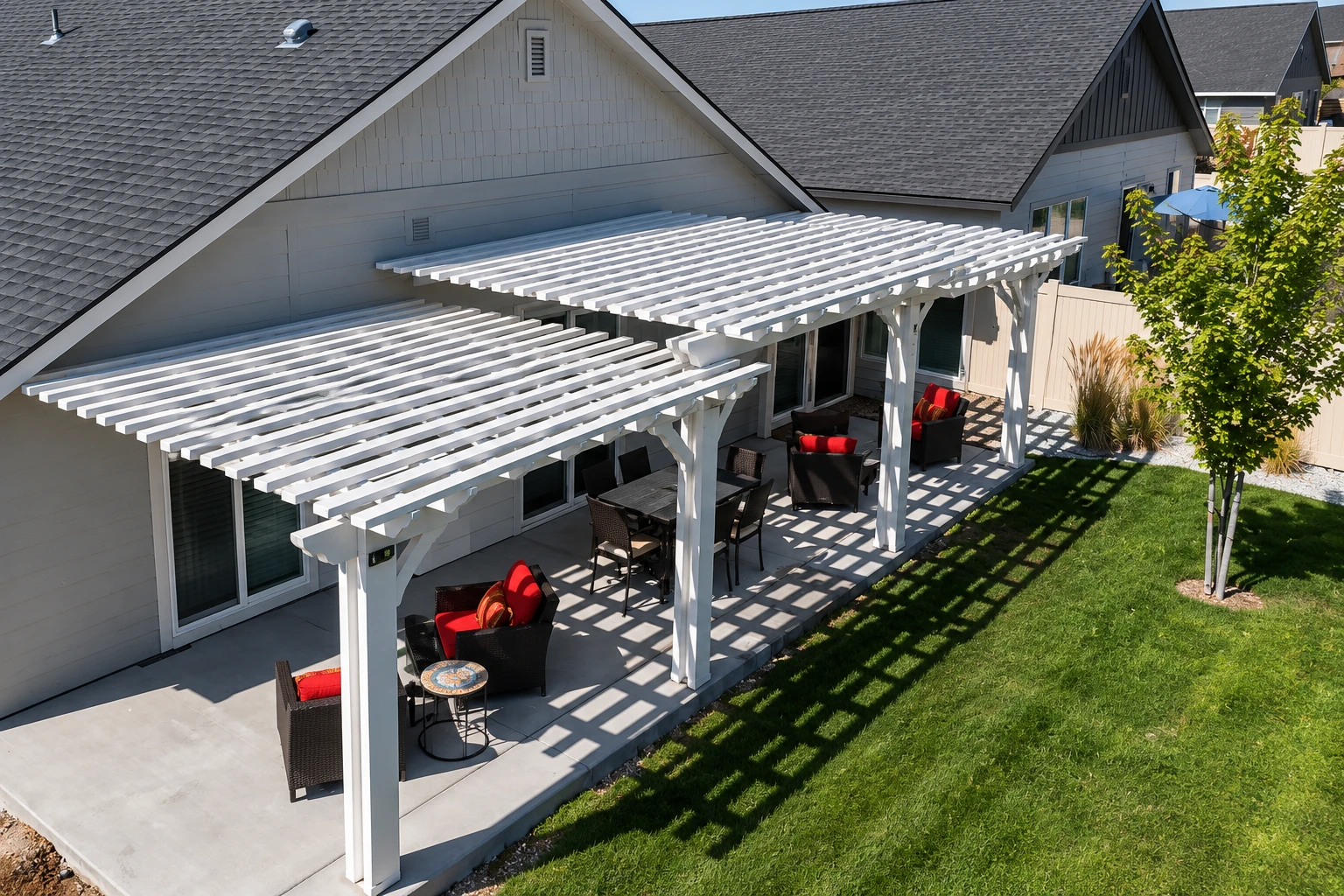
For a back patio facing the lake, we set the height and size so it meets the door cleanly and leaves room for a table, chairs and a grill.
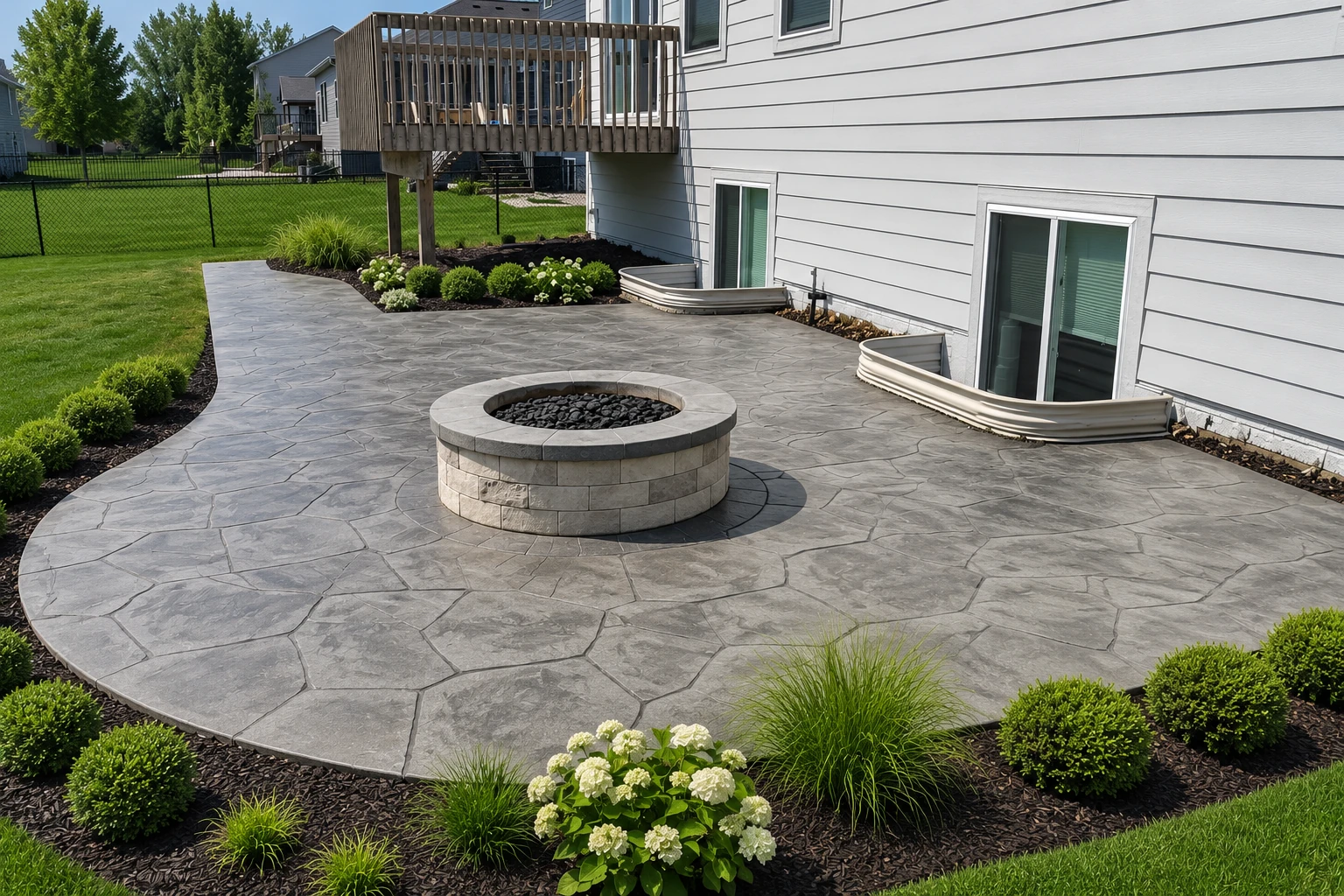
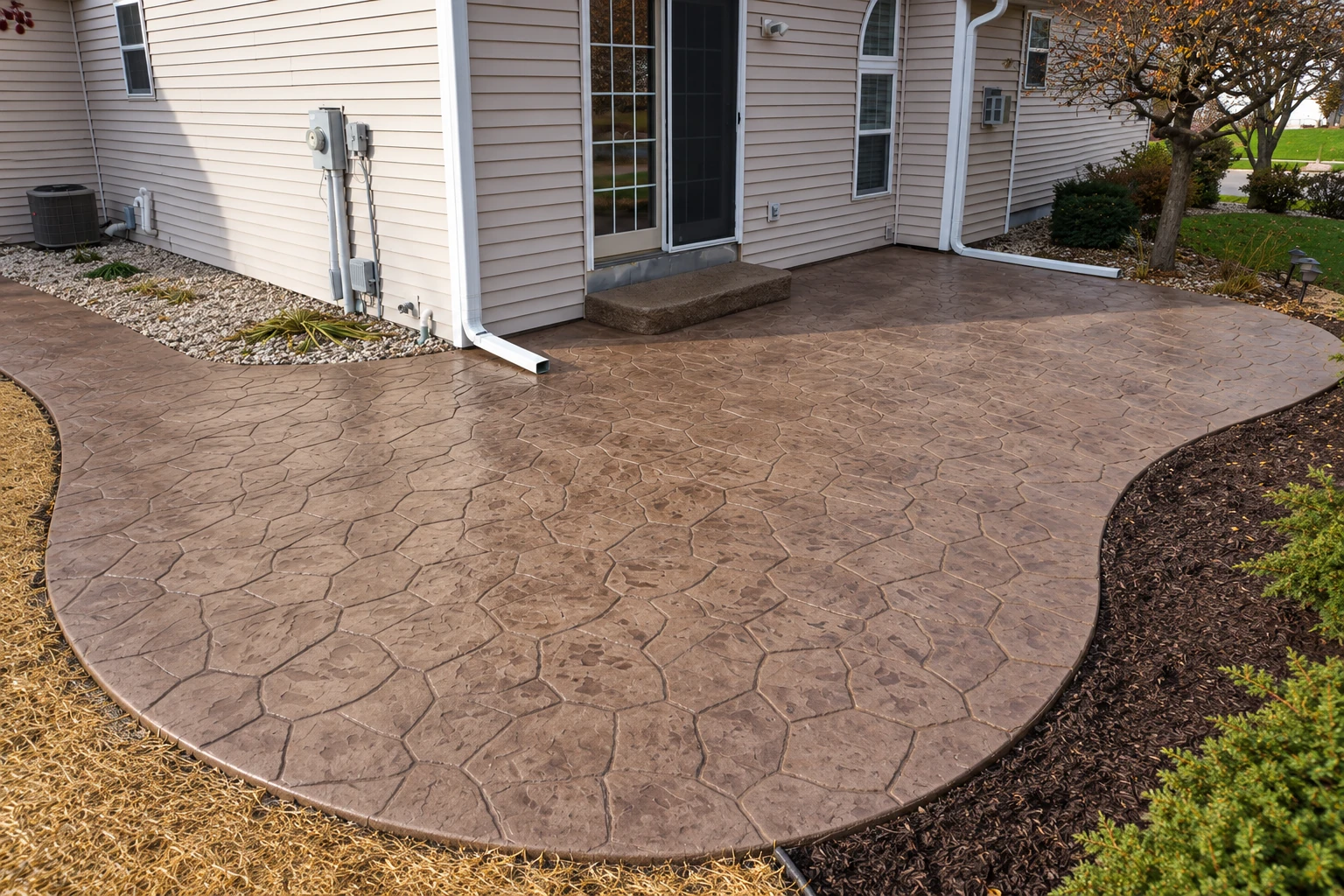
Stamped concrete presses a stone or brick pattern into the wet slab, for a patio or entry with the look of pavers in one solid piece.
A walk from the driveway to the door, or down the yard toward the water, gets a packed base and a broom finish so it stays even underfoot.
If your garage floor has cracked, heaved or stained past cleaning, we break it out and pour a new slab thick enough for the cars and gear it carries.
Color, exposed stone and borders let a driveway, patio or walk suit your house, and we talk through which finish holds up best where you'll use it.
On a lot that drops toward the water, a concrete retaining wall holds back the slope and gives you level ground for a patio or lawn.
For a shop, basement or outbuilding, we pour a flat, even interior floor that's ready for the finish or the equipment you plan to put on it.
A pool deck has to drain fast and keep its grip when it's wet, so we plan the slope and the surface texture together before we pour.
Steps down a sloped yard or up to the door get rebar, steel rod set inside the concrete to hold it together, and the same height on every step.
A garage, shop or addition can sit on a slab foundation, a thick slab with deeper edges that carries the walls, poured on ground we've dug out and packed.
For a new home, addition or outbuilding, we form and pour the foundation walls and footings to the plans, so framing starts on something square and level.
For a business or shared lot, we build concrete parking areas with a deeper base and a slab sized for the cars and delivery trucks it will carry.
Footings are the buried concrete pads under posts and walls, and we pour them for decks, porches, sheds and additions so the weight rests on firm ground.
When part of a house or garage has settled, we raise the foundation back toward level and support it, so doors and floors sit right again.
We saw-cut concrete for a new doorway, a utility trench or a clean edge where old slab meets new, without breaking up more than we have to.
We reply to calls and form messages within one business day to set a time, and there's no obligation to book. I come out to your Lake Tapps address myself, look over the site and write you an estimate that lists what's included.
(253) 275-5460If your address is in unincorporated Pierce County, the county's Planning & Public Works department issues residential permits, and when a job needs one, its review sets the earliest date we can pour. Before we schedule, we confirm whether your address falls under a city or the county, the same check we make on jobs out in Lake Morton-Berrydale, and we handle the permit applications when your job needs one.
We're licensed and insured. Washington requires every construction contractor to register with the Department of Labor & Industries and be bonded and insured, so that registration is worth asking about with anyone you're considering. Pierce County's own business license covers only certain listed kinds of businesses located in its unincorporated areas, while the state business license from the Department of Revenue applies once a business meets a listed condition, such as $12,000 or more a year in gross income.
What moves the price is the size of the job, the tear-out of old concrete and how much digging and base work the ground needs, and the schedule turns on any permit review and the curing time before you can use the slab. Your written estimate spells out what's included, such as taking out the old concrete and cleaning up afterward.
I come out myself to look at your job and write the estimate, so the person pricing it is the one who has stood on your ground and asked the questions. Once the work is underway, our crew lead runs the site and I check in while it's going on. You'll know what you're paying for before we start.
When a budget gets tight, the base is usually the first thing people want to trim, because nobody sees it once the slab is down. I'd rather keep the base and simplify the finish. A plain broom finish on a well-packed base usually outlasts a fancy surface laid over loose dirt, and color or pattern can come on a later project.
I grew up fixing things on a family farm and learned concrete on other people's crews before starting this business in Auburn in 2013. What we promise is your satisfaction, guaranteed. If you'd like me to look at your project, call (253) 275-5460 or use the form above with your address.
Most driveways and patios here are ordinary jobs, but a lot near the water, or one on septic or a well, brings a few extra steps. These are the ones we plan around.
In unincorporated Pierce County, all shoreline development goes through shoreline review with the county, so a lakeside patio, walk or set of steps starts there. State law counts work as substantial development when its cost or value is over $8,504, or when it materially interferes with public use of the shoreline. We work out where your project stands with the county before you've picked a finish.
Lake Tapps usually reaches full by late May, and from mid to late September the level drops each day, with Cascade Water Alliance controlling the draining and refilling. The edge of the water in October isn't the edge in July. When I look at a job near the shore, I go by the property and elevation lines, not wherever the water sits that day. Who owns the lake bed is covered in the questions below.
The county requires a pre-application screening for certain projects, including on properties served by a septic system or a private well. Its typical site development permit cases include moving 50 cubic yards or more of material and clearing 6,000 square feet or more. A long new driveway can mean a lot of digging, so I ask about your tank, drain field and well at the first visit and keep heavy trucks off them.
A wall built to hold the bank at the water's edge is a bulkhead, and any bulkhead, of any size, falls under the county's shoreline regulations. One taller than 4 feet, measured from finished grade, also needs a building permit and environmental review. If you're picturing a wall along the shore, we talk about height early, because it decides how many approvals stand between you and the pour.
The price is set by the size and thickness of the slab, how much old concrete has to be broken out and hauled away, and how much digging and base work the ground needs. Color, a stamped pattern or a backyard a truck can't reach adds to it. I put your figure in a written estimate after I've seen the site.
You can drive on it once it has cured enough, and that wait is longer than the wait to walk on it. Curing is the slow hardening that gives concrete its strength, and parking on a young slab is one of the ways a new driveway cracks early. We tell you both days when we pour and plan where your cars go meanwhile.
It may get a few fine cracks, because concrete shrinks as it cures, but we decide where they go. We cut control joints, shallow grooves that give the slab a straight line to crack along, and we cut them before the slab cracks on its own. The wide cracks and sinking in an old slab usually come from a soft subgrade, which is why we dig ours out and pack it.
Clear the work area of cars, planters and furniture, and tell us where sprinkler lines or a septic tank sit near the work. Leave a path open for the truck and wheelbarrows. After the pour, keep kids, pets and cars off the slab until we tell you it's ready.
Often not, because Pierce County's list of work exempt from permit includes fences up to 6 feet high and decks up to 30 inches above grade with no story or basement below. In the Lake Tapps setback, a fence may be allowed at 4 feet or less if it sits landward of the 543-foot elevation, takes no trees and stays within disturbance allowances. We check with the county on any concrete footings or slab.
Cascade does, along with the state and the county, because it owns the lake bed and shoreline up to the 545-foot elevation line. Cascade's license is required to change or add improvements there, including bulkheads, docks and boat lifts, in addition to state and local permits. On the county side, that means shoreline review, and a bulkhead's height decides what else it needs.
Call (253) 275-5460 or send the form with a few words about the job and your address, and since we take calls until 11 PM on weekdays and 10 PM on weekends, you can reach us after your own workday ends.