
Concrete driveway building
When your driveway has sunk at the garage or split across the middle, we break it out, dig to firm ground, pack a new base and pour a driveway built to carry your cars.
D&R Auburn Concrete is a concrete contractor based in Auburn, WA, building driveways, patios, sidewalks, retaining walls and foundations for homeowners here, and parking lots for business owners. I started the company in Auburn in 2013.
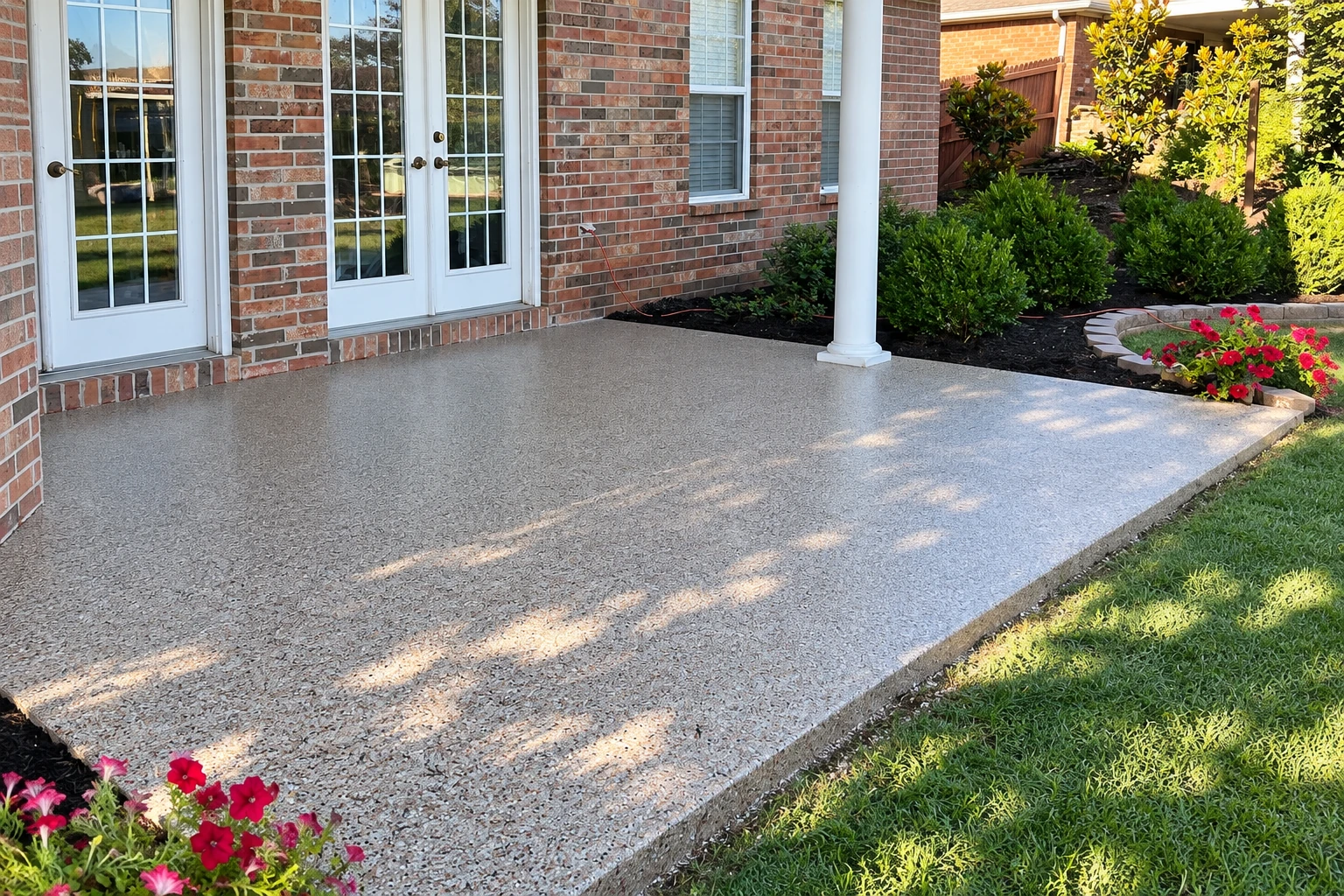
A lot of the calls D&R Auburn Concrete gets in Auburn start with a driveway or patio that has cracked, sunk at one corner or started holding water after rain. We break out the old slab, fix what's under it and pour new, and we build new flatwork, which is what we call driveways, walks and patios, for homes and business lots.
When I look at a cracked or sunken slab in Auburn, the cause is usually underneath it. Many of the ones we break out were poured on dirt that was raked level instead of dug out and packed, so the subgrade, the ground a slab rests on, kept settling and took the concrete down with it. We dig to firm ground and pack a gravel base before any concrete shows up, because that's what keeps the new one flat.
Water is the other thing I check before we set forms, because a slab that falls toward the house sends rainwater at your foundation. Concrete also shrinks as it dries and will crack somewhere, so we cut control joints, straight grooves that tell it where to crack, before it can pick its own spot. We work the same way in Lake Tapps and Pacific.
When your driveway has sunk at the garage or split across the middle, we break it out, dig to firm ground, pack a new base and pour a driveway built to carry your cars.
A backyard patio that tips toward the house or holds puddles gets torn out and replaced with one sloped away from your walls, so rain runs off into the yard.
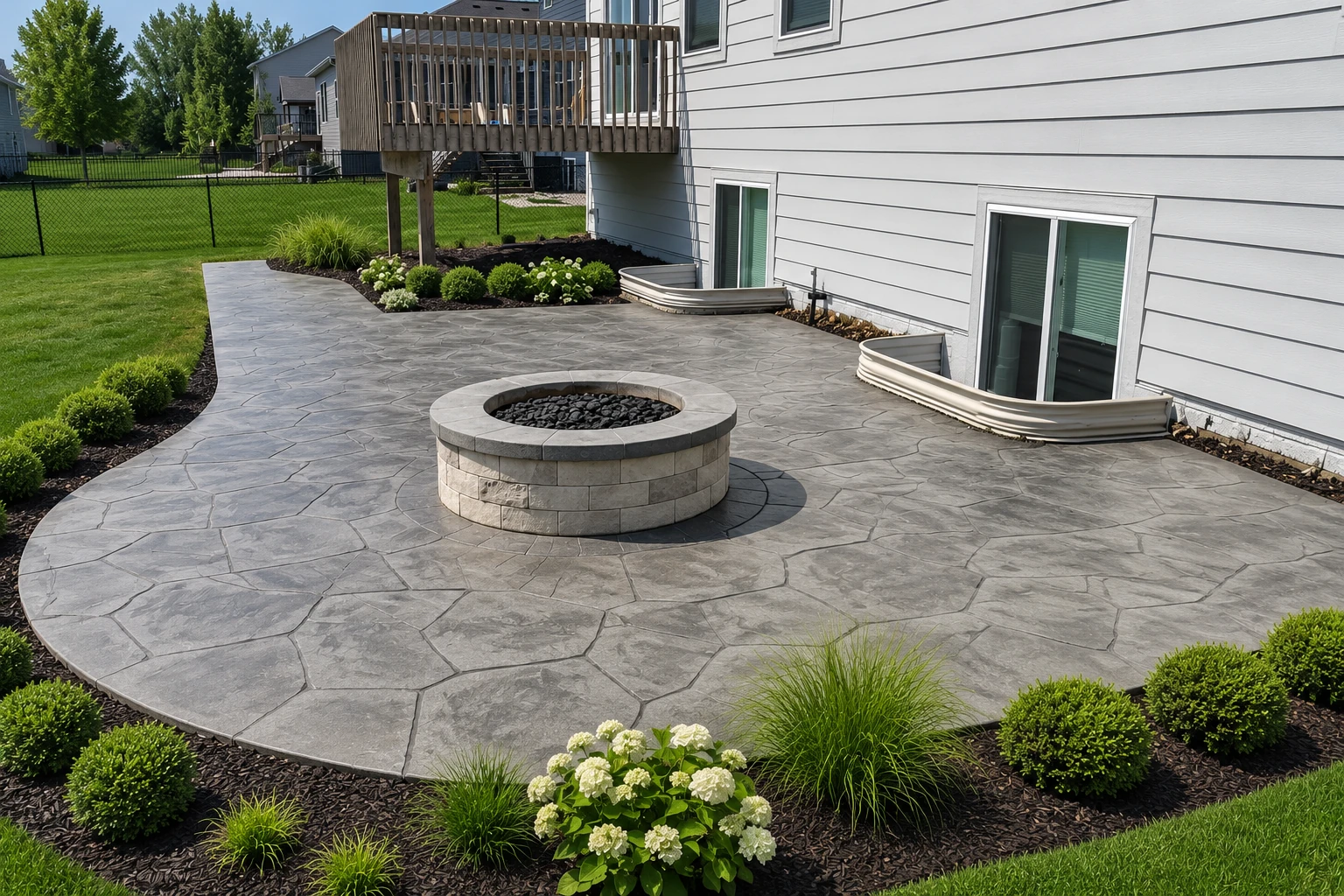
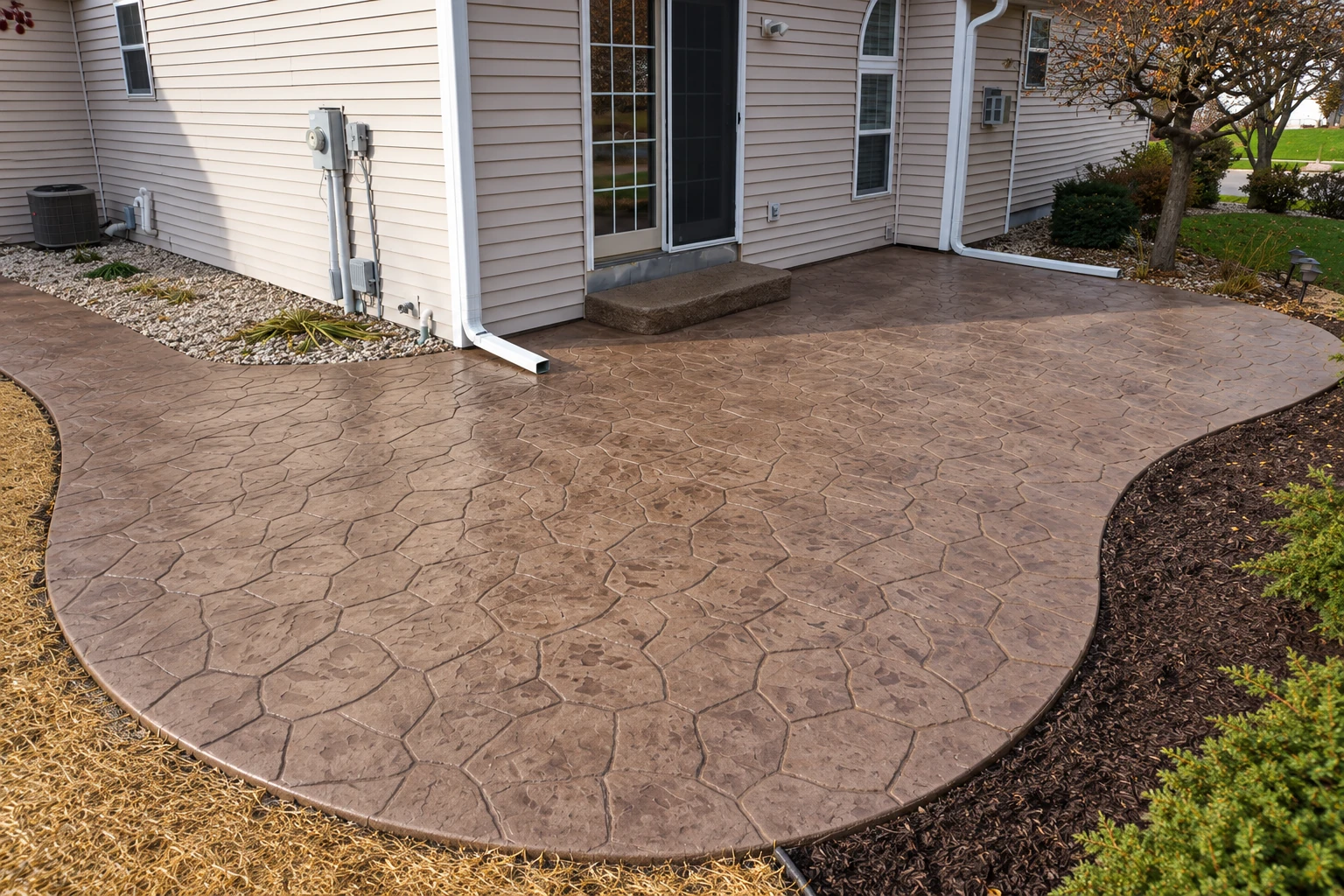
Stamped concrete gives a patio or walk the look of stone or brick in a single pour, pressed with a pattern while it's soft and sealed once it's cured.
We replace walks that have heaved into trip edges, and we give the new one a broom finish, light brushed lines that keep your feet from slipping when it's wet.
If your garage slab is cracked, stained or sloping the wrong way, we pour a new floor that drains toward the door and stands up to cars and whatever you store.
Color, exposed stone and saw-cut patterns let plain concrete suit your house, and they work well on patios, walks and front entries where you want more than gray.
Where your yard slopes, a poured concrete wall holds the hill back so you can level out a patio, a garden bed or a parking pad below it.
We pour interior floors for shops, basements and outbuildings, with the base, vapor barrier and steel set first so the floor stays flat under what you put on it.
A pool deck needs a surface that drains quickly and isn't slick underfoot, so we slope it away from the water and give it a finish made for bare feet.
Crumbling front steps get rebuilt with even rises and solid footings, so they stay tight to the house and nobody catches a toe on the way in.
For a garage, shop or addition, we build the slab foundation, setting the base, the forms and the rebar, steel rods that hold the concrete together, before the pour.
We dig, form and pour foundations for new houses and additions to the lines on your plans, so the framing crew starts on something square and level.
Business owners planning a lot in Auburn get a slab sized for the traffic it will carry, with the drainage worked out before the first truck pulls in.
Footings carry decks, posts, walls and additions, so we dig them down to firm ground and pour them to keep what's built on top from settling unevenly.
When part of a house or slab has settled, we lift it back toward level and fill the gap underneath so it has something solid to rest on.
We saw-cut concrete for new doorways, plumbing trenches and clean edges where only part of a slab is coming out, so the rest stays whole.
Tell us about your Auburn project and we'll reply within one business day to set a time. I come out myself to look at the site and write you a free estimate. There's no obligation and no pressure to book.
(253) 275-5460Who issues the permit comes down to where your address sits. Some homes with an Auburn address fall under King County, Kent or Federal Way rather than the City of Auburn, so I confirm which before we schedule. Inside city limits, the city requires construction permits for many kinds of work in the public right-of-way, the streets and sidewalks, so a driveway that meets the street can need one, and that part waits until it's approved.
The city also requires right-of-way work to be done by a licensed and bonded contractor, and it requires a business license for any business working inside city limits. Both are fair questions to ask anyone you hire, along with the state registration covered in the questions below. When your job needs a permit, we handle the applications ourselves, so you don't have to work through them on your own.
What moves the price is the size of the area, how much old concrete comes out, how far we dig to reach firm ground and the finish you pick, since stamped or colored work takes more hands than a plain broom finish. The schedule turns on the permit, if there is one, and on curing, the time new concrete needs to gain strength before it takes weight. I'll walk you through both when I come out.
When a budget gets tight, the first thing people want to trim is the base, because nobody sees it once the concrete is down. I'd rather cut the fancy finish. A stamped pattern on a slab that settles still cracks, while a plain broom finish on well-packed gravel can stay flat for years. So on your estimate, the prep is the part I'll talk you out of shrinking.
I grew up on a farm fixing what broke, learned concrete on other people's crews and started D&R Auburn Concrete here in 2013. I still come out myself to look at your job and write the estimate. Our crew lead runs the work on site, and I check in while it's underway, so the person who told you what to expect is there to see it done.
We're licensed and insured, and our promise is a plain one. Your satisfaction, guaranteed. I'd like you to understand what you're paying for before we start, so ask me about anything on the estimate that isn't clear. When you're ready, call (253) 275-5460 or send the form above.
Some Auburn lots come with rules that reach right down to the digging. These are the ones that can change how we plan a concrete job here, and what we look into first.
The city treats land subject to a 100-year flood as a flood hazard area, along with the storage floodway of the Green River, White River, Mullen Slough and Mill Creek shown on FEMA's flood maps. If your house sits near one of those, I want to know before we plan anything, because digging, filling and building there can bring the city's critical area rules into the job.
The city's critical area rules cover any activity that may affect a critical area or the buffer around it, and the list includes excavation, filling, clearing, construction and demolition. A concrete job does most of those, from breaking out the old slab to digging out for the base, so on a lot that qualifies, the rules reach our work and not just new buildings.
The city's critical area maps are a general guide, for reference only. On the ground, a qualified consultant identifies what's actually on your site, and the city makes the determination under its rules. So if a map shows something near your property, we don't guess in either direction. We plan the job once that question is settled.
If your house is on septic, the public health department for Seattle and King County, or for Tacoma and Pierce County, has to approve any new home served by septic and most changes to an existing one. That matters when we're pouring a foundation or footings for an addition. We also ask where the tank and lines run before we dig anywhere in the yard.
I price each Auburn driveway after seeing it, because two slabs the same size can cost quite differently depending on what has to come out and what's underneath. Your written estimate lists what's included, such as taking out the old concrete and cleaning up afterward, so you can set it beside any other bid and see what each one covers.
You're without it from the day we break out the old slab until the new one has cured enough to carry a car, and the curing is usually the longest part. You can walk on new concrete well before you can drive on it. We'll tell you when it's ready for each, and waiting pays off, because driving on it early can crack it.
Move your cars off the work area before we start, since we need room for the tear-out and for the concrete truck to reach the forms. It also helps to tell us where sprinkler lines or anything else buried runs, and to keep kids and pets off the fresh concrete until we say it's ready.
The City of Auburn's interactive map shows whether your property sits inside city limits and is regulated by the city. It's worth checking, since some Auburn addresses fall under the county or a neighboring city, as noted above. The answer decides whose rules your concrete job follows.
Yes. Washington requires every construction contractor to register with the Department of Labor and Industries and, by law, to be bonded and insured. A general contractor can take on most kinds of construction, while a specialty contractor can work only in the specialty they registered in. Their registration number has to appear on estimates, bids and ads, so look for it there.
Registered contractors have to give you the state's Model Disclosure Statement, called the Notice to Customer, on any residential job of $1,000 or more. If you're planning a business lot, it applies to commercial projects of $1,000 to $60,000 as well. Ask for it if you haven't received one before the work starts.
We take calls at (253) 275-5460 until 11 PM on weeknights and 10 PM on weekends, so you can reach us after work, or send the form whenever it suits you.