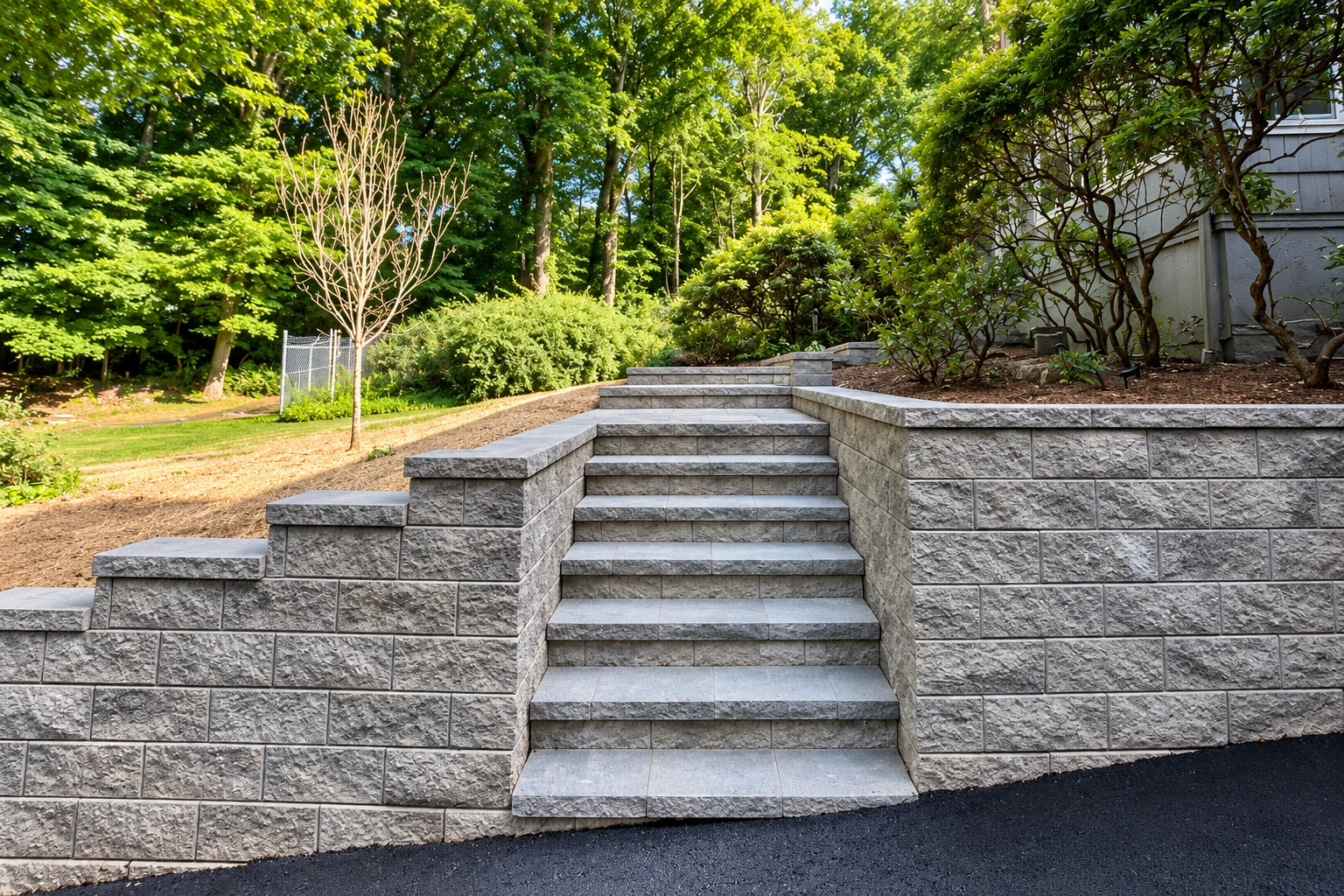
Concrete driveway building
When a driveway has cracked through, sunk at the garage or holds puddles, we break it out, dig down to firm ground, rebuild the base and pour a new slab.
D&R Auburn Concrete is a concrete contractor based in Auburn, WA. We pour driveways, patios, sidewalks, steps, garage floors and foundations for homeowners and business owners in Tacoma, with careful groundwork under every slab.
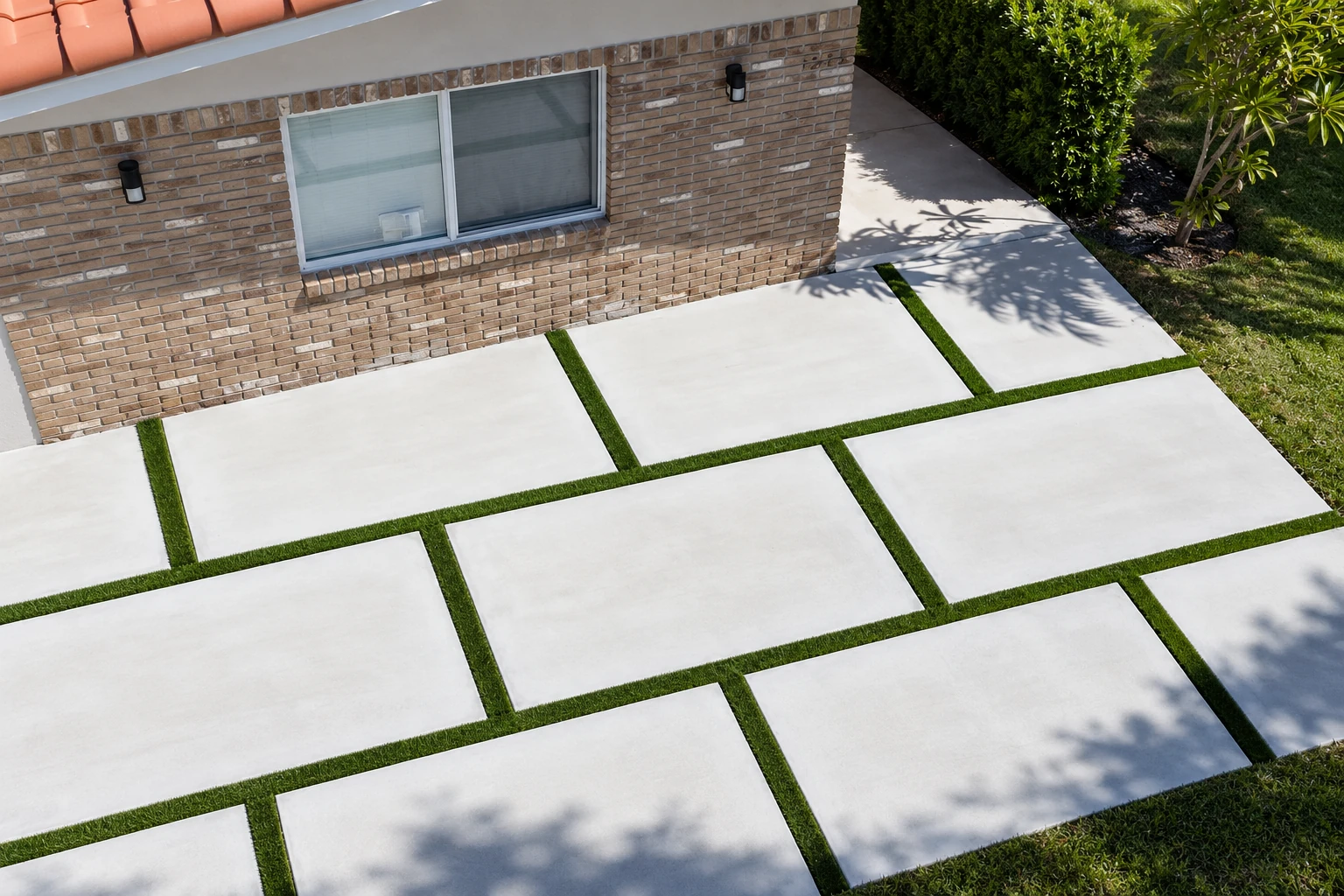
D&R Auburn Concrete does most kinds of flatwork in Tacoma, our word for concrete poured flat on the ground, such as driveways, patios, sidewalks, garage floors and pool decks. We also build steps, retaining walls, footings and foundations, and we take on business lots for property owners who need one.
Most Tacoma calls start with something the homeowner can see. A driveway has cracked across the middle, a patio has sunk at one corner, or the front steps have pulled away from the house. When I look closer, the cause is usually underneath, in the subgrade, the ground the slab sits on, which was raked level instead of dug out and packed, so the concrete settled right along with the dirt.
That's why our crew spends most of its time below the surface. We dig out the soft material, bring in base rock and pack it in layers, set the forms, and pour about 4 inches thick for most patios and walks, with more for driveways that carry cars. We also pour in the cooler part of the day, because concrete placed in midday heat can dry too fast and leave a weak, dusty top.
If a budget has to give somewhere, I'd rather it give on the finish than on the base. The base is hidden the day we finish, which is why it's the first thing people want to cut, but a plain slab on well-packed ground usually stays flat for a long time, while a fancy surface on poor ground cracks and sinks just like the old one.
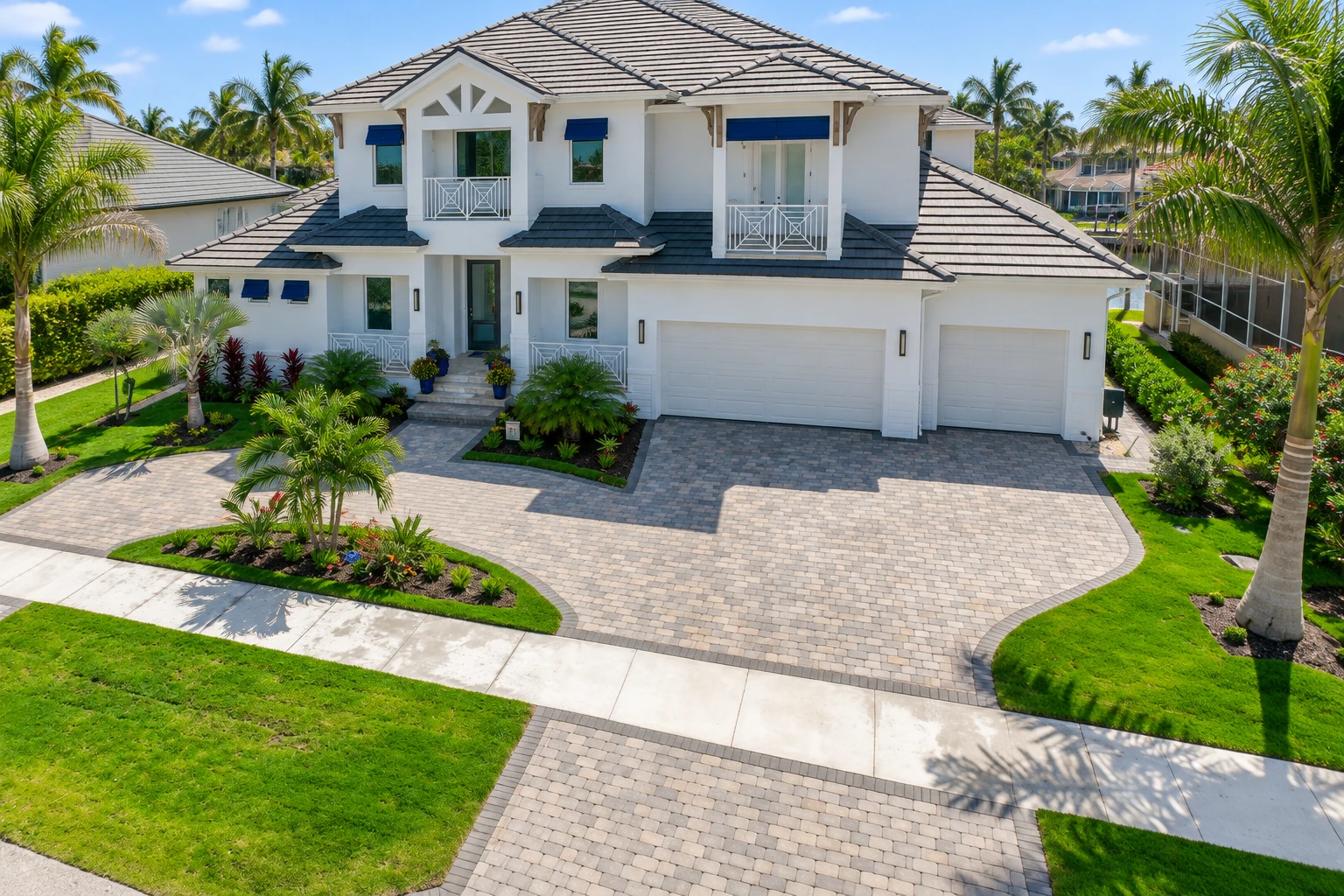
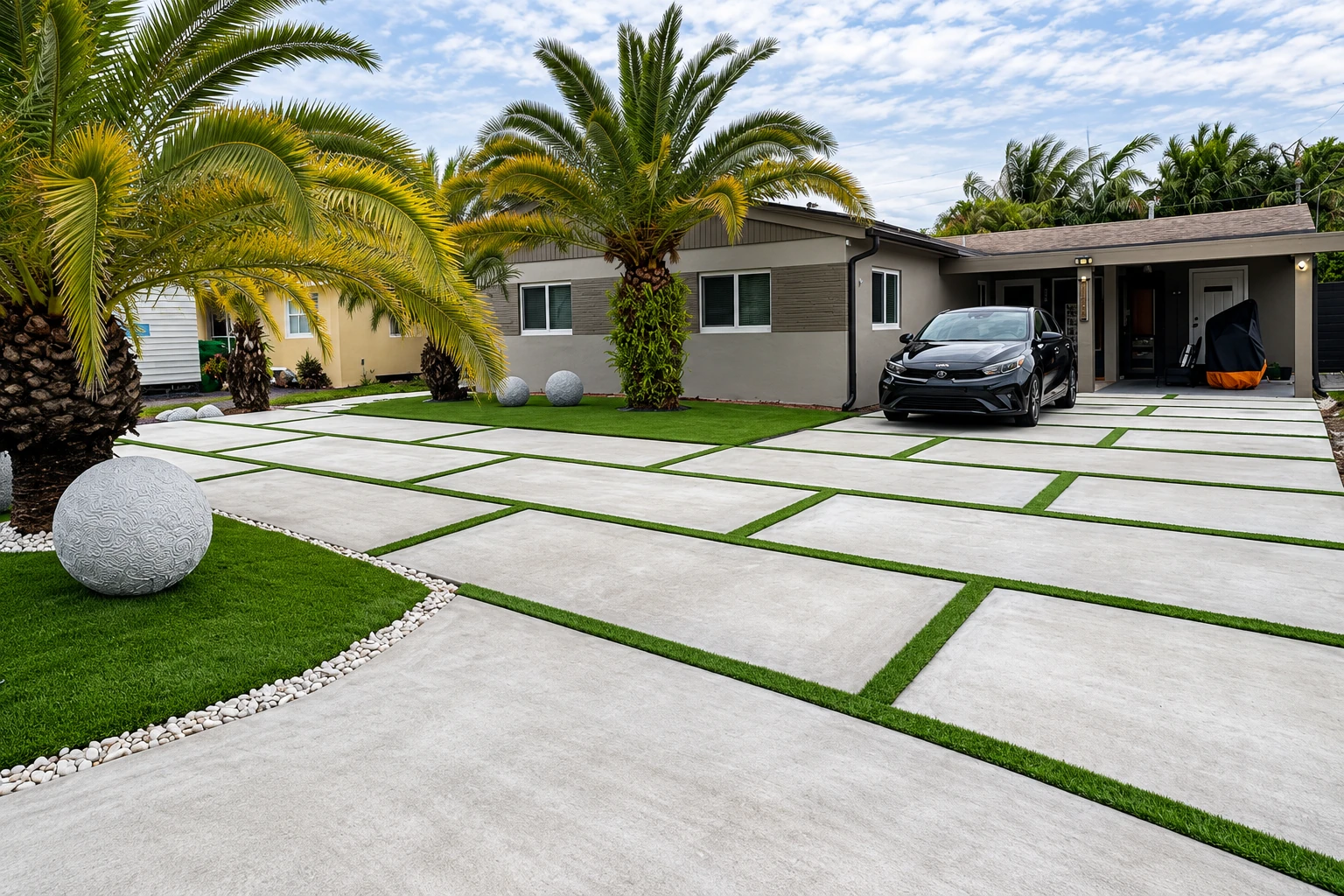
When a driveway has cracked through, sunk at the garage or holds puddles, we break it out, dig down to firm ground, rebuild the base and pour a new slab.
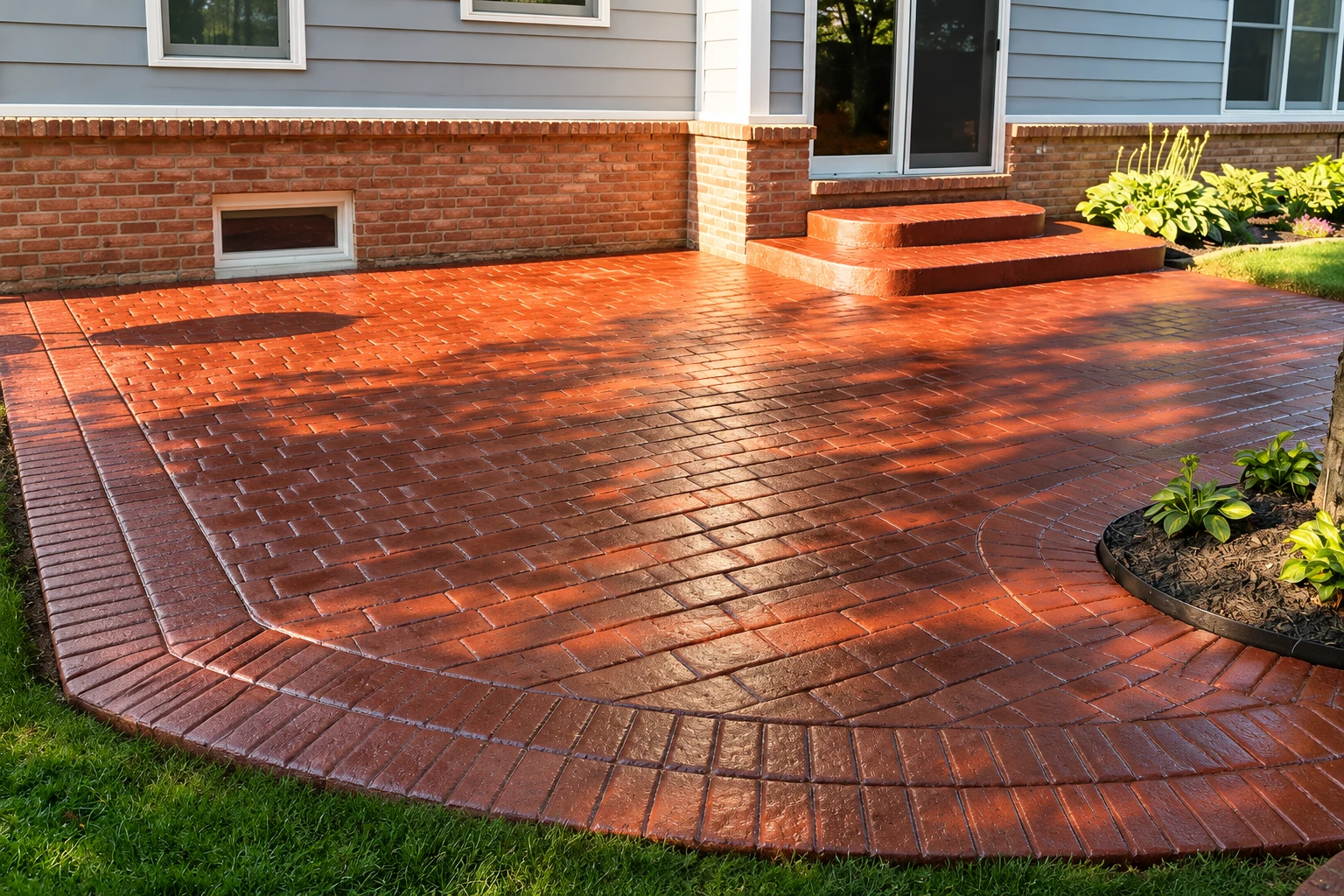
When an old patio has heaved into pieces or settled into a dip that holds water, we replace it with a slab sized for how you actually use the yard.
Stamped concrete presses a stone, brick or tile pattern into the fresh surface, a good choice when you want a patio or walk that looks finished without laying pavers.
For a front walk that's cracked, lifted or uneven enough to catch a toe, we pour new sections with a broom finish, a brushed texture that gives shoes some grip.
If your garage floor is badly cracked or sunk in spots, we break it out and pour a new slab that's flat, sound and ready to park on.
Color, exposed stone and scored lines let a slab match the house instead of looking like an afterthought, which suits entries and patios people walk across every day.
Where a yard drops off or a slope crowds the driveway, a concrete retaining wall holds the soil back, built on a proper footing so it stays upright.
For basements, shops and outbuildings, we pour interior floors on a packed base and finish them smooth and level enough for the way the room gets used.
A pool deck has to drain quickly and stay safe for bare feet, so we slope it toward the drains and finish it with grip in mind.
When front or back steps have cracked, settled or pulled away from the house, we form and pour new ones with even, comfortable risers from top to bottom.
For a garage, addition or shed that sits right on the ground, we build the slab foundation with the base, steel and thickness that structure needs.
For new construction or a foundation that has to be replaced, we dig and pour the footings and walls that carry the building, built to your project's plans.
For property owners planning a business lot, we handle the base, the drainage and the heavier pavement that daily cars and delivery trucks call for.
Footings are the buried concrete pads under posts, decks and walls, and we dig them down to firm ground so what sits on top stays put.
When a corner of the house or a slab has settled, foundation raising lifts it back toward level, after I've looked at what caused it to drop.
We saw-cut concrete to open a trench, widen a driveway or remove one damaged section, leaving clean edges that new concrete can tie into.
Tell us about your Tacoma project and we'll reply within one business day to set a time to visit. I'll come out myself to look at the ground and write your estimate, and there's no obligation and no pressure to book.
(253) 275-5460Inside Tacoma city limits, permits come from the city's Planning and Development Services office, which takes applications online and schedules inspections, so when a job needs a permit, the pour date waits on it. Some addresses around Tacoma fall under the county instead, so before we schedule, I confirm which one yours is, and we handle the permit applications whenever your job needs one.
Two things are worth checking on any contractor you hire here. The state requires every construction contractor to register with the Department of Labor & Industries, and the city generally requires any business working or seeking work inside its limits to hold a Tacoma business license. Ask any contractor you're considering, us included, about both before you sign anything.
What moves the price here is mostly the size and thickness of the slab, how much old concrete comes out, how much base we have to dig out and replace, and the finish you choose. The schedule turns on any permit, the ground we find and curing. The written estimate I leave lists what's included, such as tearing out old concrete and cleaning up, just as it does for our work in Federal Way and Renton.
I started D&R Auburn Concrete in 2013, after growing up on a family farm and learning concrete on other people's crews. I still care most about the parts nobody sees once we leave, the base, the forms and the curing, because that's what decides whether a slab stays flat. We're licensed and insured, and our promise is simple. Your satisfaction, guaranteed.
On your job, our crew lead runs the work on site, and I check in while it's underway, so the person who looked at your ground and wrote your estimate is still paying attention when the concrete goes in. If something under the old slab changes the plan, we explain what it means for the work before we pour.
I'd like you to understand what you're paying for before we start, so every question gets a full answer, whether it's about the base, the slope or the finish. When you're ready, call (253) 275-5460 or use our contact form to tell us about your Tacoma project.
Every lot is different, but a few things about the ground and the properties here shape how we plan the work, from how deep we dig to whether a soil check makes sense first.
An older state hazard map for this area says liquefaction, when wet soil loses its strength, typically happens in filled ground and in loose, saturated sandy soil, the kind found in low-lying coastal areas, along lakeshores and in river valleys. Moving soil of that kind can pull foundations and walls apart, so on low or filled lots I look closely at what's under the job before we plan it.
That map is only a general guide, and it can't show what's under one particular lot. Knowing that takes a soil investigation on your site by a qualified professional. For a foundation, footings or a heavy slab on ground that gives me pause, I'll tell you plainly if I think one is worth doing before anything is designed, and why.
Before we set a single form, I watch where water runs across the yard and off the roof. A patio or driveway that falls toward the house sends water against your foundation, so we set each slab to shed water away from the walls and toward ground that can take it.
Many Tacoma jobs start with tearing out old concrete, and what we find under it decides part of the work. Sometimes the base is fine, and sometimes it's thin, mixed with dirt or soft from water, which you only know once the slab is up. When that happens, I show you, explain what it changes, and we agree before going further.
We price every Tacoma job in writing after I've seen it, because the base and the tear-out vary too much from lot to lot to quote fairly over the phone. On any home job of $1,000 or more, state rules require the contractor to give you L&I's disclosure notice to customers, so you'll get that with our estimate.
Mostly by clearing the way, since our crew handles the tear-out and the base work. Move cars, planters and anything stored against the slab, tell us where sprinkler lines or buried cables run, and plan where you'll park while the new driveway cures. If a neighbor shares your access, a quick word before the trucks arrive helps.
Usually you can walk on new concrete after a day or two and drive a car on it after about a week, though heavy trucks should wait longer. That wait is curing, the slow hardening that gives concrete its strength, and rushing it is how good slabs get marked or cracked early. I'll give you the dates for your job when we schedule.
Concrete can still crack, but a new slab on a packed base usually cracks far less, and where it does, it cracks where we planned. We cut control joints, shallow grooves that give the slab a chosen place to crack, soon after the pour, and we add rebar, steel bars inside the slab that hold the pieces together if a crack opens.
Yes, generally. The city requires every subcontractor working at a Tacoma job site to hold a City of Tacoma license, not just the company you hired. If a contractor plans to bring other trades onto your job, it's fair to ask whether each one is licensed with the city before work starts.
Tacoma uses the Washington State Building Code with the city's own amendments, and for houses it uses the International Residential Code, minus a few chapters. Which edition applies is tied to when your permit vests. The state's newer codes take effect May 3, 2027, and Tacoma adopts its own amendments to them separately, so we build to whichever version your permit falls under.
Yes. L&I runs a Homeowner Recovery Program for consumers harmed by construction contractors, and since July 1, 2026, eligible consumers can apply for recovery payments for financial loss from contractor work. It's one more reason to hire a contractor who is registered with the state and puts the job in writing.
Call (253) 275-5460 any day, from early morning into the evening, or send the form, and tell me what you're seeing so I can bring the right questions to your Tacoma site.